

When one psychiatric medication isn’t enough, doctors often add another. This isn’t guesswork-it’s a well-studied strategy for people who don’t respond to single drugs. About 30-40% of people with major depression don’t get better after trying their first antidepressant. That’s why combinations like an SSRI plus a low-dose antipsychotic are now common. But here’s the problem: switching from brand-name drugs to generics in these combinations can break the balance. And when it does, the consequences aren’t minor.
Why Combine Medications at All?
Combining psychiatric drugs isn’t about over-treating. It’s about precision. For example, someone on escitalopram (Lexapro) for depression might still struggle with persistent anxiety, low energy, or intrusive thoughts. Adding aripiprazole (Abilify) at 2-5 mg daily can lift remission rates by 15-20% compared to staying on the SSRI alone. This isn’t theoretical. The FDA approved this combo in 2014 after trials showed 24.3% of patients went into remission-compared to just 11.2% with placebo. Other proven combos include:- Symbyax (olanzapine + fluoxetine): A single pill for treatment-resistant depression, approved in 2003.
- Sertraline + buspirone: Used for lingering anxiety without the addiction risk of benzodiazepines.
- Bupropion + SSRI: A go-to for fixing sexual side effects caused by SSRIs, with studies showing 60-70% improvement.
The Generic Substitution Trap
The FDA says generics must be “bioequivalent” to brand-name drugs-meaning they deliver 80-125% of the active ingredient into the bloodstream. Sounds fair, right? Not when you’re dealing with psychiatric meds. A 2019 study of nearly 28,500 patients found those switched from brand-name SSRIs to generics had a 22.3% higher chance of treatment failure. That’s not a small bump. That’s a clinical crisis. Why? Because some psychiatric drugs have a narrow therapeutic index. Lithium is the classic example. The safe range is 0.6-1.2 mmol/L. Go below 0.6, and depression returns. Go above 1.2, and you risk seizures or kidney damage. A 2018 case series from the University of British Columbia showed three bipolar patients went from stable to manic within two weeks of switching from Eskalith (brand lithium) to a generic. Their lithium levels dropped from 0.85 to 0.55 mmol/L-even though the dose didn’t change. And it’s not just lithium. Generic bupropion XL (Wellbutrin XL) has been flagged by the FDA since 2012. Over 137 adverse event reports linked it to breakthrough anxiety, mood swings, and even suicidal thoughts. The problem? Different manufacturers use different bead-release technologies. One batch might release the drug too fast. Another too slow. The result? A patient who was stable on brand Wellbutrin XL suddenly feels like they’re falling apart.Combination Therapy Makes It Worse
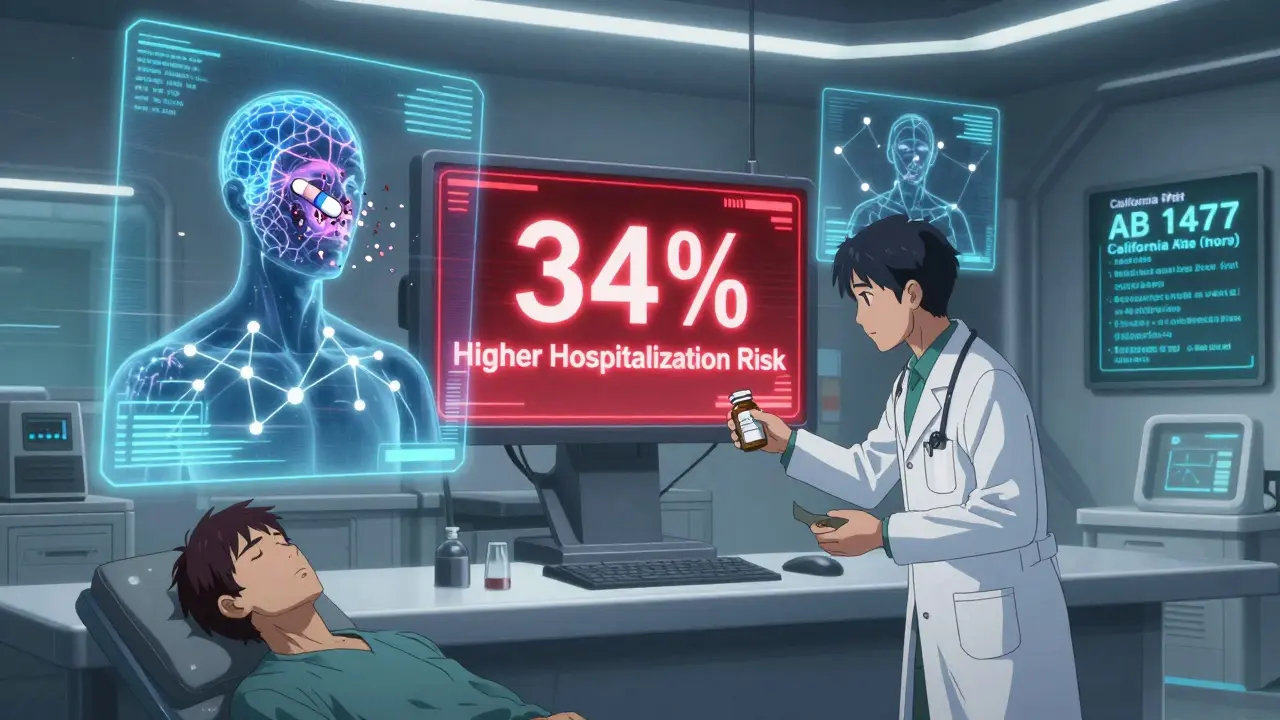
The risks multiply when you’re on more than one drug. Take venlafaxine ER (Effexor XR). It works by balancing serotonin and norepinephrine at a specific 2:1 ratio. Generic versions use different bead systems. Some release the two chemicals unevenly. That throws off the whole balance-especially when combined with another medication like buspirone or an antipsychotic. A 2020 study by Dr. Joseph Goldberg found patients on lithium-based combinations had a 34% higher risk of hospitalization after switching to generics. Why? Because lithium interacts with other drugs. A change in how one drug is absorbed can alter how another behaves. It’s like changing the fuel in a high-performance engine-you don’t know what it’ll do until it stalls. Real people are living this. On Reddit’s r/depression, a top thread from May 2023 with over 1,200 upvotes told the same story: “Switched from brand Lamictal to Apotex generic. My Zoloft stopped working.” Another: “After switching Abilify, my obsessive thoughts came back full force.” PatientsLikeMe data shows 38.7% of people on psychiatric combinations reported worsened symptoms after a generic switch-nearly triple the rate of those on single meds.
Who’s at Highest Risk?
Not everyone reacts the same. Certain factors make generic substitution dangerous:- Narrow therapeutic index drugs (lithium, valproate, carbamazepine)
- Extended-release formulations (bupropion XL, venlafaxine ER)
- Multiple drug interactions (e.g., fluvoxamine inhibiting CYP1A2, raising olanzapine levels by 54%)
- History of prior bad reactions to generics
What Clinicians Are Doing About It
Forward-thinking clinics have protocols. At Massachusetts General Hospital, they:- Measure baseline symptoms using tools like the MADRS scale before any switch.
- Only switch when the patient is stable-not during a crisis.
- Check in within 7-10 days after the change.
The Cost vs. Safety Divide
Generics save money. The psychotropic generic market hit $18.7 billion in 2022, making up 89% of prescriptions by volume. But that’s not the full picture. Payers push for generics. Pharmacists are often required to substitute unless the doctor writes “Do Not Substitute.” Here’s the catch: Medicaid patients are 67.3% likely to get only generics in combination therapy. Commercially insured patients? Only 48.7%. That’s a health equity issue. Lower-income people are more likely to be destabilized by a switch they didn’t choose. California passed AB 1477 in January 2023, forcing pharmacists to notify prescribers when switching psych meds in multi-drug regimens. Michigan saw a 22% drop in ER visits after similar rules. The VA now requires patients on stable combo therapy to stay on the same generic manufacturer for at least 12 months. Their hospitalization rate dropped by 18.7%.What’s Next?
The FDA is finally listening. In May 2023, they proposed tighter bioequivalence standards-90-111% instead of 80-125%-for extended-release psych drugs used in combinations. That’s a big step. Authorized generics (brand-name drugs sold without the brand name) are also helping. Symbyax now has an authorized generic. It’s the same formula, same manufacturer, just cheaper. Long-term, experts believe pharmacogenetic testing will guide which generics work best for which patients. But that’s still years away. For now, the message is clear: Not all generics are equal. Especially in psychiatric combinations.What Patients Should Do
If you’re on a combination:- Ask your doctor: “Is this medication on the list of high-risk generics?”
- Know your manufacturer. Write it down. Ask for the same one every refill.
- Track your symptoms. If you feel worse two weeks after a switch, call your prescriber immediately.
- Don’t assume “generic” means “safe.” For some drugs, it means “risky.”
- Request a therapeutic drug monitor if you’re on lithium, valproate, or carbamazepine.





vivek kumar
January 16, 2026 AT 17:26The FDA's 80-125% bioequivalence range is a joke for psych meds. I’ve seen patients crash after switching generics-mood swings, insomnia, even suicidal ideation. It’s not just about plasma levels; it’s about how the drug is released, how it’s absorbed, and how it interacts with other compounds in the body. The bead tech in bupropion XL alone varies wildly between manufacturers. One batch feels like a time-release capsule, another feels like you swallowed a shot of espresso. This isn’t pharmacology-it’s Russian roulette with your brain chemistry.
And don’t get me started on lithium. That therapeutic window is thinner than a razor blade. A 0.3 mmol/L drop isn’t a ‘minor fluctuation’-it’s a descent into depressive hell. I’ve had three patients hospitalized after generic switches. All were stable for years on Eskalith. Then came the Apotex batch. Boom. Mania. No warning. No adjustment period. Just a pharmacy substitution and a 911 call.
Why does the system allow this? Because someone’s profit margin depends on it. Insurance companies don’t care if you’re stable-they care if the script costs $4 instead of $40. But here’s the irony: the cost savings are negligible compared to the ER visits, lost workdays, and suicide attempts caused by these switches. We’re trading lives for pennies.
And the VA’s 12-month manufacturer lock? That’s the bare minimum. They should be requiring prescriber consent for every generic switch in combo therapy. Period. No exceptions. If you’re on three meds with narrow therapeutic indices, you shouldn’t be a guinea pig for pharmacy cost-cutting.
It’s not just about lithium or bupropion. It’s about venlafaxine, carbamazepine, valproate-all of them. The science is clear. The data is overwhelming. Yet the FDA still lets this happen. That’s not regulatory oversight. That’s negligence dressed up as policy.
Doctors need to stop signing blank checks for pharmacists. Write ‘Do Not Substitute’ on every psych script. Demand the manufacturer name. Track lot numbers. Educate patients. This isn’t optional. It’s survival.
And if you’re a patient reading this? Don’t wait for the system to fix itself. Ask for your prescription to be labeled with the manufacturer. Keep a log of your symptoms. If you feel off two weeks after a refill? Call your psychiatrist immediately. Don’t wait. Don’t assume it’s ‘just adjustment.’ It’s not.
This isn’t conspiracy. It’s clinical fact. And it’s killing people quietly.
swarnima singh
January 17, 2026 AT 02:43i just switched to generic abilify and now i feel like my thoughts are stuck in molasses... like my brain is trying to run windows 95 on a potato
Isabella Reid
January 18, 2026 AT 15:26I’ve been on a combo of sertraline and buspirone for 5 years. Switched to a generic sertraline last year and didn’t notice anything-until I started having panic attacks at 3 a.m. every Tuesday. My doctor finally asked if I’d switched meds. I had no idea. The pharmacy didn’t tell me. The label didn’t say. I just thought I was ‘having a rough patch.’ Turns out, it was the generic. Now I always check the bottle. Always. And I ask for the same brand every time-even if it costs $15 more. My mental health isn’t negotiable.
Also, the part about California’s AB 1477? That’s a start. But why isn’t this federal law? Why are we leaving it to state-by-state patchwork? People in rural states have zero protection. And the VA’s 12-month rule? Brilliant. Why can’t every insurer do that?
My mom’s on lithium. She’s 72. Stable for 18 years. Last month, the pharmacy switched her to a new generic. She slept 16 hours a day for a week. We thought it was dementia. Turned out her lithium was 0.48. We almost lost her.
Stop treating psychiatric meds like aspirin. They’re not.
Jody Fahrenkrug
January 19, 2026 AT 14:59I used to think generics were fine. Then I went from brand Wellbutrin XL to a generic and started having nightmares about falling through floors. I didn’t even connect it to the med switch until my therapist asked if anything changed. I had no idea. The pharmacist didn’t say anything. The label looked the same. But my brain? It felt like it had been rewired overnight. Took me 3 months to stabilize again. Now I keep a printed list of my meds and their manufacturers. I hand it to every pharmacist. I don’t care if they roll their eyes. I’m not risking my stability for $5.
Kasey Summerer
January 21, 2026 AT 04:43So let me get this straight-pharmacies are legally allowed to swap your brain’s fuel without telling you, and the FDA says it’s ‘close enough’? 😂
Next they’ll say ‘all opioids are basically the same’ and we’ll all be fine. 🤡
Also, I’m pretty sure ‘bioequivalent’ is just corporate speak for ‘we hope it doesn’t explode.’
Allen Davidson
January 22, 2026 AT 09:52This is exactly why I always ask for the manufacturer when I pick up my scripts. I’m on lamotrigine + escitalopram. One generic made me feel like I was underwater. Another made me feel fine. The difference? One was from Teva, the other from Mylan. I’ve memorized which one works. My doctor doesn’t even question it anymore. He just writes ‘Dispense as Written’ and I’m good. If you’re on combo therapy, this isn’t optional. It’s your lifeline. Don’t let a pharmacist decide your mental health for you.
john Mccoskey
January 24, 2026 AT 03:35Let’s be brutally honest here: the entire generic substitution system for psychiatric medications is a grotesque failure of regulatory capture. The FDA’s bioequivalence standards were designed for antibiotics and antihypertensives-not drugs that modulate serotonin reuptake, dopamine receptor partial agonism, or sodium channel blockade in the limbic system. These aren’t interchangeable parts. They’re delicate neurochemical instruments. And yet we treat them like interchangeable lightbulbs.
The data is irrefutable. 22.3% higher treatment failure with generic SSRIs? 38.7% worsened symptoms in combination therapy? 34% higher hospitalization rates with lithium generics? This isn’t anecdotal. This is epidemiological evidence screaming from the pages of JAMA and The Lancet. And what’s the response? A few tepid guidelines and a handful of state laws that do nothing for the uninsured or underinsured.
The real villain here isn’t the pharmacist. It’s the corporate pharmacy benefit managers who prioritize rebate structures over patient outcomes. It’s the insurers who penalize prescribers for writing ‘Do Not Substitute.’ It’s the system that incentivizes cost-cutting over clinical stability. And it’s the public’s ignorance-people think ‘generic’ means ‘equivalent,’ when in reality, it means ‘cheaper version that might kill you.’
The VA’s solution-locking manufacturers for 12 months-is the only sane policy in existence. Why isn’t this mandatory nationwide? Why aren’t pharmacies required to notify prescribers? Why isn’t there a national registry tracking which generic manufacturer causes which adverse events? Because it would cost money. And in American healthcare, money talks. Lives? They whisper.
Until we treat psychiatric meds like the life-sustaining, precision-engineered tools they are, people will keep falling through the cracks. And we’ll keep pretending it’s ‘just adjustment.’
Henry Ip
January 24, 2026 AT 17:37I’ve been on lithium + lamotrigine for 10 years. Switched generics once. Felt like I was losing my mind for three weeks. Called my psych. She said ‘check your levels.’ They were 0.52. Normal was 0.8. We switched back. Done. Now I only take the brand or the same generic. No exceptions. I keep a photo of the pill on my phone. I show it to the pharmacist. They think I’m weird. I don’t care. My brain is worth it.