
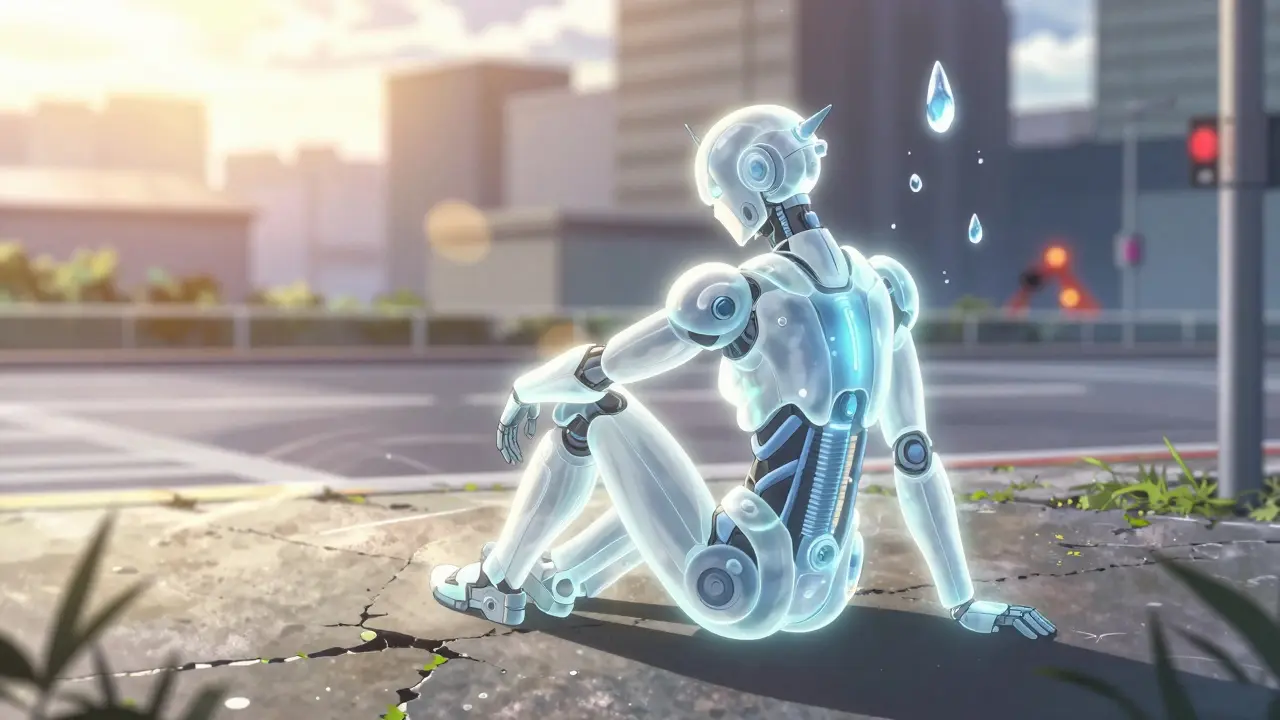
When the temperature climbs above 24°C (75.2°F), something dangerous happens to people who use drugs: their risk of overdose spikes. It’s not just about feeling hot. It’s about your body breaking down under pressure-heat, dehydration, and drugs working together in ways that can kill. This isn’t theoretical. In New York City, emergency calls for overdoses jumped 22% during heat advisories between 2018 and 2022. In places like Portland and Seattle, where summers used to be mild, overdose deaths during heat domes rose over three times higher than normal. And it’s happening because heat changes how your body handles drugs-often in deadly ways.
Why Heat Makes Overdose More Likely
Heat doesn’t just make you sweaty. It changes your body chemistry. When the temperature rises, your heart works harder just to keep you cool. Add stimulants like cocaine or meth, and your heart rate can jump 30-50% above normal. That’s a recipe for cardiac arrest. Even opioids, which slow breathing, become more dangerous because heat reduces your body’s ability to compensate for low oxygen. Studies show heat can cut respiratory compensation by 12-18%, meaning the line between a safe dose and a fatal one gets dangerously thin.
Dehydration plays a huge role too. Lose just 2% of your body weight in fluids-something that happens easily in hot weather-and drug concentrations in your blood can rise by 15-20%. That’s like taking a bigger dose without realizing it. If you’re using heroin, fentanyl, or even prescription pills, your body isn’t processing them the same way. You might think you’re being careful, but heat is silently increasing your risk.
And it’s not just about the drugs. Many people taking medications for mental health-like antipsychotics or antidepressants-find those drugs become less effective or more toxic in heat. Up to 70% of antipsychotics lose potency above 24°C. That means someone managing schizophrenia or depression might stop feeling stable, turn to other substances to cope, and end up in a worse situation.
Who’s Most at Risk
The people hit hardest aren’t just drug users-they’re people without shelter, without access to water, without support. In the U.S., about 580,000 people experience homelessness on any given night. Nearly 4 in 10 of them have a substance use disorder. They’re sleeping on sidewalks, in cars, or under bridges when the heat hits. No AC. No fan. No way to cool down.
Even those with housing aren’t safe. People living in older apartments without air conditioning, or in neighborhoods where the urban heat island effect raises temperatures 3-5°C above surrounding areas, are at higher risk. A 2023 CDC analysis found that heat-related emergency room visits among people who use drugs were 18-22% higher than average during extreme heat events. Yet, only 12 out of 50 U.S. states have even included substance use in their official heat emergency plans.
And then there’s the silence. People who use drugs often avoid shelters because they’re turned away for being “actively using.” Police in some cities have confiscated cooling supplies from outreach workers. No one talks about this. But it’s killing people.
What You Can Do: Practical Harm Reduction Steps
If you or someone you know uses drugs, here’s what works-not guesswork, not theory, but real, tested strategies:
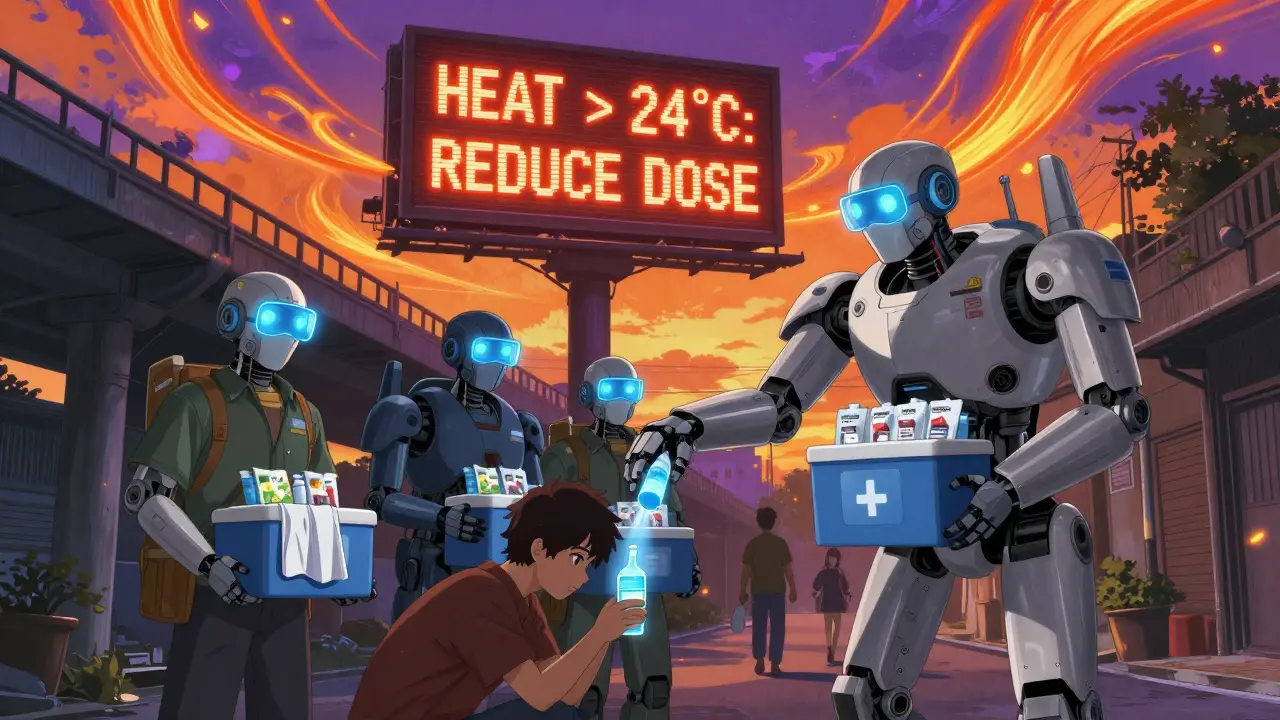
- Reduce your dose by 25-30% when temperatures hit 24°C or higher. Your body isn’t the same in heat. What felt safe last week might be lethal now.
- Hydrate like your life depends on it. Drink one cup (8 oz) of cool water every 20 minutes. Not soda. Not energy drinks. Water. This isn’t optional. NYC’s Harm Reduction Coalition cut heat-related overdose calls by 17% just by handing out water and electrolyte packets during outreach.
- Avoid mixing drugs with heat. If you’re using stimulants, don’t be outside in direct sun. If you’re using opioids, don’t use alone. Heat makes both more dangerous. Use with someone who has naloxone.
- Check your meds. If you’re on antidepressants, antipsychotics, or blood pressure meds, talk to your provider before a heatwave. Some drugs need dose adjustments when it’s hot.
- Find cool space. Libraries, community centers, and public transit stations often have AC. Go there. Even two hours of cooling can reset your body’s stress response.
What Communities Should Do
Individual actions save lives-but systemic change saves more. Cities that act differently see better results.
Philadelphia started handing out cooling kits after their 1995 heatwave killed 700 people. By 1999, they’d cut deaths to 100. Their kits included electrolyte packets, misting towels, and info on overdose signs. Today, they distribute over 2,500 annually. Vancouver went further: they opened seven air-conditioned respite centers next to supervised consumption sites. During the 2021 heat dome, they reduced heat-related overdose deaths by 34%.
Maricopa County in Arizona trained volunteers to check on people living outdoors. During the 2022 heat season, they made over 12,000 wellness checks and intervened in 287 overdoses-using naloxone, water, and shade.
The CDC now recommends every city have a Heat and Health Risk Factor Screening Questionnaire for healthcare providers. It asks about housing, medication use, drug history, and access to water. Simple questions. Big impact.
And now, federal funding is starting to catch up. In 2023, the U.S. government allocated $50 million to help states build overdose prevention into heat emergency plans. By December 2025, every state must include it-or risk losing funding.
The Bigger Picture: Climate Change Is Making This Worse
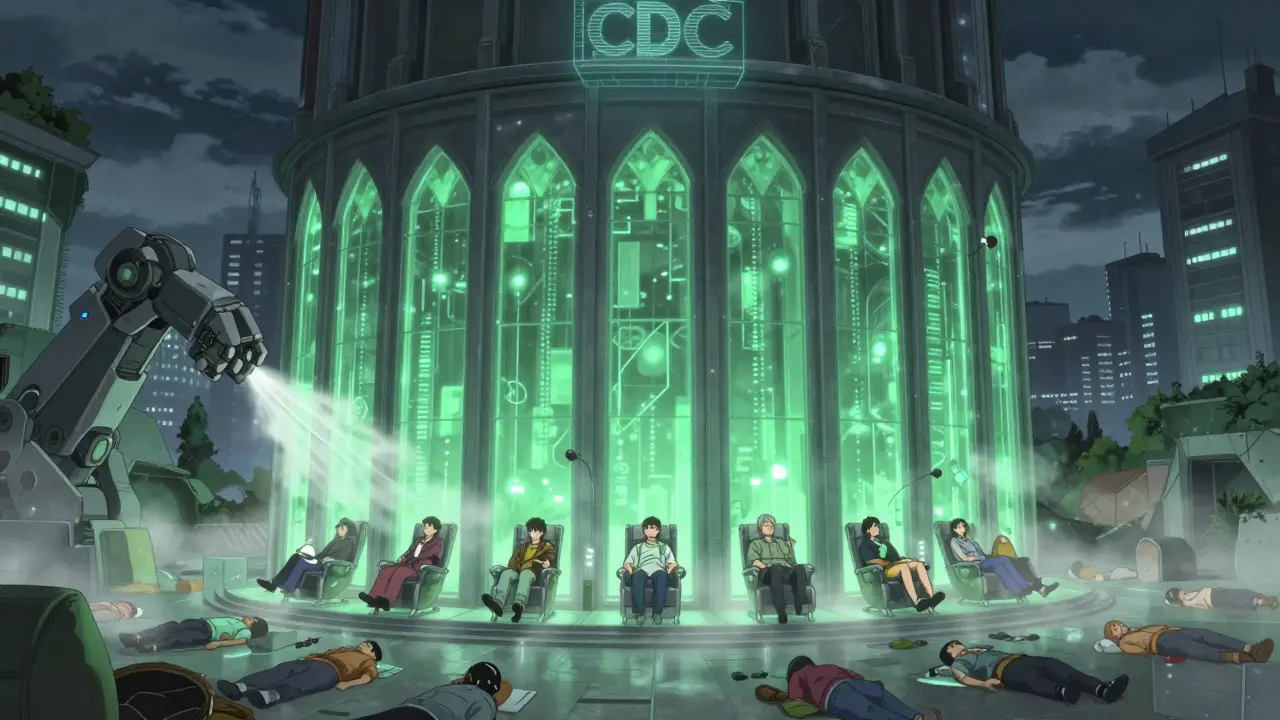
By 2050, climate models predict 20-30 more days each year where temperatures exceed the 24°C overdose risk threshold. That’s not a future problem. It’s already happening. Places like Aberdeen, Scotland, which used to have mild summers, saw record highs in 2022. What was rare is becoming normal.
Even the way drugs are processed in your body is changing. New research from the NIH suggests heat alters gut bacteria by 15-20%, which could affect how drugs are absorbed. We don’t fully understand it yet-but we know enough to act now.
Heatwaves aren’t just weather events. They’re public health emergencies. And people who use drugs are among the most vulnerable. Ignoring this link isn’t negligence-it’s deadly.
What to Do Right Now
Don’t wait for a policy change. Don’t wait for someone else to act.
- If you use drugs: cut your dose. Drink water. Find shade. Use with someone who has naloxone.
- If you know someone who uses drugs: ask if they’re okay. Bring them water. Help them find a cool place. Don’t judge. Just care.
- If you work in healthcare or outreach: start asking about heat exposure. Use the CHILL’D-Out screening tool. Push your agency to stock water, electrolytes, and cooling packs.
- If you’re part of a community group: organize a cooling station. Partner with local harm reduction groups. Distribute supplies. Talk to city council.
There’s no magic solution. But there are simple, proven steps. And they work. People are alive today because someone remembered to offer water. Because someone didn’t turn them away. Because someone cared enough to act.
Can heat really cause an overdose even if I don’t use more drugs?
Yes. Heat changes how your body processes drugs. Dehydration concentrates drugs in your blood, and heat reduces your body’s ability to handle their effects. You might be using the same amount, but your body is under more stress-making a previously safe dose dangerous.
Why are people who use drugs more affected by heat than others?
Many have co-occurring health conditions like heart disease or mental illness, which are worsened by heat. Many also lack access to air-conditioned spaces, clean water, or medical care. Some medications they take interact dangerously with heat. And substance use itself can impair judgment and thermoregulation-making it harder to recognize danger.
Is naloxone still effective during a heatwave?
Yes. Naloxone works the same way regardless of temperature. But heat can make overdoses happen faster and more severely, so having naloxone on hand and knowing how to use it is even more critical. Always carry it during hot weather, and make sure others around you know where it is.
What if I’m turned away from shelters during a heatwave?
Many shelters still have policies that exclude people actively using drugs. That’s changing, but slowly. In the meantime, look for public spaces with AC-libraries, malls, transit hubs. Some cities have opened special cooling centers for vulnerable populations. Reach out to local harm reduction groups-they often have networks to connect people with safe places to cool down.
Are there specific drugs that are more dangerous in heat?
Cocaine and methamphetamine are the most strongly linked to heat-related overdose deaths because they raise heart rate and body temperature. Opioids are dangerous too-heat reduces breathing capacity, making overdose more likely. Even alcohol and benzodiazepines can increase dehydration and impair judgment. No drug is safe in extreme heat without precautions.


Randy Harkins
February 8, 2026 AT 14:48Just want to say this is one of the most important posts I've read this year. Seriously. I work in harm reduction and we’ve been pushing for heat-related overdose protocols for years. The stats don’t lie-dehydration + stimulants = cardiac nightmare. I’ve seen it firsthand. And yeah, handing out water isn’t glamorous, but it’s saving lives. We gave out 3,000 bottles last summer alone. People cry when you hand them a bottle of water and a naloxone kit. Not because they’re grateful for the kit-because someone remembered they’re human.
Chima Ifeanyi
February 8, 2026 AT 17:48Let’s not conflate correlation with causation. Yes, overdose rates spike during heatwaves-but so do hospitalizations for asthma, hypertension, and even sunburn. The real issue is systemic neglect of marginalized populations, not some magical ‘heat-to-drug’ interaction. You’re attributing agency to environmental factors while absolving policy failures. Also, ‘24°C threshold’? That’s arbitrary. In Lagos, 24°C is a cool day. We don’t have ‘overdose spikes’ because we don’t have the infrastructure to track them. That’s the real crisis.
Ken Cooper
February 10, 2026 AT 01:38bro i just read this and i’m crying lmao. like, seriously. i used to do coke in the summer when i was 19 and i thought i was invincible. then one time i passed out on a park bench and some dude i didn’t even know gave me water and called 911. i didn’t even know he had naloxone. he was just… there. and now i’m clean. this isn’t about policy. it’s about someone seeing you and not looking away. i’m sending this to my old crew. if you’re reading this and you’re out there in the heat-drink water. even if it’s warm. even if you’re scared. we see you.
Susan Kwan
February 11, 2026 AT 14:36Oh wow. A 22% increase in overdoses during heatwaves? Shocking. Just like how 80% of people who die in car crashes were wearing seatbelts-oh wait, no, that’s not how statistics work. You’re cherry-picking data to push an agenda. And let’s be real: if people didn’t use drugs, they wouldn’t overdose. Maybe the solution isn’t more water bottles-it’s less enabling. But hey, I’m sure the ACLU will fund your misting stations.
Random Guy
February 11, 2026 AT 20:17THIS IS A TRAGEDY. A TRAGEDY I TELL YOU. I SAW A GUY ON THE STREET IN PHILLY LAST SUMMER-HE WAS LAYING ON THE PAVEMENT, FACE BLUE, AND NO ONE WAS DOING ANYTHING. I RAN TO A LIBRARY AND GOT A FAN AND A WATER BOTTLE AND HE WOKE UP AND SAID ‘THANK YOU’ AND THEN HE CRIED. I’M STILL NOT OVER IT. I’M STILL NOT OVER IT. I’M STILL NOT OVER IT.
Tom Forwood
February 13, 2026 AT 03:06As someone who grew up in Phoenix, I can tell you-heat doesn’t just affect drug users. It affects everyone. But yeah, people who use drugs? They’re the ones nobody checks on. I’ve been to 3 different shelters during heatwaves. Two turned people away for ‘active use.’ One had a fan and a water cooler. The third? They had a nurse, a naloxone box, and a guy handing out popsicles. That’s the difference between survival and statistics. We need to normalize this. Not just ‘harm reduction’-just humanity. Bring a cooler to the park. Talk to people. You don’t need a degree to be kind.
John McDonald
February 14, 2026 AT 16:12I’m a paramedic. I’ve seen this. Heat + opioids = slower breathing. Heat + meth = heart attack in 10 minutes. And yeah, hydration helps-but not if you’re dehydrated because you’ve been walking 3 miles to find shade. The real win? When cities stop treating people like problems and start treating them like neighbors. We need more AC shelters. More outreach teams. More people who show up without a badge. This isn’t politics. It’s first aid. And we’re all trained for it.
Chelsea Cook
February 15, 2026 AT 14:02Oh wow, so now we’re blaming climate change for people’s choices? Cute. Let’s get real: if you’re using fentanyl in 90-degree heat without water, you’re not ‘vulnerable’-you’re making a decision. And yes, I know people are dying. But your ‘practical steps’ read like a pamphlet from a church group. Where’s the accountability? Where’s the ‘stop using’ part? Or are we just gonna keep handing out water while the body count rises? I’m not here to coddle. I’m here to say: care, but don’t enable.
Andy Cortez
February 17, 2026 AT 10:56ok but like… who even wrote this? it’s like a 50-page grant proposal with emojis. i read like 3 paragraphs and my brain exploded. also, ‘24°C threshold’? are we in a lab? in texas, 24°C is basically AC weather. and why is everyone acting like this is new? i’ve been seeing people pass out on benches since 2015. we need less talking. more action. like… actual funding. not ‘awareness.’ and also-can we stop pretending naloxone is a magic bullet? it’s not. it’s a bandaid on a gunshot wound.
Jacob den Hollander
February 17, 2026 AT 14:12I’ve been working in outreach for 12 years. I’ve held people while they died. I’ve also held people while they woke up. The difference? Water. Shade. Someone saying ‘I’m here.’ Not a policy. Not a statistic. Just presence. I carry a cooler with water, electrolytes, and a few naloxone kits in my van. I don’t ask questions. I don’t judge. I just say, ‘You good? Want some water?’ And you know what? 8 out of 10 say yes. And sometimes, they cry. And sometimes, they say ‘thank you’ like they’ve been waiting their whole life to hear someone say it. This isn’t complicated. It’s human.
John Sonnenberg
February 19, 2026 AT 11:14Every time I see one of these posts, I think: why does this feel like a eulogy? Why are we waiting for people to die before we act? I live in a city where the library closes at 8 PM. The only AC is a bus stop. People sleep on concrete. I brought a portable fan and 50 bottles of water last week. One man asked if I’d come back tomorrow. I said yes. He didn’t say thank you. He just nodded. That’s all I need. We don’t need legislation. We need consistency. Show up. Every day. Even if no one claps.
Joshua Smith
February 20, 2026 AT 18:59Just wanted to say thanks for this. I’m a social worker and I’ve been trying to get my agency to adopt the CHILL’D-Out tool. No one’s listened. But now I’m gonna print this out and hand it to my supervisor. Maybe if I show them the stats from Philly and Vancouver… they’ll get it. I’ve seen people get turned away from shelters because they were ‘using.’ That’s not safety. That’s abandonment. We can do better. We have to.