Medication Storage Compliance Checker
Result will appear here
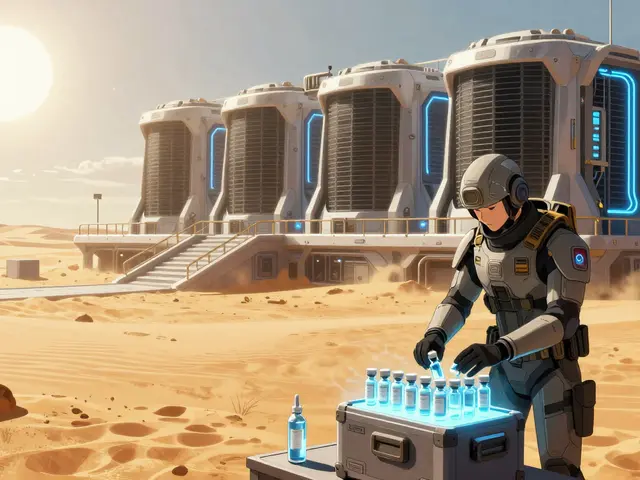
Imagine being stationed in a desert where the midday sun pushes ambient temperatures above 50°C (122°F). In this environment, a small mistake in how a vaccine or a dose of insulin is stored isn't just a pharmacy error-it's a risk to mission readiness. When medications lose their potency due to heat, soldiers are left vulnerable to preventable diseases and acute medical crises. This is why military medication safety relies on a rigorous, often grueling, system of thermal regulation known as the cold chain.
The core problem is that most pharmaceuticals are fragile. While a civilian pharmacy in a temperate city might just worry about a power outage, a deployed medic is fighting a constant battle against extreme heat and unstable power. According to data from the US Army Medical Materiel Center-Southwest Asia, some vaccines can lose up to 50% of their potency in just 30 minutes if exposed to extreme heat. When efficacy drops, the protection of the entire unit is compromised.
The Essentials of Cold Chain Management
To fight this degradation, the military uses Cold Chain Management is a system of coordinated storage and transport activities that maintain a temperature-sensitive product within a predefined range from manufacturer to patient. This isn't a suggestion; it's a mandatory protocol. The system focuses heavily on Temperature-Sensitive Medical Products (TSMPs), which include critical vaccines for Anthrax, Rabies, and COVID-19, as well as life-saving medications like insulin and epinephrine.
Depending on the drug, the required environment varies wildly. Most refrigerated items must stay between 2°C and 8°C (36°F to 46°F). Frozen storage usually requires -50°C to -15°C, while ultra-cold storage-often used for specific modern vaccines-demands a brutal -90°C to -60°C. Even "room temperature" isn't just whatever the room is; it must be controlled between 15°C and 30°C. If a product hits 31°C, it is officially in a "temperature excursion" and must be documented and evaluated immediately.
| Storage Type | Required Temperature Range | Common Examples |
|---|---|---|
| Ultra-Cold | -90°C to -60°C (-130°F to -76°F) | Select mRNA Vaccines |
| Frozen | -50°C to -15°C (-58°F to 5°F) | Specific Viral Vaccines |
| Refrigerated | 2°C to 8°C (36°F to 46°F) | Insulin, Epinephrine, Rabies Vaccine |
| Controlled Room Temp | 15°C to 30°C (59°F to 86°F) | Many Antibiotics, Tablets |
The Battle Against Heat and Logistics
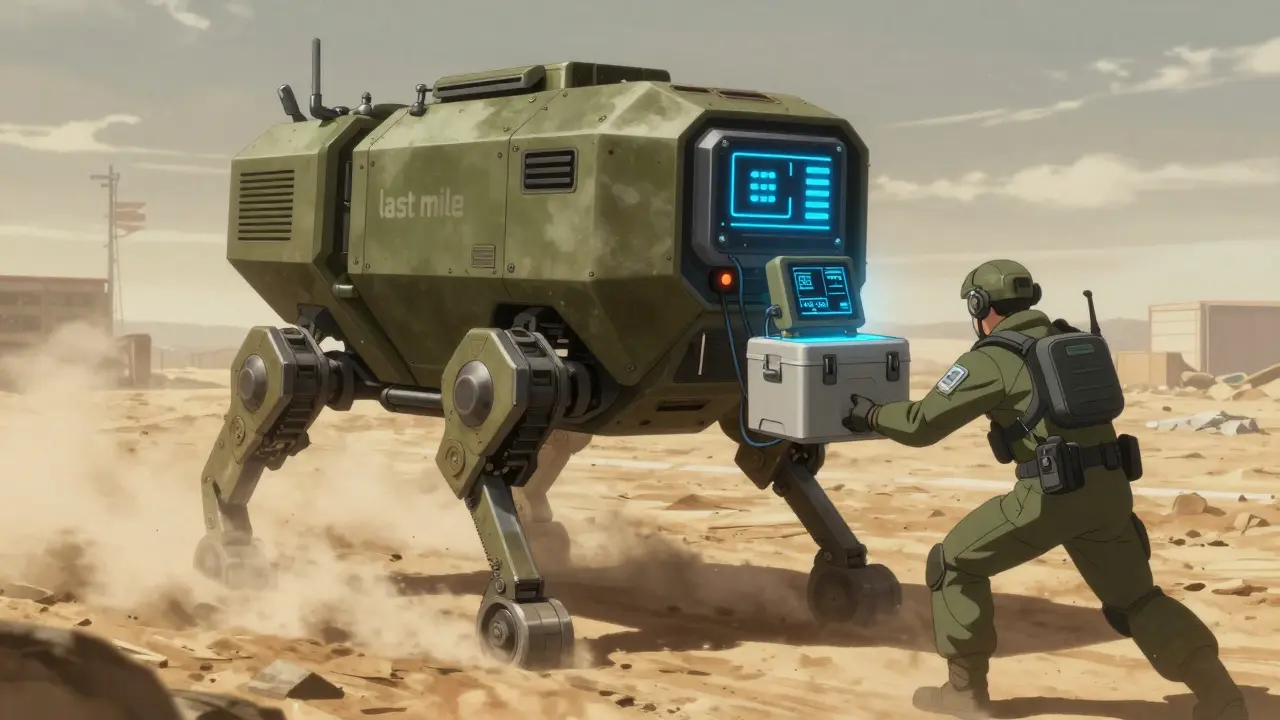
The hardest part of the cold chain isn't the main warehouse; it's the "last mile." This is the journey from a regional hub like Camp Arifjan to a forward operating base (FOB). In 2023, a staggering 72% of temperature excursions happened during this final leg of transport. When a medic is hauling a cooler across a dusty airfield in 45°C heat, the margin for error disappears.
To mitigate this, the military employs a dual-verification system. Unlike civilian pharmacies that might rely on one digital alarm, military units use both physical NIST-certified thermometers and digital recording devices like Temp-Tale is a digital temperature monitoring device used to track and validate the thermal history of a shipment during transit. These devices act as a "black box" for medications, proving whether a vaccine stayed cool for the full 72 hours of transit or if it spiked during a bumpy ride.
However, the human cost of this precision is high. Under CENTCOM policy, medics often have to manually log temperatures every six hours if they don't have remote monitoring. For many, this translates to nearly an hour of paperwork every day, which can distract from actual patient care. Despite the burden, the results are clear: the implementation of advanced monitoring reduced medication waste by $2.3 million annually across CENTCOM theaters.
Real-World Failures and Field Adaptations
Even with the best rules, things go wrong. Generator failures at forward medical facilities account for about 37% of refrigeration crashes. When the power dies in a combat zone, medics have exactly 30 minutes to move TSMPs to an alternate site before the medication is potentially compromised. This high-pressure environment has led to some clever, though unofficial, field adaptations.
Some medics have reported modifying MRE coolers with phase-change materials to keep medications at a steady 4°C for up to 12 hours in extreme heat. Others rely on specialized insulated backpacks with reusable gel packs. While these "hacks" show the resourcefulness of personnel, the official goal remains the development of truly heat-stable drugs. Research from the Iowa Harm Reduction Coalition showed that epinephrine auto-injectors can maintain 95% efficacy for three months at 70°C, but subtle changes in the chemical buffer can make the device harder to trigger, adding a mechanical risk to the chemical one.
The danger of ignoring these standards is real. During Operation Freedom's Sentinel, 15% of vaccine batches had to be thrown away because of temperature excursions. That is not just a waste of money; it's a gap in the unit's biological armor.

The Future of Stable Pharmaceuticals
The military is moving away from just "fighting the heat" and toward "beating the heat." The DARPA (Defense Advanced Research Projects Agency) is currently funding the StablePharm program. Their goal is to create medications that remain stable at temperatures up to 65°C (149°F). If they succeed, the need for bulky coolers and stressful manual logging could vanish.
We are also seeing the rise of AI-powered predictive modeling. Early tests at Fort Bragg showed that using AI to predict temperature spikes based on weather and transport data reduced excursions by 22%. By the end of 2028, the Army expects that 75% of all military pharmaceuticals will feature integrated IoT sensors, meaning a pharmacist will know the exact temperature of a vial in real-time from thousands of miles away.
What happens if a medication goes outside the 2-8°C range?
This is called a "temperature excursion." In the military, this must be documented immediately. The medication is not automatically thrown away, but it must be evaluated based on the duration and severity of the spike. If the potency is suspected to have dropped-such as with certain vaccines-the batch is discarded to avoid compromising soldier health.
Are military storage standards different from civilian ones?
The basic temperature ranges (like 2-8°C) are the same as those recommended by the World Health Organization (WHO) and the USP. The difference is the enforcement. The military requires mandatory dual verification (physical logs plus digital monitors) and stricter, more frequent documentation than most civilian pharmacies.
Which medications are most vulnerable to heat in the field?
Insulin and epinephrine are cited as the most vulnerable. Because they are often carried by individuals or stored in small field kits rather than large medical refrigerators, they are more likely to be exposed to extreme ambient temperatures.
How long can a Temp-Tale device keep a shipment safe?
The Temp-Tale device itself doesn't keep the shipment safe-it monitors the temperature. However, the insulated shipping boxes used with these devices are designed to maintain the required temperature for up to 72 hours, even when the outside air is as hot as 40°C (104°F).
Why is the "last mile" of transport so dangerous for meds?
The last mile is the transition from a climate-controlled hub to a forward operating base. This involves exposure to tarmac heat, non-refrigerated vehicles, and slower transport times, which is why over 70% of temperature failures occur during this phase.
Next Steps for Deployed Medical Personnel
If you are heading into a high-heat environment, don't rely solely on the equipment provided. Double-check your gel pack integrity and ensure your digital monitors are calibrated. If you experience a generator failure, remember the 30-minute window for TSMP transfer-every second counts when you're dealing with heat-sensitive antibiotics or vaccines.
For those managing logistics, prioritize the transition to digital logs. Removing the manual, six-hour logging requirement not only reduces human error but frees up medics to focus on the patients they are deployed to protect.