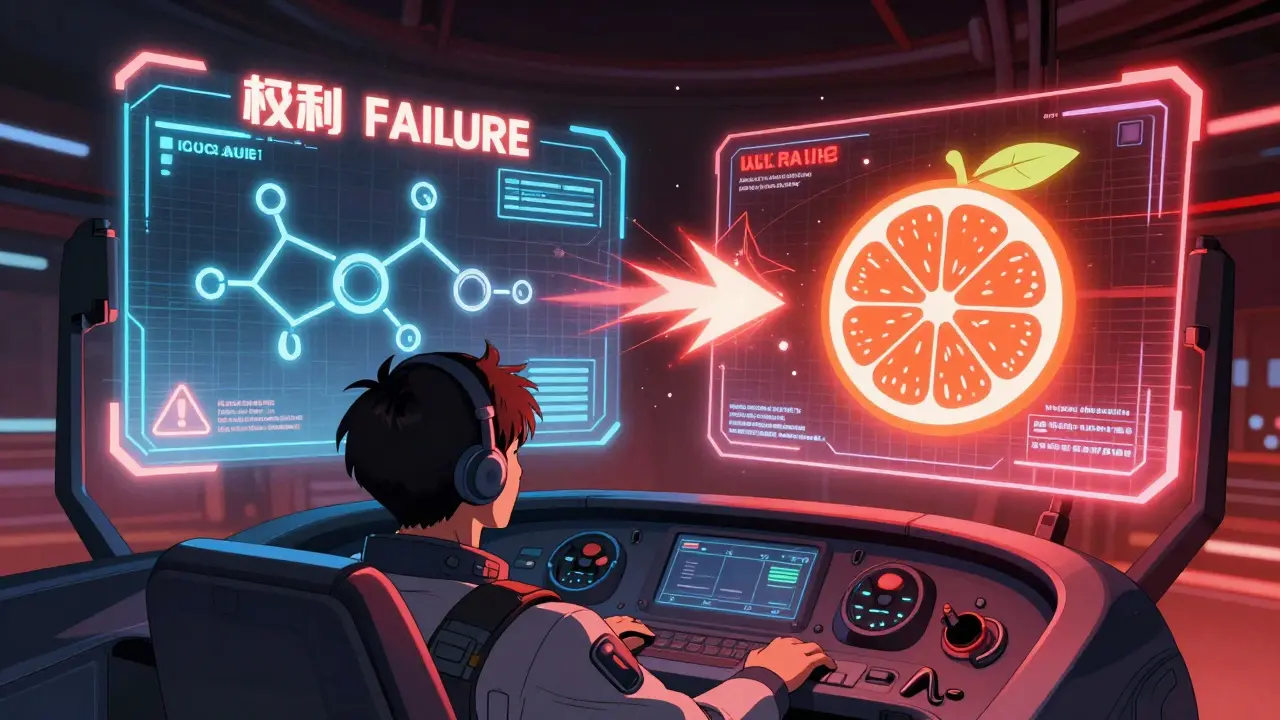
Imagine taking a pill to lower your cholesterol, then having a glass of grapefruit juice with breakfast, only to end up in the hospital with severe muscle breakdown. It sounds like a freak accident, but it's actually a textbook example of how a substance can change how a drug behaves in your body. For many of us, the pharmacy cabinet is full of different prescriptions, vitamins, and over-the-counter meds, but we rarely think about how they play together. The truth is that drug interactions aren't just a medical footnote-they are a serious safety risk that accounts for about 6.5% of all hospital admissions in the U.S.
What exactly is a drug interaction?
At its simplest, a drug interaction happens when a substance-whether it's another medication, a specific food, a herbal supplement, or even a health condition you already have-changes the effect of a drug. This change can go two ways: it can make the medication less effective, meaning your condition isn't being treated, or it can make the drug dangerously potent, leading to an overdose effect even if you took the correct dose.
Drug Interactions is a pharmacological phenomenon where the effect of a drug is altered by the co-administration of another drug, food, or herbal product. These interactions are a primary driver of Adverse Drug Events, which are the harmful or unintended responses to a medication. To give you an idea of the scale, research published in JAMA suggests that serious interactions lead to roughly 106,000 deaths every year. That's why knowing what's in your system is a non-negotiable part of staying healthy.
The three main types of interactions you should know
Not all interactions are the same. They generally fall into three buckets, depending on what the drug is interacting with.
- Drug-Drug Interactions: This is when two or more medications clash. This is the most common type, making up about 80% of clinically significant cases. For example, taking two different sedatives might lead to excessive drowsiness or respiratory depression.
- Drug-Food/Drink Interactions: This happens when what you eat or drink changes how a drug works. The most famous example is grapefruit juice, which blocks certain enzymes in your gut, potentially increasing the levels of some statins in your blood by 300-600%.
- Drug-Condition Interactions: This is when an existing health issue changes the way a drug works. For instance, if you have asthma, certain beta-blockers used for blood pressure might block the same receptors that your asthma rescue inhaler needs to work, making your breathing worse.

How it works: The science of pharmacokinetic and pharmacodynamic shifts
If you're wondering why this happens, it comes down to how your body processes chemicals. There are two main mechanisms at play here.
First, there are pharmacokinetic interactions. This is all about how the drug moves through your body-how it's absorbed, distributed, metabolized, and excreted. Most of this happens in the liver via the Cytochrome P450 (or CYP450) enzyme system. Specifically, an enzyme called CYP3A4 is responsible for processing about half of all prescription drugs. If another drug blocks this enzyme, the first drug builds up in your system. A real-world example is taking fluconazole (an antifungal) while on simvastatin; the antifungal inhibits the enzyme, which can spike the levels of simvastatin by up to 2,000%, potentially causing rhabdomyolysis (severe muscle breakdown).
Then there are pharmacodynamic interactions. This isn't about the drug's concentration in your blood, but rather how the drug acts at its target site. These can be additive (1+1=3, where the effect is amplified), antagonistic (where one drug cancels out another), or simply altered responses. For example, using NSAIDs (like ibuprofen) can cause your body to retain salt and fluid, which directly fights against the work of diuretics used to treat heart failure.
| Medication | Common Interacting Substances | Potential Risk | Interaction Count (Approx) |
|---|---|---|---|
| Warfarin | Antibiotics, Antifungals, Cranberry Juice | Uncontrolled bleeding or clotting | 600+ |
| Digoxin | Certain Diuretics, Antibiotics | Toxicity / Heart Arrhythmia | 300+ |
| Levothyroxine | Calcium or Iron Supplements | Reduced absorption/Hypothyroidism | 200+ |
Why the elderly are at higher risk
Age changes how our bodies handle medication. Older adults often deal with Polypharmacy, which is the concurrent use of multiple medications-often five or more. According to the American Geriatrics Society, elderly patients experience drug interactions at three times the rate of younger people. This is often due to a combination of declining kidney and liver function, which slows down drug clearance, and the complexity of seeing multiple specialists who might not be communicating with each other.
To combat this, doctors often use the Beers Criteria, a guideline that lists medications that are potentially inappropriate for older adults. Implementing these guidelines has been shown to reduce adverse drug events by about 27% in geriatric populations. If you're managing care for an aging parent, asking their doctor if their meds align with the Beers Criteria is a great starting point.

Practical steps to keep yourself safe
You don't need a pharmacy degree to avoid dangerous interactions, but you do need a system. The biggest mistake people make is assuming that "natural" means "safe." Herbal supplements and vitamins are just as capable of messing with your prescriptions as another chemical drug.
Here are a few rules of thumb for medication safety:
- Use one pharmacy: If you get your heart meds at one place and your antidepressants at another, the computer systems can't flag interactions. Using a single pharmacy allows for a comprehensive Drug Utilization Review.
- Keep a Master List: Write down every prescription, OTC drug (like aspirin or allergy meds), and supplement (like St. John's Wort or fish oil), including the exact dose and how often you take it.
- Time your doses: Some interactions are just about absorption. If a supplement like calcium interferes with your thyroid medication, taking them at least 2 hours apart can often solve the problem.
- Ask the "Interaction Question": Whenever you get a new prescription, ask your pharmacist: "Does this interact with anything else I'm taking, including my vitamins or a specific food?"
If you want to do your own research, there are professional-grade tools available. While consumer sites like WebMD are okay for a quick glance, physicians often rely on Medscape or the FDA-approved GoodRx Drug Interaction Checker for more detailed clinical guidance. Just remember that these tools are starting points-not a replacement for a doctor's advice.
The future of safety: Personalized medicine
We are moving away from a "one size fits all" approach to dosing. The next big leap is Pharmacogenomics, which is the study of how your unique genes affect your response to drugs. For instance, some people are "slow metabolizers" because of a variant in their CYP450 genes, meaning a standard dose of a drug could become toxic in their system while being ineffective for someone else.
By 2026, we expect genetic testing for these variants to become standard for high-risk medications. This means your doctor won't just look at what other drugs you're taking, but will look at your DNA to predict interactions before you ever take the first pill. It's a shift toward a more dynamic, patient-specific risk model that accounts for age, genetics, and organ function.
Can vitamins and supplements cause drug interactions?
Yes, absolutely. Many people assume supplements are harmless because they are "natural," but they can be very potent. For example, St. John's Wort can speed up the metabolism of many drugs, making them less effective, while Vitamin K can counteract the blood-thinning effects of Warfarin, increasing the risk of a blood clot.
What should I do if I suspect I'm having a drug interaction?
If you notice new or unusual symptoms after starting a new medication or supplement, contact your healthcare provider immediately. Do not stop taking a prescribed medication without consulting your doctor first, as abrupt cessation can sometimes be more dangerous than the interaction itself.
Does drinking alcohol count as a drug interaction?
Yes. Alcohol is a substance that can either amplify or inhibit the effects of many drugs. For instance, combining alcohol with benzodiazepines or opioids can lead to dangerous respiratory depression or extreme sedation, which can be fatal.
Are all drug interactions dangerous?
Not all of them. Some interactions are "minor" and have little clinical impact. Others are "significant," meaning they require a dose adjustment or close monitoring. However, "contraindicated" interactions are the most dangerous and mean the two substances should never be used together.
Why doesn't my doctor always catch every interaction?
Modern medicine is incredibly complex. Many interactions are only discovered after a drug is released to the general public (post-marketing surveillance) because clinical trials often exclude elderly patients or those with multiple chronic conditions. Additionally, if you see different specialists who don't share the same electronic health records, a gap in communication can occur.