| Source | Reliability | Speed | Best For |
|---|---|---|---|
| FDA.gov | Gold Standard | Real-time | Absolute confirmation |
| Recalls.gov | High | Delayed (12-36h) | Cross-agency searches |
| Manufacturer Portals | High | Fast | Specific lot details |
| Social Media | Low | Instant | Initial alerts only (must verify) |
The Red Flags of Fake Recall News
Not every "warning" online is a real recall. Many people confuse a "market withdrawal"-where a company voluntarily pulls a product for a minor reason-with a formal FDA recall. This confusion leads thousands of patients to panic unnecessarily every year. If you see a post on Facebook or X (formerly Twitter), look for these missing elements. If they aren't there, be extremely skeptical. Legitimate alerts always have a specific Recall Event Number. This is a 16-digit code that follows a strict format: 'RE-XXXX-XXXX-XXXXXX'. If a post just says "Metformin is recalled" without a specific event number or lot number, it's likely too vague to be useful and could be misinformation. Furthermore, real notices specify a Recall Classification. A Class I recall is the most serious, meaning there's a reasonable probability that the drug could cause serious health problems or death. If the post doesn't mention whether it's Class I, II, or III, it's missing critical context. Watch out for formatting. Official FDA notices use a specific Pantone 294 blue seal and black text. While scammers are getting better at mimicking this, the lack of a unique Firm Notification Distribution Code (FNDC)-which starts with an 'F' followed by eight characters-is a huge red flag. Most fraudulent alerts originate on social media and omit these technical details entirely to cast a wider, more alarming net.Your 5-Step Verification Protocol
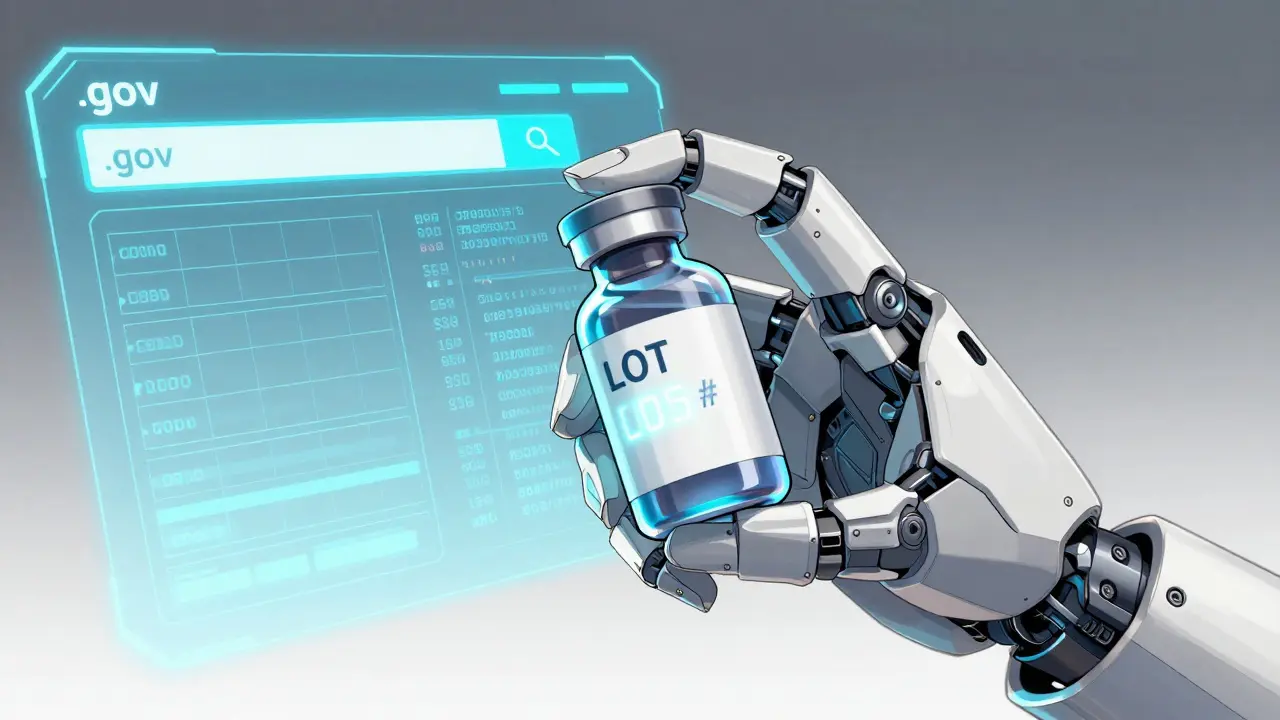
When you encounter a drug warning, don't panic. Follow this systematic approach to find out if your specific medication is actually affected. This process takes only a few minutes but can prevent a medical emergency.- Find Your Lot Number: Look at the bottom edge of your medication bottle or the side of the blister pack. You're looking for a 10-15 character alphanumeric sequence (e.g., 'LOT# ABC1234567'). Without this number, you cannot verify if your specific batch is recalled.
- Search the FDA Recall Index: Go to fda.gov/recalls. Enter the brand name and the manufacturer. For the best results, always include the manufacturer's name; otherwise, the search may return too many unrelated results.
- Cross-Reference the Manufacturer: Once you find the official FDA notice, it will list the manufacturer's contact info. Call them directly using the number provided in the FDA announcement-not a number you found via a Google search, as phishing sites often mimic company domains.
- Check the Friday Enforcement Report: Every Friday at 2:00 PM Eastern Time, the FDA updates its Enforcement Report. If you're unsure about a newer alert, this report provides the most granular data, including the exact reason for the recall, such as specific contaminant levels (e.g., NDMA levels exceeding 96 ng/day).
- Call the Pros: If you're still confused, contact the FDA's Division of Drug Information at 1-855-543-3784. Provide them with the Recall Event Number, and they can confirm the status of your drug within a few business hours.
Comparing Your Verification Options
Depending on how much time you have and how urgent the situation is, you might use different tools. However, not all tools are created equal. For instance, the FDA's own social media accounts, like @FDArecalls, are great for immediate warnings, but they only cover about 43% of total recalls-mostly the most dangerous Class I events. If you rely solely on Twitter, you'll miss the majority of smaller safety warnings. Third-party apps like GoodRx Recall Checker are convenient because they often include lot number scanners. While they are generally accurate, they can lag behind official announcements by nearly nine hours. In a medical emergency, nine hours is a long time. On the other hand, state-level systems, such as the California State Board of Pharmacy's email alerts, are incredibly fast-often delivering news within two hours of FDA authorization-but they only cover products distributed in that specific state. For the most comprehensive view, Recalls.gov is a powerful tool because it aggregates data from six different federal agencies. The trade-off is speed; it can take 12 to 36 hours longer than the agency-specific portals to update. If you need an answer *now*, go straight to the source (FDA.gov).The Danger of the "Quiet Period"
There is a hidden window of time that makes you vulnerable to misinformation. The FDA often has a "quiet period" (documented in their Recall Procedures Manual) that can last up to 72 hours. This is when the agency coordinates with the manufacturer to ensure the recall is handled correctly before the public is notified. During this window, "leaks" or rumors often hit social media. Because the official FDA site hasn't been updated yet, these rumors look like "exclusive" news. This is exactly when fraudulent alerts peak. If you see a warning that isn't yet on the official FDA site, don't assume the FDA is just "slow." It's more likely that the information is unverified or a total fabrication. The best move is to wait for the official Event Number to be released.
Looking Ahead: QR Codes and Blockchain
Verifying drugs is about to get a lot easier. By December 31, 2026, the Recall Modernization Act will require QR codes on all prescription labels. Instead of squinting at tiny lot numbers and typing them into a search bar, you'll simply scan the code with your phone to get an instant safety status. California has already piloted this, and nearly 90% of users found it much more reliable than manual searching. Beyond QR codes, the industry is moving toward blockchain technology through the Pharmaceutical Supply Chain Integrity Network. This creates an immutable record of every drug batch from the factory to the pharmacy. In the future, this will eliminate the "verification gap" entirely, as the history of your specific bottle will be digitally locked and verifiable in seconds. However, as technology improves, so do the scams. We are seeing a rise in AI-generated "deepfake" recall notices that look identical to official documents but lead to malicious websites. The golden rule remains: if the notice doesn't lead you to a .gov website or a verified government phone number, don't trust it with your health.What should I do if I find out my drug was recalled?
First, do not stop taking your medication immediately unless the recall notice specifically says it is life-threatening. Stopping certain medications abruptly can cause severe withdrawal or a relapse of your condition. Instead, call your pharmacist or doctor immediately and provide them with the lot number from your bottle. They will tell you if your specific batch is affected and provide a safe alternative.
How can I tell the difference between a recall and a market withdrawal?
A recall is a formal action, often overseen by the FDA, because the product may cause health problems or doesn't meet safety standards. A market withdrawal is a voluntary action by the manufacturer for reasons that don't pose a safety risk (like a labeling error or a minor quality issue). Only recalls are assigned a Recall Event Number (RE-XXXX-XXXX-XXXXXX) and a Class (I, II, or III).
Are social media alerts from the FDA reliable?
Yes, alerts from verified accounts like @FDArecalls are legitimate, but they are not comprehensive. They typically only announce high-priority Class I recalls. To ensure your medication is safe from all types of recalls, you must still check the full FDA Recall Index at fda.gov.
Where can I find the lot number on my medication?
Lot numbers are usually printed on the bottom edge of the prescription bottle label or stamped directly onto the foil backing of blister packs. They are typically 10-15 characters long and are often preceded by the letters "LOT" or "L".
What is a Class I drug recall?
A Class I recall is the most urgent. It occurs when there is a reasonable probability that the use of, or exposure to, a violated product will cause serious adverse health consequences or death. These require immediate verification and medical consultation.
Next Steps for Different Users
- For Patients: Set up a direct alert system through your local pharmacy. Most independent pharmacies use the National Drug Code Directory and FDA feeds to notify patients personally via phone or email.
- For Caregivers: Maintain a simple list of the lot numbers for all medications your loved one takes. This saves critical time if a recall is announced and you need to verify safety quickly.
- For Tech-Savvy Users: Check the FDA's Enforcement Report every Friday. It's the most reliable way to see the technical reasons behind recalls and catch issues before they hit the mainstream news.