When your prescription runs out and you go to pick it up, you might not even notice the difference between the brand-name pill and the one in the bottle. But here’s the thing: that generic pill might not be a traditional generic at all. It could be an authorized generic - and it’s more common than you think.
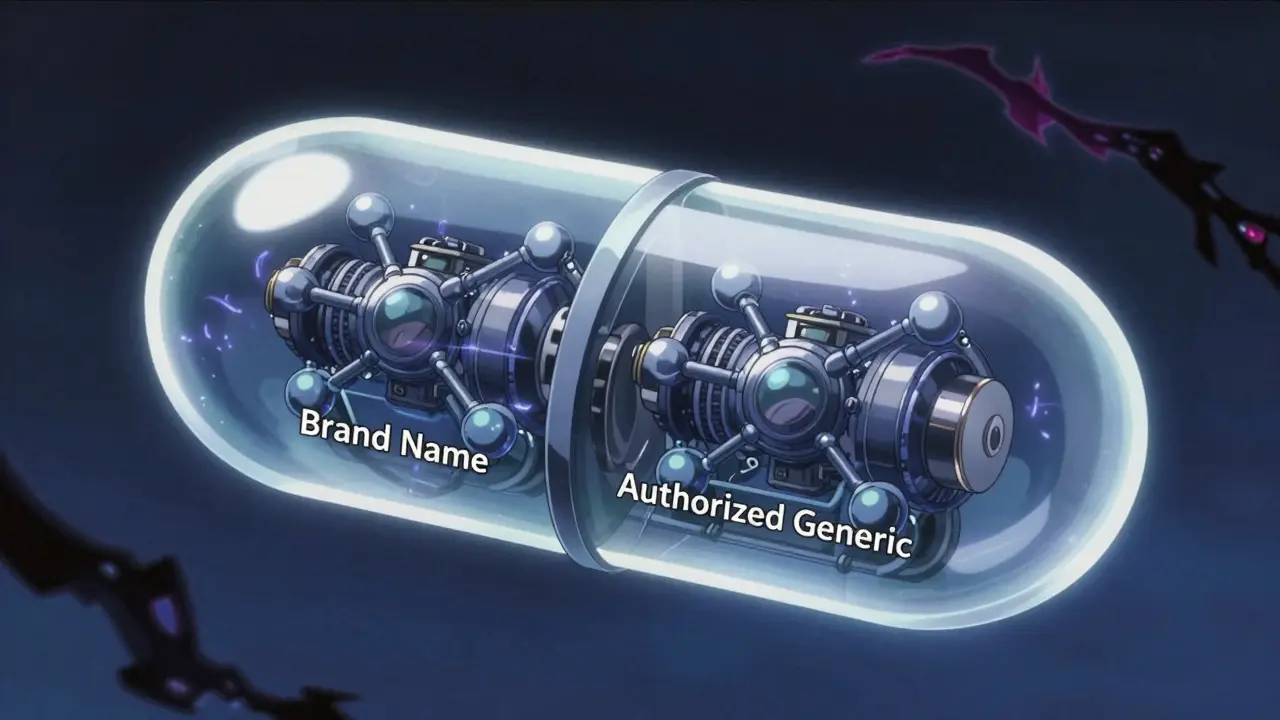
Authorized generics aren’t just cheaper versions of brand-name drugs. They’re the exact same drug, made in the same factory, with the same ingredients, by the same company that made the original. The only difference? No brand name on the label. No fancy packaging. Just a plain bottle with the active ingredient and dosage clearly printed.
So do people actually choose them? And if they’re identical to the brand, why do so many patients still end up with traditional generics? Let’s cut through the confusion and look at what really happens when patients are handed these pills.
What Exactly Is an Authorized Generic?
An authorized generic isn’t created through the usual generic approval process. Most generics go through the FDA’s Abbreviated New Drug Application (ANDA), which requires proving they’re bioequivalent to the brand - meaning they work the same way in the body. But authorized generics skip all that.
They’re made under the brand company’s original New Drug Application (NDA). That means they’re produced on the same生产线, with the same equipment, using the exact same formula. The FDA confirms this in the Orange Book - the official list of approved drug products - where authorized generics are marked as "products with no applicant." That’s their fingerprint.
For example, if you take a brand-name drug like Lipitor (atorvastatin), the authorized generic version is made by Pfizer - the same company - and contains identical active and inactive ingredients. There’s no guesswork. No variability. Just the same pill in a different bottle.
This matters because traditional generics sometimes use different fillers, coatings, or binders. Those aren’t harmful, but they can change how a pill feels in your mouth, how quickly it dissolves, or even how it affects people with sensitivities. A 2018 study tracking 210,000 patients found that those switched to traditional generics were 28.7% more likely to go back to the brand-name drug than those switched to authorized generics (22.3%). Why? Because the authorized version felt - and worked - exactly the same.
Why Do Patients Stick With Authorized Generics?
Most patients don’t actively choose between authorized and traditional generics. Insurance plans and pharmacy benefit managers (PBMs) decide what gets dispensed. But when given a choice - or when they notice the difference - many patients stick with authorized generics.
A Consumer Reports survey in 2022 gave 1,200 people unlabeled pills - brand, authorized generic, and traditional generic - and asked them to guess which was which. Seventy-eight percent couldn’t tell the difference between the brand and the authorized generic. Only 52% could tell the difference between the brand and the traditional generic.
That’s not coincidence. It’s biology. When the inactive ingredients match - the dyes, the fillers, the coating - your body doesn’t notice the switch. Reddit threads from r/pharmacy show similar patterns: 63% of 87 respondents said they couldn’t tell the difference between brand and authorized generics. Only 11% reported any side effects after switching to authorized generics.
And here’s the kicker: patients who switch to authorized generics are less likely to stop taking their medication. The 2018 BMJ study found that authorized generics had a 22.3% lower "switchback" rate than traditional generics. That means fewer people quit their meds because they felt something was "off." That’s huge for chronic conditions like high blood pressure, diabetes, or depression.
But Why Don’t More People Get Them?
Here’s where it gets messy. Authorized generics enter the market right after the brand patent expires - often before traditional generics even start. They’re fast. They’re cheap. And they’re made by the brand company itself.
But here’s the catch: brand companies use authorized generics to block competition. The FTC found that some manufacturers threaten to launch their own authorized generic unless a traditional generic company agrees to delay entering the market. That’s called a "pay-for-delay" deal. And it’s legal.
So while authorized generics lower prices by 4-8% at retail and 7-14% at wholesale during the first 180 days, they also delay the arrival of cheaper traditional generics. After that window, traditional generics usually drop 15-25% lower than authorized generics. That’s why, after the exclusivity period ends, 65-75% of prescriptions shift to traditional generics.
Patients don’t always know this. They see a lower price and assume it’s the best deal. But if the authorized generic is still priced higher than what’s coming next, they’re getting stuck with a mid-tier option.
Price vs. Trust: The Real Trade-Off
Price is the biggest driver of generic choice - but trust matters more than most people realize.
AmerisourceBergen’s 2022 analysis showed that after the 180-day exclusivity period, traditional generics dominate because they’re cheaper. But the same data shows that when authorized generics are available early, patients are more likely to stay on therapy. That’s because they don’t have to relearn how the pill works, how it feels, or whether it’s "the real thing."
For someone on a maintenance drug like metformin or lisinopril, that stability is worth something. A 2022 Drug Patent Watch case study on entacapone showed that when authorized generics entered, Medicaid prices dropped 8.4-10.3%, and on-invoice prices fell by 13-18%. That’s real savings - without the anxiety of switching.
But if you’re on a tight budget and have no insurance, you’ll likely end up with the cheapest option - even if it’s a traditional generic. That’s fine. But if you’ve had bad reactions to other generics before, the authorized version might be your safest bet.
How to Tell If You’re Getting an Authorized Generic
You won’t see "authorized generic" on the bottle. Pharmacists might not even mention it unless you ask.
Here’s how to find out:
- Check the manufacturer name on the label. If it’s the same company as the brand (e.g., Pfizer for Lipitor), it’s likely an authorized generic.
- Ask your pharmacist: "Is this made by the same company that makes the brand?"
- Look up the drug in the FDA’s Orange Book. Authorized generics are listed under the brand’s NDA with "No Applicant" in the applicant field.
Most pharmacies don’t label them differently. So if you’re switching from brand to generic and feel unsure, don’t assume it’s a traditional generic. Ask.
What’s Changing Now?
Authorized generics now make up about 12% of all generic prescriptions dispensed in the U.S. - up from 8% in 2015. Seven of the top 10 drug companies - including Pfizer, Merck, and AbbVie - now use them regularly.
The FDA is pushing for more transparency. Their 2023 draft guidance wants pharmacies and insurers to clearly identify authorized generics on receipts and formularies. Congress is watching too. The Congressional Budget Office warned in 2023 that if brand companies keep using authorized generics to delay competition, Medicare Part D could pay $1.2 billion more by 2027.
Meanwhile, patients are quietly voting with their behavior. When they can’t tell the difference - and the price isn’t much higher - they stick with authorized generics. And that’s not because they’re fooled. It’s because they’ve learned, through experience, that sometimes the most reliable version of a drug is the one made by the original maker.
Bottom Line
People don’t "choose" authorized generics because they’re marketed that way. They choose them because they work - and they feel familiar. If you’re switching from a brand-name drug and your prescription comes in a plain bottle from the same manufacturer, you’re probably getting an authorized generic. And if you’ve had trouble with other generics before, that’s a good sign.
Don’t assume cheaper always means better. Sometimes, the best option isn’t the cheapest - it’s the one you can trust.