

Many people think they’re allergic to a drug-maybe penicillin, sulfa, or ibuprofen-because they had a rash or stomach upset years ago. But here’s the truth: 9 out of 10 people who say they’re allergic to penicillin aren’t actually allergic at all. Skin testing can prove it. And if you’re told you’re allergic to a common antibiotic, that mislabeling could mean you get stronger, more expensive, or riskier drugs instead. That’s not just inconvenient-it can be dangerous.
What Is Drug Allergy Skin Testing?
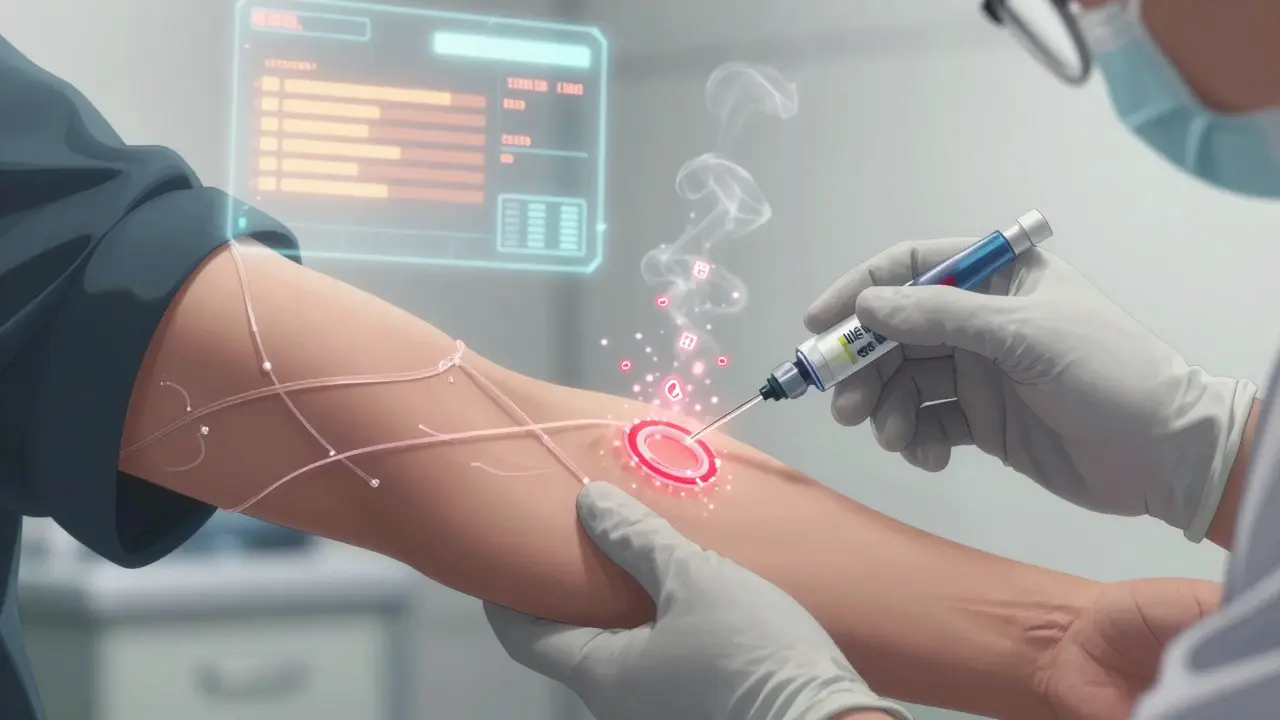
Drug allergy skin testing is a safe, quick way to find out if your body reacts to a specific medication. It’s not a guess. It’s science. Doctors use tiny amounts of the drug-diluted in saline-to see if your skin reacts like it does to a bee sting or pollen. If it does, you might be allergic. If it doesn’t, you probably aren’t.
There are three main types of skin tests:
- Skin prick test (SPT): A drop of the drug solution is placed on your skin, then a tiny needle lightly pricks the surface. It feels like a quick mosquito bite.
- Intradermal test (IDT): A small amount of the drug is injected just under the skin, creating a tiny bubble. This is more sensitive and often used if the prick test is negative.
- Patch test: A patch with the drug is taped to your back for 48 hours. This checks for delayed reactions, like rashes that show up a day or two later.
These tests don’t make you sick. The drug stays in the top layer of your skin. It doesn’t go into your bloodstream. That’s why serious reactions are extremely rare.
How Do You Know If You Need It?
You might be a good candidate for skin testing if:
- You were told you’re allergic to penicillin or another antibiotic after a rash, nausea, or hives-especially if it happened years ago.
- You’ve had a reaction to a drug but never saw a specialist to confirm it.
- You’re about to need a drug you’re labeled allergic to, and your doctor wants to be sure.
- You’ve had multiple infections because you couldn’t take the best antibiotic due to a suspected allergy.
Not all drug reactions are allergies. A stomach ache from an antibiotic? That’s likely a side effect. A rash that shows up a week later? That might be a delayed reaction, not an IgE-mediated allergy. Skin tests work best for immediate reactions-ones that happen within minutes to an hour after taking the drug.
What Happens During the Test?
The whole process takes about 45 to 60 minutes. Here’s what you can expect:
- You’ll sit in a chair, and your forearm or back will be cleaned and marked with a permanent marker.
- The technician will place drops of different substances: the drug you’re being tested for, a positive control (histamine), and a negative control (saline).
- For the skin prick test, a small needle gently touches each drop, making a tiny mark. You won’t bleed. You might feel a slight sting.
- After 15 minutes, they’ll check for redness or swelling. A bump larger than the histamine control means a positive result.
- If the prick test is negative, they’ll move to the intradermal test. A tiny needle injects a small amount of the drug just under the skin. You’ll wait another 15-20 minutes.
- They’ll measure any bumps. A 3 mm increase in size is considered positive.
They’ll take photos of your skin before and after. That way, there’s a clear record. You might feel itchy where the histamine was applied-that’s normal. It’s supposed to happen. It means the test is working.
What If the Test Is Negative?
A negative result is powerful. It means you’re very unlikely to have a true allergy to that drug. For penicillin, if both the skin prick and intradermal tests are negative, the chance you’re allergic is less than 1%. That’s why doctors often follow up with a drug challenge-giving you a small dose of the drug under observation. If you tolerate it, you’re officially delabeled.
Delabeling changes your medical future. You can now safely take penicillin, amoxicillin, or related antibiotics. That means fewer side effects, lower costs, and better outcomes. Hospitals that do this routinely see fewer cases of dangerous infections like C. diff because they’re using the right, narrow-spectrum antibiotics instead of broad-spectrum ones.
What If the Test Is Positive?
If your skin reacts, it means your immune system recognizes the drug as a threat. That doesn’t mean you’ll go into anaphylaxis every time you take it-but you’re at higher risk. You’ll be advised to avoid that drug and any similar ones. Your medical record will be updated, and you may be given an allergy bracelet.
But even with a positive result, there’s hope. Some drug allergies fade over time. You might be able to get retested in 5-10 years. And for some drugs, like certain antibiotics or painkillers, there are safe alternatives.
What You Must Do Before the Test
Antihistamines-like Claritin, Zyrtec, Benadryl, or even cold and allergy medicines-can block your skin’s reaction. That means a false negative. You must stop them 5 to 7 days before your test. Check with your doctor about every medication you take, even over-the-counter ones.
You should also avoid:
- Topical steroids on the test area (arms, back)
- Large amounts of caffeine (it can affect skin reactivity)
- Stress or extreme fatigue (it can make results less reliable)
Wear a short-sleeve shirt. You’ll need access to your arms or back. No lotions or creams on the test area the day of the test.
Why Isn’t This Done More Often?
It’s surprising, but most doctors don’t offer skin testing. Why? Because it takes training. Not every clinic has the right staff, reagents, or emergency equipment. In the U.S., only 30-40% of people with suspected penicillin allergies get tested. In France and Germany, it’s over 70%.
But things are changing. In 2022, the European Medicines Agency approved standardized penicillin test kits. That means more reliable results. And in January 2023, the U.S. National Institute of Allergy and Infectious Diseases updated guidelines to include opioid allergy testing-something once considered too risky.
It’s also becoming part of antimicrobial stewardship programs. Hospitals that test patients for drug allergies reduce broad-spectrum antibiotic use by up to 30%. That’s not just good for you-it’s good for everyone, by slowing down antibiotic resistance.

Limitations and Risks
Skin testing isn’t perfect. It’s very accurate for penicillin and some other beta-lactam antibiotics. But for drugs like cephalosporins, NSAIDs (like ibuprofen), or sulfa drugs, the tests are less reliable. A negative result doesn’t always mean you’re safe.
Also, skin tests don’t work for delayed reactions. If you got a rash three days after taking a drug, a skin prick test won’t help. You’ll need a patch test-or sometimes, a carefully monitored drug challenge.
There’s a small risk of a reaction during testing. That’s why it’s done in a clinic with staff trained to handle anaphylaxis. Epinephrine is always on hand. But serious reactions are rare. Most people feel only mild itching or redness.
Real Stories, Real Results
One patient, a 45-year-old woman, was told she was allergic to penicillin after a rash as a child. She avoided all penicillin-based antibiotics for 25 years. When she developed a severe urinary tract infection, she was given a strong, expensive antibiotic with more side effects. After skin testing showed no allergy, she took amoxicillin without issue. Her infection cleared. Her bills dropped. Her doctor called it a "life-changing" result.
On the flip side, a man in 2022 had negative skin tests for cephalosporins. He took one anyway-and went into anaphylaxis. That’s why testing isn’t the only step. It’s part of a bigger picture. Doctors use test results along with your history, symptoms, and sometimes a drug challenge to make the final call.
What Comes Next?
If you think you might be mislabeled as allergic to a drug, talk to your doctor. Ask: "Can I be referred to an allergist for skin testing?" Most primary care doctors don’t do this themselves-but they can refer you. Allergists are trained in these tests and know how to interpret them safely.
And if you’ve already had the test? Make sure your medical records reflect the result. Don’t let an old note in your chart keep you from the right treatment. Ask for a letter or summary to give to future doctors.
Drug allergy skin testing isn’t magic. But it’s one of the most effective tools we have to stop unnecessary fear, avoid harmful drugs, and get you the right treatment-fast.
Can I take antihistamines before a drug allergy skin test?
No. You must stop all antihistamines-prescription and over-the-counter-5 to 7 days before your test. This includes Zyrtec, Claritin, Allegra, Benadryl, and even some sleep aids or cold medicines. These drugs block your skin’s reaction, which can give you a false negative result. Always check with your doctor about every medication you’re taking.
Does skin testing hurt?
It’s usually mild. The skin prick test feels like a quick pinch or mosquito bite. The intradermal test involves a small injection, which can sting for a few seconds. The histamine control might make your skin itchy for 10-15 minutes, but that’s normal. Most people say it’s less uncomfortable than a blood draw.
How accurate is drug allergy skin testing?
It’s very accurate for penicillin and related antibiotics-over 95% negative predictive value when both skin prick and intradermal tests are negative. That means if both tests are negative, you’re almost certainly not allergic. For other drugs like cephalosporins or NSAIDs, accuracy drops to 30-50%. The test is best for immediate reactions (within an hour), not delayed rashes.
Can I be allergic to a drug even if the skin test is negative?
Yes. Skin tests are not perfect. For some drugs, especially non-beta-lactam antibiotics and NSAIDs, the test may miss an allergy. That’s why doctors sometimes follow up with a drug challenge-giving you a small, controlled dose under supervision. A negative skin test reduces risk but doesn’t eliminate it entirely.
How long does a skin test take?
The entire process takes about 45 to 60 minutes. You’ll wait 15-20 minutes after the skin prick test, then another 15-20 minutes after the intradermal test. You’ll be monitored the whole time. You can leave right after the final check if there’s no reaction.
Is drug allergy skin testing covered by insurance?
Most insurance plans in the U.S. cover skin testing for drug allergies, especially if it’s ordered by an allergist and tied to a documented history of reaction. Medicare and Medicaid typically cover it too. Check with your provider, but many patients pay little or nothing out of pocket. The cost of avoiding unnecessary broad-spectrum antibiotics often pays for itself.





Emma Duquemin
December 30, 2025 AT 01:22I used to be one of those people who swore I was allergic to penicillin-rash at 12, panic ever since. Last year, I finally got tested and it was like unlocking a secret level in life. They gave me amoxicillin for a UTI and I didn’t turn into a human balloon. My pharmacist cried. My wallet cheered. I now tell every friend with a ‘drug allergy’ to get tested. It’s not scary-it’s liberation.
Also, side note: I stopped taking Zyrtec for a week before the test and felt like a zombie. But worth every sleep-deprived second.
PS: My mom still thinks I’m lying. I let her watch the video of my skin test. She’s now begging for an appointment.
Kevin Lopez
December 30, 2025 AT 11:54Penicillin IgE-mediated reactions have a negative predictive value >95% with SPT + IDT. Non-beta-lactams? Not validated. NSAID cross-reactivity is mediated by COX inhibition, not IgE-skin testing is useless here. Stop conflating side effects with true allergy. Mislabeling drives broad-spectrum antibiotic use and contributes to AMR. Standardized kits are a step forward, but implementation lags due to lack of allergist access and reimbursement barriers.
Nicole K.
December 30, 2025 AT 20:44You people are so careless. You just go around getting tested like it’s a spa day? What if you have a reaction and your doctor isn’t ready? My cousin had a reaction to a skin test and ended up in the ICU. You think it’s harmless? It’s not. You should just avoid the drug and be done with it. Don’t risk your life for convenience.
Fabian Riewe
December 31, 2025 AT 17:45Hey Nicole-I get where you’re coming from, but the stats are real. Skin testing is done in controlled settings with epinephrine on standby. The risk is way lower than taking a random antibiotic you’re ‘sure’ you’re allergic to. My sister got tested last year and now she’s on her third course of amoxicillin for ear infections-no drama, no side effects, no extra cost.
Also, if you’re on antihistamines, just stop them for a week. It’s not that hard. Your skin will thank you.
Amy Cannon
January 1, 2026 AT 20:23As someone who grew up in a household where 'allergies' were treated like ancient curses passed down from ancestors, I must say-this is revolutionary. In my community, we say 'don't take that, you'll die' and that's it. No testing. No questions. Just fear.
I showed this to my aunt who’s been avoiding all antibiotics since 1987 after a rash from a cough syrup. She’s now making an appointment. I cried. Not because of the science-but because she finally believes she’s not broken. This isn’t just medicine. It’s healing. And it’s about time.
Also, I spelled 'intradermal' wrong in my text to the clinic. They still helped me. Thank you, internet. And thank you, science.
Himanshu Singh
January 3, 2026 AT 15:23Really nice post! I live in India and here most doctors just say 'avoid penicillin' without testing. I had a rash after amoxicillin as a kid and was labeled allergic. Last year I got tested in Delhi and guess what? Negative! Now I can take normal meds without paying double. Thanks for sharing this info, it’s life changing.
Greg Quinn
January 4, 2026 AT 12:54It’s fascinating how we treat medicine like a binary: you’re allergic or you’re not. But biology doesn’t work that way. The skin test doesn’t measure ‘allergy’-it measures immune memory. And memory fades. A rash at 7 doesn’t mean your immune system still sees penicillin as an enemy at 47.
Maybe the real allergy isn’t to the drug-it’s to uncertainty. We’d rather cling to a label than face the unknown. Skin testing forces us to let go of that fear. And that’s not just medical. It’s human.
Lisa Dore
January 4, 2026 AT 13:08Just got my results back-negative for penicillin after 20 years of avoidance. I’m not just excited, I’m emotional. My daughter has asthma and I was terrified of giving her antibiotics because of my label. Now I can actually help her without panic.
Also, shoutout to my allergist who spent 45 minutes explaining everything. I didn’t feel like a number. I felt seen.
To anyone reading this: If you’ve been told you’re allergic to anything-ask. Just ask. It’s not rude. It’s smart. And it might save your life.
Sharleen Luciano
January 6, 2026 AT 07:15How quaint. You people treat this like some kind of wellness trend. Skin testing? Please. In my circle, we trust our doctors-not some flashy diagnostic fad. And if your doctor says you’re allergic, you’re allergic. You don’t need a needle and a stopwatch to know your body’s limits. This over-medicalization of every little reaction is just another way for Big Pharma to profit from fear.
Also, why are you all so obsessed with penicillin? There are hundreds of antibiotics. Just pick one that doesn’t make you itch. Problem solved. No drama needed.