
What Narcolepsy with Cataplexy Really Feels Like
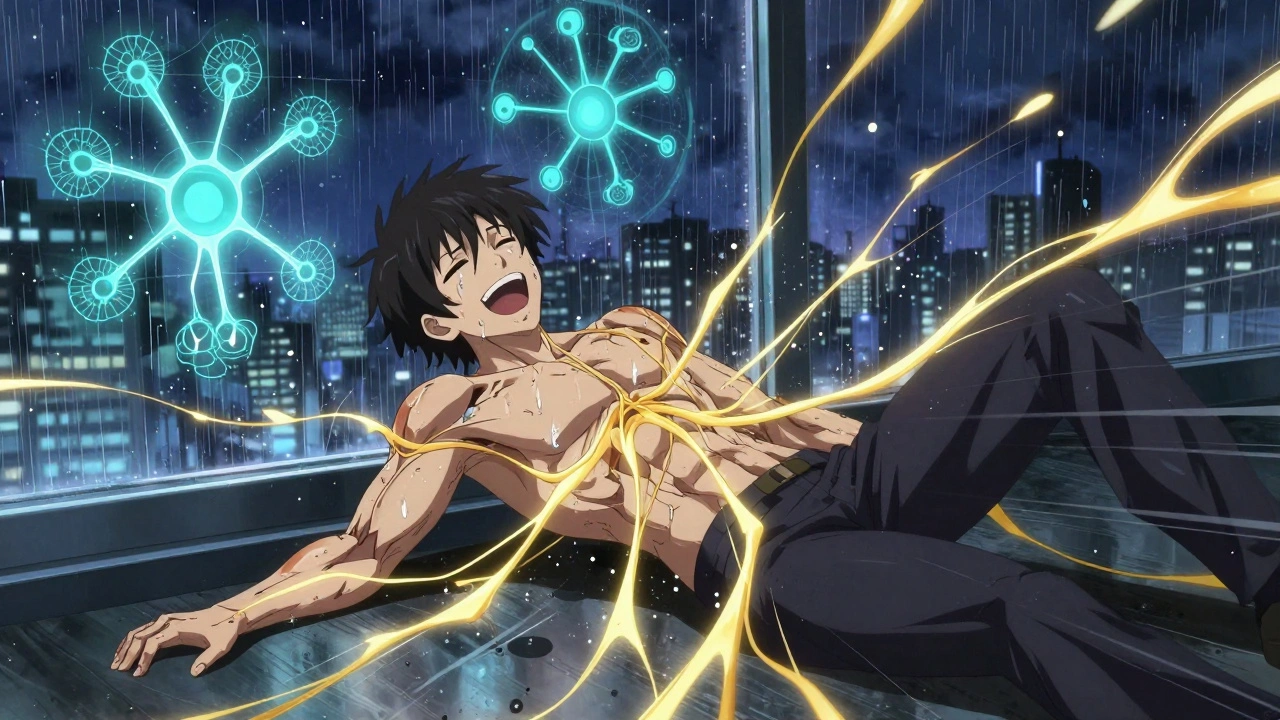
Imagine suddenly losing control of your muscles while laughing at a joke-your knees buckle, your head drops, and you can’t move for a few seconds. Then, hours later, you fall asleep in the middle of a conversation without warning. This isn’t a dream. It’s narcolepsy with cataplexy, also called narcolepsy type 1. It’s not just being tired. It’s your brain losing the ability to control sleep-wake cycles and muscle tone at the wrong times. About 1 in every 2,000 people have it. Most don’t get diagnosed for nearly a decade. By then, many have been told they’re lazy, anxious, or depressed.
The Five Hallmarks of Narcolepsy Type 1
Narcolepsy with cataplexy doesn’t come with just one symptom. It comes with five, and they don’t always show up together. Excessive daytime sleepiness is the most common-people feel like they’re constantly fighting to stay awake, even after a full night’s sleep. Cataplexy is the signature sign: sudden muscle weakness triggered by strong emotions like laughter, surprise, or anger. It can be as mild as a drooping eyelid or as severe as collapsing to the floor. Sleep paralysis-being awake but unable to move-often happens when falling asleep or waking up. Hallucinations, vivid and scary, can occur at the same times. And then there’s broken nighttime sleep: tossing and turning, waking up frequently, even though you’re exhausted all day.
Why Diagnosis Takes So Long
Most people see three or four doctors before getting the right diagnosis. Cataplexy is often mistaken for seizures, panic attacks, or even fainting. Many patients describe their episodes as "sudden weakness" or "dizziness," not realizing it’s a neurological event. A 2022 survey found that 79% of patients struggled to explain their symptoms clearly-even to themselves. Doctors who haven’t seen many cases may not recognize the pattern. The average delay between first symptoms and diagnosis is 8.7 years. By then, people have lost jobs, relationships, and the ability to drive safely.
How Doctors Confirm the Diagnosis
There are two main ways to confirm narcolepsy type 1: a sleep study and a spinal fluid test. The first step is an overnight sleep study called polysomnography (PSG). It tracks brain waves, eye movements, breathing, and muscle activity. If the results show unusual REM sleep patterns, the next step is the Multiple Sleep Latency Test (MSLT). This involves four or five 20-minute naps spaced two hours apart during the day. If you fall asleep quickly-within eight minutes-and enter REM sleep two or more times, that’s a strong indicator. But the MSLT isn’t perfect. Sleep deprivation, medications, or other sleep disorders can mess with the results. About 5-10% of people get false positives.
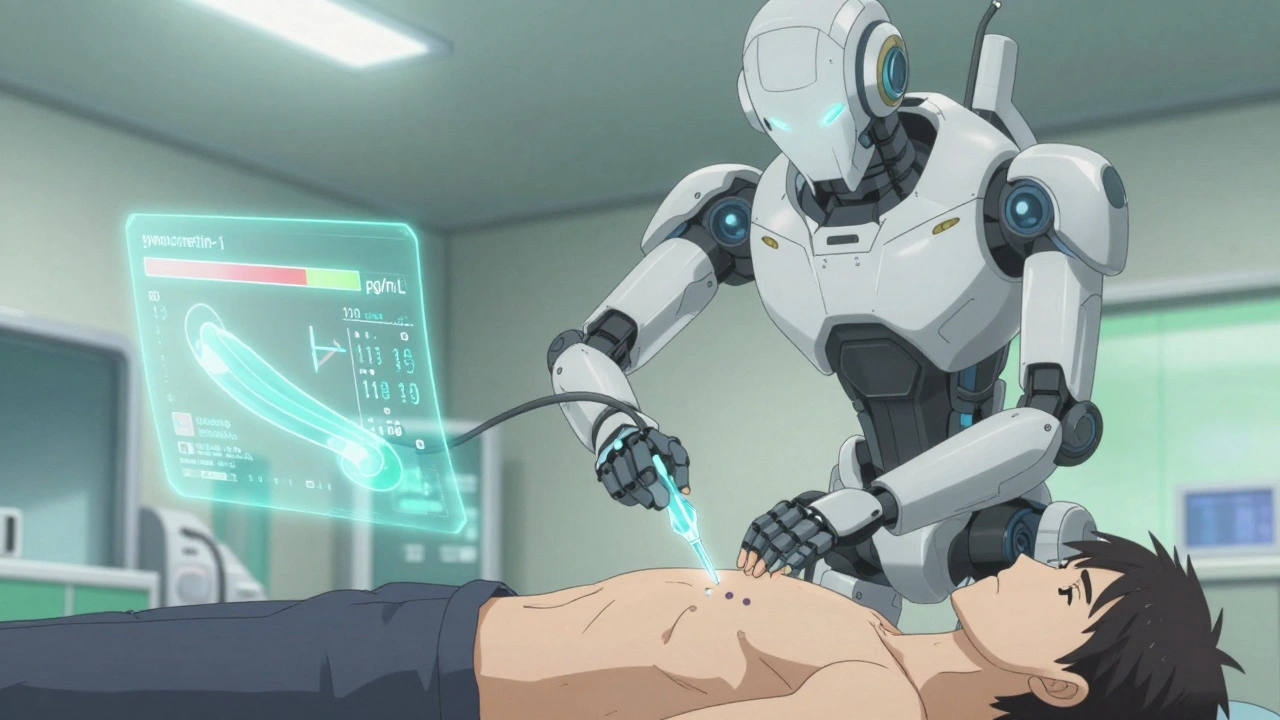
The gold standard, though, is measuring hypocretin-1 in cerebrospinal fluid. This is done with a lumbar puncture-also known as a spinal tap. In narcolepsy type 1, hypocretin levels drop to 110 pg/mL or lower. This test is 98% accurate. If your levels are that low and you have cataplexy, you have narcolepsy type 1. No other test is needed. But not everyone gets this test. It’s invasive. About 1 in 3 people get a headache afterward. And not every sleep center offers it. In the U.S., only 40% of centers can do MSLTs properly, and even fewer can run the CSF test.
What Sodium Oxybate Does-and Doesn’t Do
Sodium oxybate (sold as Xyrem and Xywav) is the only medication approved to treat both cataplexy and excessive daytime sleepiness in narcolepsy type 1. It’s not a stimulant. It’s not a sedative. It’s a form of gamma-hydroxybutyrate (GHB), a chemical your brain naturally makes in small amounts. At therapeutic doses, it helps stabilize sleep cycles. People who take it report fewer cataplexy attacks-often dropping from seven a week to less than one. They also sleep better at night, which reduces daytime sleepiness. In a 2023 patient survey, 85% said their cataplexy improved significantly.
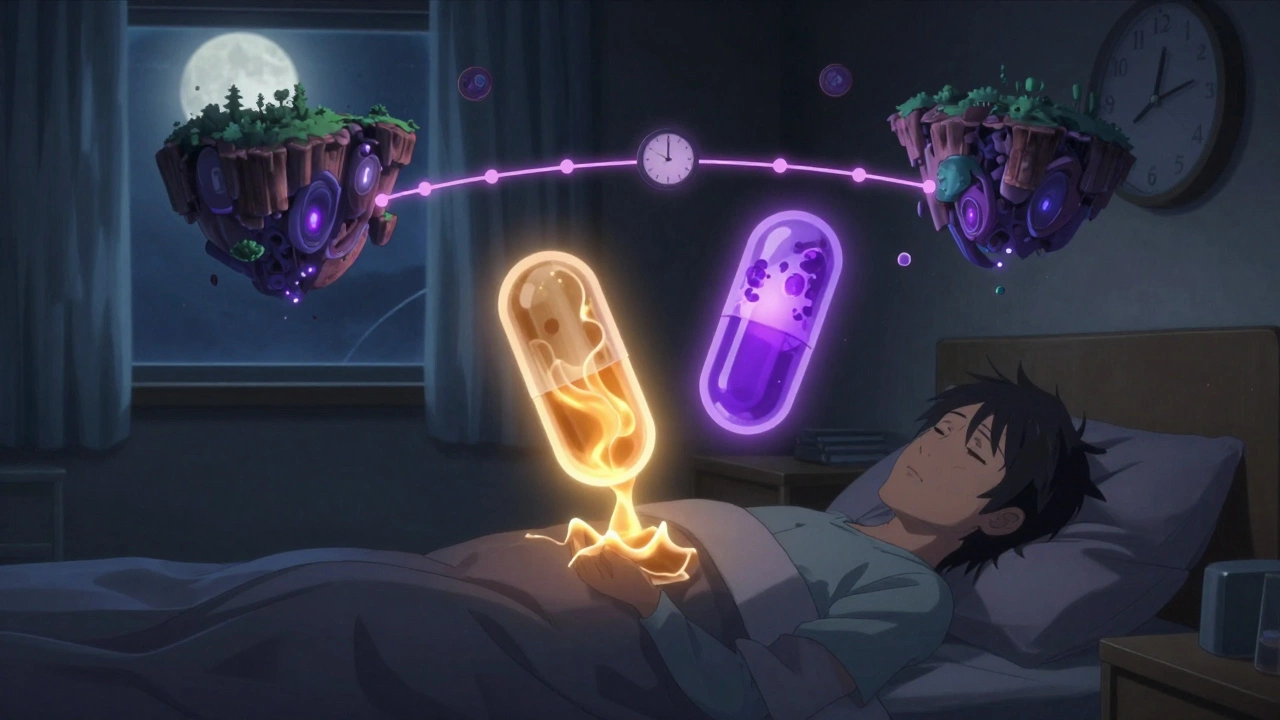
But it’s not magic. You have to take it twice a night: once when you first get into bed, and again 2.5 to 4 hours later. That means waking up in the middle of the night to take a second dose. For many, this is the hardest part. A 2021 study found 65% of patients struggled with the midnight dosing. Some people forget. Others can’t get up. And if you miss a dose, cataplexy can come back fast.
The Hidden Challenges of Getting the Medicine
Sodium oxybate is tightly controlled because GHB has been abused as a recreational drug. That means there’s a special program you have to join called REMS. Your doctor must be certified. Your pharmacy must be certified. You can’t get it from a regular pharmacy. It’s shipped directly to your home. And it’s expensive. Before insurance, a month’s supply can cost $10,000 to $15,000. Even with insurance, many patients face denials. One survey found 28% had their prior authorization rejected at least once. Some people stop taking it because they can’t afford it. Others give up because the system is too complicated.
Side Effects and What to Expect
Most people tolerate sodium oxybate well, but side effects are common. Nausea affects about 38% of users. Dizziness is reported by 29%. Some people have trouble with bedwetting-about 12% at higher doses. These usually improve over time as your body adjusts. But some people can’t get past the side effects. About 12% of users stop taking it because of nausea, dizziness, or feelings of dissociation. That’s why doctors start low-usually 4.5 grams per night-and slowly increase the dose over weeks or months. It takes 2 to 3 months to find the right dose for most people.
How It Compares to Other Treatments
There are other drugs for narcolepsy: modafinil and armodafinil for daytime sleepiness, solriamfetol, and pitolisant. But none of them work for cataplexy the way sodium oxybate does. Stimulants might help you stay awake, but they won’t stop you from collapsing when you laugh. Pitolisant helps with both, but only reduces cataplexy by about 40-60%. Sodium oxybate cuts it by 75-90%. That’s why specialists still consider it the first-line treatment for people with cataplexy. The European Academy of Neurology and the American Academy of Sleep Medicine both recommend it as the most effective option.
What’s Coming Next
There’s new hope on the horizon. In February 2024, a company called Jazz Pharmaceuticals announced results for a new version of sodium oxybate called FT001. It’s designed to be taken just once a night-no midnight dose. If approved, it could change everything for patients who can’t manage the current schedule. Another drug, TAK-994, was showing promise in trials, directly replacing the missing hypocretin in the brain. It reduced cataplexy by 92%. But in October 2023, development was paused due to liver safety concerns. Still, it proves that targeting the root cause-hypocretin loss-is possible.
The next version of the diagnostic guide (ICSD-4), expected in late 2024, will likely lower the hypocretin threshold to 80 pg/mL and add better tools to measure cataplexy. This could make diagnosis faster and more accurate.
What Success Looks Like
For people who stick with sodium oxybate, life changes. One patient said she started driving again after 10 years. Another got her job back. A teenager said he could go to school without falling asleep in class. In surveys, 74% of users regained driving privileges. 68% stopped needing unplanned naps. That’s not just symptom control-it’s reclaiming your life.
But success isn’t just about the medicine. It’s about getting diagnosed. It’s about finding a sleep specialist who knows what to look for. It’s about having insurance that covers the cost. It’s about support from family and employers who understand this isn’t laziness-it’s a neurological condition.
What to Do If You Suspect Narcolepsy with Cataplexy
- Keep a sleep diary for two weeks. Note when you feel sleepy, when you have muscle weakness, and what triggered it.
- Take the Epworth Sleepiness Scale test. A score above 10 means you’re excessively sleepy.
- Find a sleep specialist-not a general doctor. They know the signs.
- Ask about both MSLT and CSF hypocretin testing. Don’t settle for one if the other could give you a clearer answer.
- If you’re prescribed sodium oxybate, join the REMS program early. It takes time to get set up.
- Connect with support groups like Narcolepsy Network. You’re not alone.
Final Thought: This Isn’t Just About Sleep
Narcolepsy with cataplexy isn’t a minor inconvenience. It’s a life-altering condition. But it’s treatable. The tools to diagnose it exist. The most effective treatment is available. The biggest barriers aren’t medical-they’re awareness, access, and stigma. If you or someone you know has unexplained daytime sleepiness or sudden muscle weakness triggered by emotion, don’t wait. Get it checked. You don’t have to live in the dark anymore.
Is narcolepsy with cataplexy the same as just being tired?
No. Normal tiredness goes away with rest. Narcolepsy with cataplexy is a neurological disorder where the brain can’t regulate sleep-wake cycles. People with it fall asleep suddenly, even in the middle of activities, and may lose muscle control during strong emotions-something healthy people never experience.
Can you outgrow narcolepsy with cataplexy?
No. Narcolepsy type 1 is a lifelong condition. The loss of hypocretin-producing brain cells is permanent. But symptoms can be managed effectively with medication, sleep schedules, and lifestyle changes. Many people live full, active lives with proper treatment.
Why is sodium oxybate the only drug that works for cataplexy?
Because it directly stabilizes nighttime sleep architecture, which reduces the brain’s tendency to trigger REM sleep at the wrong times-like during emotional moments. No other drug targets this mechanism. Stimulants and wake-promoting agents help with sleepiness but don’t stop muscle weakness.
Is the spinal tap for CSF testing dangerous?
It’s generally safe but not risk-free. About 10-30% of people get a headache after the procedure, which usually lasts a few days. Rarely, there’s infection or nerve irritation. But for diagnosing narcolepsy type 1, the test is 98% accurate-far more reliable than sleep studies alone.
Why is sodium oxybate so expensive?
It’s a complex drug to manufacture and distribute under strict FDA safety rules (REMS program). The company holds patents and controls distribution. Insurance often covers it, but prior authorization can take weeks. Some patients pay thousands out of pocket until approval is granted.
Can children get narcolepsy with cataplexy?
Yes. It often starts between ages 10 and 30, but it can begin in childhood. In 2023, the FDA approved Xywav for children as young as 7. Diagnosis in kids can be harder because symptoms like sleepiness or sudden weakness may be mistaken for behavioral issues or ADHD.
What happens if I stop taking sodium oxybate?
Cataplexy and excessive daytime sleepiness usually return within days. Stopping suddenly doesn’t cause withdrawal, but symptoms rebound quickly. Always work with your doctor to taper off if needed. Never stop without medical supervision.
Are there any natural remedies that help?
No natural remedy has been proven to treat the core symptoms of narcolepsy with cataplexy. While good sleep hygiene, scheduled naps, and avoiding alcohol help manage symptoms, they don’t replace medication. Relying only on supplements or herbs can delay effective treatment.
How do I find a doctor who knows about this?
Look for a board-certified sleep specialist, preferably at a sleep center affiliated with a university hospital. The American Academy of Sleep Medicine has a directory. Narcolepsy Network also offers resources to help patients locate specialists. Primary care doctors rarely have the training to diagnose this condition.
Is sodium oxybate addictive?
When used exactly as prescribed for narcolepsy, the risk of addiction is extremely low. The REMS program is designed to prevent misuse, not because patients get addicted, but because GHB has been abused recreationally. Under medical supervision, it’s a safe, life-changing treatment.





Brian Perry
December 3, 2025 AT 22:45bro i thought i was just lazy until i collapsed laughing at a cat video. then i got diagnosed with narcolepsy type 1. took 9 years. 9 years of being called 'zombie mode activated' by my coworkers. now i take sodium oxybate and i can actually drive again. 🤯
Susan Haboustak
December 4, 2025 AT 00:26The data here is misleading. You're presenting sodium oxybate as a 'cure' when it's just a band-aid. The real issue is the pharmaceutical monopolization of GHB derivatives. Why is this drug priced at $15k/month? Because Big Pharma knows people will pay anything to stop collapsing in public. The real scandal isn't the disease-it's the profit.
Siddharth Notani
December 4, 2025 AT 12:04Dear all, I am a neurologist from India. I have treated over 40 cases of narcolepsy with cataplexy. The CSF hypocretin test is indeed the gold standard, but in resource-limited settings, we rely on clinical diagnosis + MSLT. Many patients here cannot afford the lumbar puncture. Still, with proper sleep scheduling and low-dose oxybate, outcomes are excellent. 🙏
Akash Sharma
December 5, 2025 AT 16:13I’ve been on sodium oxybate for three years now and I’ll tell you what no one says: the midnight dose is pure torture. I set three alarms. I keep a glass of water and the pill on my nightstand. I’ve woken up at 3 AM so many times I’ve started dreaming about alarms. But here’s the thing-after the first month, my cataplexy went from 8 episodes a week to maybe one. I cried the first time I laughed without falling. I didn’t even realize how much I’d been holding back. And yeah, the nausea sucked at first, but my body adjusted. The real kicker? My boss didn’t believe me until I showed him the sleep study. Now he schedules meetings after lunch. I didn’t ask for that. He just… got it. That’s the real win.
Justin Hampton
December 5, 2025 AT 21:41This whole post is just pharma propaganda. GHB is a date rape drug. They're calling it 'sodium oxybate' to make it sound safe. Wake up. You're being manipulated into taking a controlled substance under the guise of medicine. And don't get me started on the 'rems program'-it's a scam to keep people dependent. You don't need this. You need to just sleep more.
Pooja Surnar
December 6, 2025 AT 12:55People like you are so selfish. You think it's okay to take a dangerous drug just so you can laugh without falling over? What about the kids who might experiment with this? You're normalizing addiction. And why do you think it's okay to cost $15k? You're just another entitled American who thinks the world owes you a fix.
Sandridge Nelia
December 7, 2025 AT 10:45I'm a nurse who works in sleep medicine, and I just want to say: if you're reading this and suspect you have narcolepsy, please don't wait. I've seen patients who waited 12 years and lost everything. The spinal tap isn't fun, but it's one needle. The relief? Life-changing. And yes, the midnight dose sucks-but it's temporary. You'll find a rhythm. You're not alone. 💙
Mark Gallagher
December 7, 2025 AT 11:59This article is a disgrace to American medicine. Why are we letting foreign patients get access to this treatment before our own? The REMS program is a bureaucratic nightmare designed to protect corporate interests, not patients. And why are we letting non-American doctors like this 'Siddharth' give advice on our healthcare system? We have the best sleep labs in the world. We should be leading, not following.