

Back pain is one of those things that seems to happen to everyone at some point. You bend over to pick up a grocery bag, twist wrong, or even just roll over in bed-and suddenly, your lower back locks up. For most people, it goes away in a few days. For others, it doesn’t. And that’s where the real difference begins: acute versus chronic low back pain. They’re not just different in how long they last-they’re different in how they work, how they’re treated, and what kind of results you can actually expect from physical therapy.
What Exactly Is Acute Low Back Pain?
Acute low back pain hits fast and hard. It’s the kind you get after lifting something too heavy, slipping on ice, or sitting too long in a bad chair. It usually feels sharp, localized, and gets worse when you move in certain ways. Most of the time, it’s not a sign of something seriously broken-it’s your muscles or ligaments screaming because they were overstretched or strained. According to clinical guidelines, acute pain lasts less than four weeks. Some sources extend that to 12 weeks, but the real turning point is healing time. Soft tissues like muscles and tendons usually repair themselves in 4 to 8 weeks. About 90% of people with a herniated disc or muscle strain recover fully during that window without needing surgery or strong meds. The key to recovery? Movement-not rest. Too many people think they need to lie low for days. That’s outdated advice. Staying still too long actually makes things worse. Studies show that getting up and moving gently within 24 to 48 hours leads to faster recovery. Physical therapy started within the first week can cut the risk of turning acute pain into chronic pain by up to 22%.When Does Acute Become Chronic?
Here’s the scary part: about 1 in 5 people with acute low back pain end up with chronic pain. That’s not bad luck-it’s often a missed window. Chronic low back pain isn’t just pain that lasted too long. It’s pain that changed its nature. After three to six months, the body’s pain system can start misfiring. Your nerves become hypersensitive. Your brain starts interpreting normal movements as dangerous-even when there’s no tissue damage left. This is called central sensitization. It’s why someone with chronic pain might feel agony from a light touch or a breeze. Unlike acute pain, chronic pain rarely has a clear “cause.” You might have had a bad disc years ago, but the pain now isn’t coming from the disc-it’s coming from your nervous system. That’s why imaging tests like MRIs often show “abnormalities” in people with chronic pain who feel fine, and normal scans in people who are in constant agony. The transition from acute to chronic doesn’t happen overnight. It creeps in. Maybe you skipped PT because you thought it would “go away on its own.” Maybe you were told to “just wait it out.” Maybe you got an MRI too early and were scared into inactivity. All of these things increase the chance your pain will stick around.Physical Therapy for Acute Pain: Fast, Focused, and Effective
If you catch acute back pain early, physical therapy is one of the most powerful tools you have. It’s not about deep tissue massage or electric stimulation. It’s about retraining your body to move safely again. Standard acute care involves 6 to 12 sessions over 3 to 6 weeks. The first few visits focus on reducing pain with simple techniques: ice for inflammation, heat for stiffness, and gentle mobility drills. Within days, you’ll start doing basic movements-bridges, pelvic tilts, cat-cow stretches-that teach your spine to move without triggering pain. The real magic happens in the next phase: graded activity. Your therapist doesn’t push you to do 20 squats. They start with one, then two, then three-each time helping you build confidence that movement won’t hurt you. This breaks the fear cycle before it takes root. Results? They’re impressive. People who start PT within 14 days of pain onset see:- 40-60% reduction in pain intensity
- 35-50% less time off work
- 84% chance of avoiding chronic pain
Physical Therapy for Chronic Pain: A Different Game
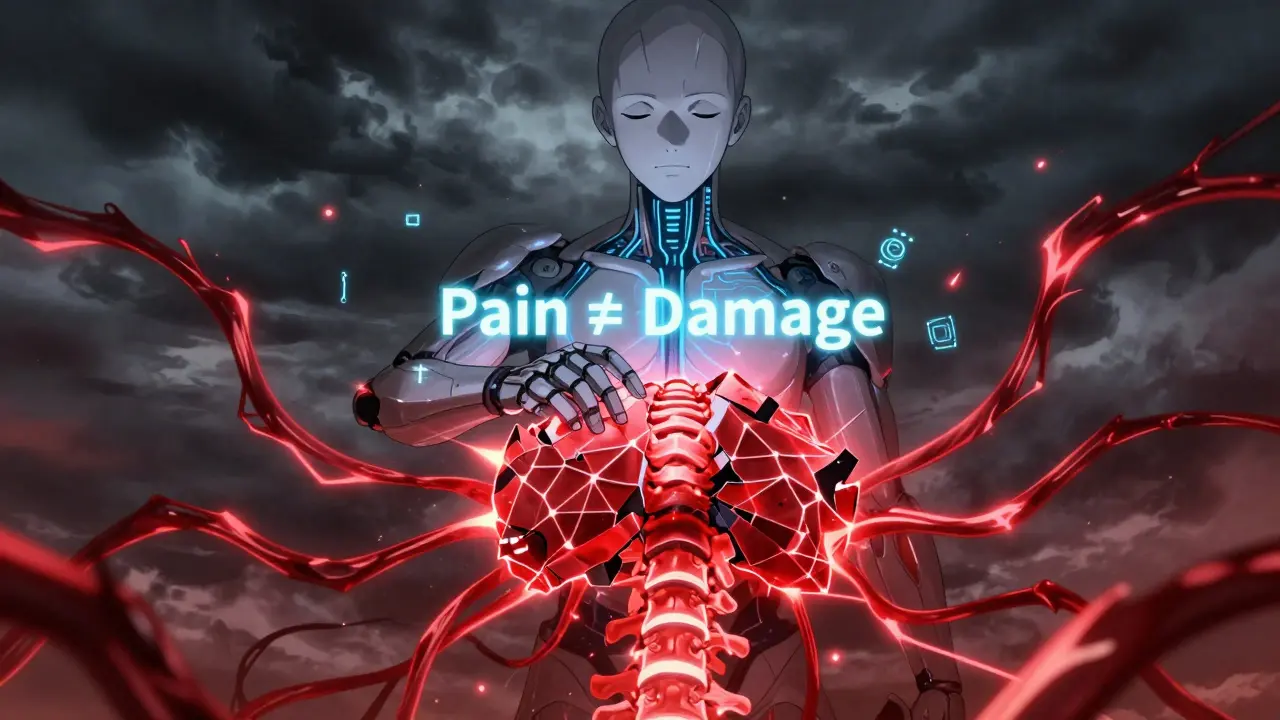
Chronic pain doesn’t respond to the same tricks. You can’t just stretch your way out of a nervous system that’s been rewired. That’s why traditional “strengthen the core” programs often fail for chronic cases. Effective chronic pain therapy is more like therapy for your brain than your back. It’s called pain neuroscience education. Your therapist doesn’t just show you exercises-they explain how pain works. They help you understand that pain doesn’t equal damage. That your back isn’t broken. That your nerves are just overreacting. This approach is backed by science. One study found that patients who received pain neuroscience education were 37% more likely to improve functionally than those who got standard care. Another showed that combining this with graded exposure-slowly doing things you’ve been avoiding, like bending, lifting, or walking-led to long-term pain reduction in 50% of cases. Treatment for chronic pain is longer: 15 to 25 sessions over 8 to 12 weeks. It’s also more complex. You might work on breathing techniques to calm your nervous system, mindfulness to reduce anxiety around pain, and even cognitive behavioral strategies to tackle fear-avoidance behaviors. Over 70% of chronic pain patients have these behaviors-they avoid movement because they’re scared it’ll hurt, which makes them weaker and more sensitive over time. Success here isn’t about being pain-free. It’s about being functional. A 30-50% reduction in pain might sound modest, but if you go from being unable to play with your kids to being able to walk the dog without fear-that’s huge.What the Numbers Don’t Tell You: Real People, Real Results
Look at patient reviews. On Healthgrades, 82% of people with acute back pain said they felt 90% better after just 4 to 6 PT sessions. One man said: “I lifted a box wrong. Saw a therapist three days later. By session five, I was back to lifting groceries without thinking twice.” For chronic pain? Only 58% reported meaningful improvement. One woman wrote: “I’ve done 20 sessions over five months. I’ve got maybe 30% relief. It helps, but I’m not the same person I was before.” But here’s the twist: the people who did feel better in chronic cases almost always mentioned pain neuroscience education. “They finally explained why my pain didn’t go away,” one patient said. “I stopped thinking my spine was falling apart.” That shift in mindset made all the difference. Reddit threads and Spine-Health forums echo this. Acute pain sufferers report quick wins. Chronic pain sufferers talk about frustration-but also hope, if they found a therapist who understood the nervous system.Why Timing Matters More Than You Think
There’s a narrow window-about two to four weeks-where physical therapy can literally prevent chronic pain from forming. After that, you’re not just treating pain. You’re fighting a rewired brain. That’s why waiting is dangerous. If you’re in pain and you think, “I’ll just wait and see,” you’re gambling with your future. The longer you delay, the more your nervous system learns to hurt. The more your muscles weaken. The more you start avoiding things you love. Insurance data shows that 78% of acute back pain cases get physical therapy within the first month. But only 42% of chronic cases start with PT. Most wait until other treatments fail-meds, injections, even surgery. By then, the damage is deeper. Medicare’s new reimbursement rules are starting to change that. Starting in January 2024, physical therapists get bonuses for reducing the number of acute cases that turn chronic. That means more clinics are pushing early intervention.
What’s Next for Back Pain Treatment?
The future of back pain care is personal. Tools like the Back Pain Stratification Tool-a quick 7-question screen-can now predict with 83% accuracy who’s at risk of chronic pain. If you’re flagged high-risk, you get extra education and more frequent sessions. It’s not one-size-fits-all anymore. Digital platforms like Kaia Health, approved by the FDA in 2023, now offer AI-guided PT for chronic pain. Patients use an app at home with video exercises and real-time feedback. Clinical trials show 45% average pain reduction in 12 weeks. The big shift? We’re moving from “fix the back” to “fix the brain.” Physical therapy isn’t just about strength anymore. It’s about understanding, rewiring, and rebuilding confidence.What Should You Do If You Have Low Back Pain?
If your pain started in the last few days:- Don’t panic. Most cases heal on their own.
- Don’t stay in bed. Walk gently, stretch slowly.
- See a physical therapist within 7 days. Don’t wait for it to get worse.
- Stop blaming your spine. The problem isn’t just structural.
- Find a therapist trained in pain neuroscience education.
- Be patient. Progress is slow, but it’s real.
- Focus on function, not just pain levels.
Final Thought: Pain Is Not a Diagnosis
Back pain is a symptom-not a disease. Acute pain is a warning. Chronic pain is a misfire. Physical therapy doesn’t just treat the body. It teaches your nervous system to stop screaming. The best outcome isn’t zero pain. It’s being able to live without fear. And that’s something no pill, no injection, and no surgery can guarantee.How long does acute low back pain usually last?
Acute low back pain typically lasts less than four weeks, and most people recover fully within 4 to 12 weeks. It’s usually caused by a strain or sprain and resolves as soft tissues heal. Around 90% of cases, including those with herniated discs, improve without surgery or specialist care.
What makes chronic low back pain different from acute pain?
Chronic low back pain lasts longer than 12 weeks and often continues even after tissues have healed. Unlike acute pain, which is usually mechanical, chronic pain involves changes in the nervous system called central sensitization. This means your brain and nerves become overly sensitive to pain signals, even without ongoing injury. The pain becomes more about how your body processes signals than about physical damage.
Can physical therapy prevent acute back pain from becoming chronic?
Yes, early physical therapy significantly reduces the risk. Studies show that starting therapy within 14 days of symptom onset lowers the chance of chronic pain by 16-22%. If you begin within 72 hours, the risk drops by up to 22%. Delaying treatment beyond 16 days increases chronicity risk by 38%.
What type of physical therapy works best for chronic back pain?
For chronic pain, the most effective approach combines pain neuroscience education with graded exposure therapy. This means learning how pain works in your nervous system and slowly reintroducing movements you’ve avoided due to fear. Therapists trained in cognitive functional therapy or the STarT Back model are best equipped for this. Traditional strengthening alone rarely helps long-term.
How many physical therapy sessions do I need for low back pain?
For acute pain, most people need 6 to 12 sessions over 3 to 6 weeks. For chronic pain, treatment typically requires 15 to 25 sessions spread over 8 to 12 weeks. The difference isn’t just in quantity-it’s in focus. Acute care emphasizes movement restoration; chronic care targets nervous system retraining and psychological barriers.
Is imaging like an MRI necessary for low back pain?
For most cases of acute low back pain, imaging isn’t needed and can even be harmful. Research shows that early MRIs or X-rays increase the chance of chronic pain by 27% because they lead to fear, over-treatment, and unnecessary interventions. Guidelines from the American College of Physicians recommend waiting at least 6 weeks before imaging unless there are red flags like loss of bladder control, fever, or unexplained weight loss.
What’s the success rate of physical therapy for chronic low back pain?
Complete pain resolution is rare in chronic cases-only 20-30% of patients achieve it. But meaningful improvement is common: 60-70% of people see better function, and 30-50% report reduced pain intensity. Success depends on the approach. Those who receive pain neuroscience education and graded exposure are far more likely to improve than those who only do exercises.





Prakash Sharma
January 8, 2026 AT 06:44Let me tell you something - in India, we don’t wait for PT. We do surya namaskar at 5 AM, rub garlic on our backs, and call it medicine. You think this is new? Our grandmas healed back pain with coconut oil and shouting at the gods. PT? Sure, if you got money to burn. But real men and women work through pain - not run to a therapist because a grocery bag hurt their spine.
Stop coddling bodies. Pain is nature’s way of saying ‘move smarter’ - not ‘pay $150/hour.’
Luke Crump
January 8, 2026 AT 15:39Okay, but what if the real problem isn’t your back… but your *belief* that your back is broken? What if pain is just the universe’s way of telling you you’ve been living in a capitalist hellscape of fear, surveillance, and sedentary wage slavery? You think PT fixes the body - but what if it just distracts you from the fact that your spine is screaming because your life is a spreadsheet?
Maybe the real cure is quitting your job, moving to a cabin, and sleeping on the ground. No therapist needed. Just silence. And dirt.
Also - who wrote this? A physical therapist? A pharmaceutical rep? Or someone who just really loves bullet points?
Manish Kumar
January 8, 2026 AT 16:03You know, I’ve been thinking about this for a while now - and I think we’re missing the deeper metaphysical layer here. Pain, especially chronic pain, isn’t just a biological signal - it’s a spiritual echo of unresolved trauma, societal pressure, and the alienation of modern existence. We’ve reduced the human body to a machine that needs fixing, but the truth is, your spine doesn’t just ache because of poor posture - it aches because you’ve forgotten how to breathe deeply, how to sit with stillness, how to be present without reaching for your phone or your next paycheck.
Physical therapy helps, sure - but only if it’s paired with meditation, journaling, and maybe a week alone in the woods. The body remembers what the mind forgets. And right now, we’re all forgetting. We’re treating symptoms like they’re the disease. But the disease is disconnection. The disease is the lie that we’re separate from our own flesh.
And yes - I’ve had chronic back pain for seven years. I’ve done 30 PT sessions. I’ve had MRIs. I’ve tried everything. What finally shifted me? Not the stretches. Not the ultrasound. It was the day I stopped fighting it and started listening. And that, my friends, is not in any clinical trial. That’s the quiet revolution.
Also - I’m not saying PT is useless. I’m saying it’s incomplete. Like trying to fix a symphony by only tuning the violin.
Aubrey Mallory
January 9, 2026 AT 06:19As someone who’s been through both acute and chronic pain, I want to say - this post is spot-on. But I also want to say this: if you’re reading this and you’re scared to move, you’re not weak. You’re not lazy. You’re not broken. You’re just terrified - and that’s okay. What helped me wasn’t just the exercises. It was the therapist who looked me in the eye and said, ‘Your body isn’t betraying you. It’s trying to protect you.’
That one sentence changed everything. We need more of that in healthcare. Not just protocols. Not just stats. Real human connection. And if you’re a provider reading this - please, stop treating pain like a math problem. It’s a story. And every person’s story deserves to be heard before you hand them a list of stretches.
Lois Li
January 10, 2026 AT 10:07Just wanted to say - I started PT for acute pain after 5 days and did 8 sessions. By week 3, I was back to lifting my toddler without wincing. No meds. No injections. Just movement, patience, and a therapist who didn’t make me feel like a broken appliance. Seriously - if you’re reading this and thinking ‘I’ll wait,’ don’t. The 16-day window is real. I saw it happen to my coworker - she waited 3 months, got an MRI that showed ‘degeneration’ (which turned out to be normal aging), and now she’s stuck in a cycle of fear and meds. Don’t be her.
Also - yes, chronic pain is real. And yes, it’s harder. But it’s not hopeless. I’ve seen people come back from it. It just takes the right kind of help.
christy lianto
January 11, 2026 AT 01:26My mom had chronic back pain for 12 years. She tried everything - acupuncture, chiropractors, yoga, opioids. Nothing stuck. Then she found a therapist who did pain neuroscience education. She cried the first session. Not from pain. From relief. For the first time, someone told her: ‘Your back isn’t falling apart. You’re not broken. Your pain is loud, but it’s not lying.’
That’s the magic. Not the stretches. Not the heat packs. It’s the validation. It’s being told you’re not imagining it - and then being shown how to quiet the noise. I wish every doctor would say that. I wish every insurance company would pay for it. This isn’t just therapy. It’s trauma healing with a side of movement.
Ken Porter
January 11, 2026 AT 11:03PT works. But only if you’re not lazy. I had a herniated disc. Lied on the couch for 3 weeks. Then did 6 PT sessions. Back to lifting weights in a month. No drama. No trauma. Just show up. Do the work. Done.
Stop making this a mental health crisis. It’s a muscle problem. Fix the muscle.
Annette Robinson
January 12, 2026 AT 06:52Ken - I hear you. And I get it. Movement matters. But here’s what I’ve learned: telling someone to ‘just move’ when their nervous system is screaming is like telling someone with PTSD to ‘just relax.’ It’s not that simple.
My brother had acute pain. He ignored it. Then it became chronic. He saw five therapists. Four told him to ‘strengthen his core.’ The fifth - she asked him what he was afraid of. He broke down. He hadn’t moved in 18 months because he thought bending over would snap his spine.
That’s the difference. Sometimes the body’s fine. The mind is the patient.
So yes - move. But also - listen. And if you’re a therapist - don’t just show. Explain. Don’t just fix. empower.