

Medication Risk Monitoring Calculator
Important: This tool provides general guidance only. It is not a substitute for professional medical advice. If you or someone you know is having suicidal thoughts, contact emergency services immediately or call the National Suicide Prevention Lifeline at 988 in the US.
Medication Risk Assessment
When a teenager starts taking psychiatric medication, the goal is relief-not risk. But for many families, the fear of worsening suicidal thoughts becomes a quiet shadow over every pill, every appointment, every change in mood. It’s not paranoia. It’s science. The U.S. Food and Drug Administration put a black box warning on antidepressants in 2004, and updated it in 2007, making it clear: for kids and teens up to age 24, these medications can increase the risk of suicidal thinking-especially in the first few weeks of treatment or after a dose change.
Why This Happens
It’s not that the drugs cause depression. It’s that they can stir up energy before they lift mood. A teen who’s been too exhausted to act on suicidal thoughts suddenly gains the physical ability to do so. Their mind is still trapped in hopelessness, but now their body has the spark to move. That’s why the first month is the most dangerous window. This isn’t just about antidepressants. It’s true for many psychiatric meds-antipsychotics, stimulants, even mood stabilizers. The California Department of Health Care Services made this clear in 2022: any psychotropic medication used in youth needs a suicide risk check, not just SSRIs. A 2023 guide by Dr. Mohab Hanna confirmed it: monitoring for suicidal ideation must be universal, not selective. If a teen is on medication for ADHD, anxiety, or psychosis, their clinician should still ask: Are you having thoughts you’d rather not be alive?Who Needs the Closest Watch?
Not every teen needs weekly check-ins. But some do. High-risk groups include:- Teens with a prior suicide attempt or self-harm behavior
- Those with a family history of suicide
- Youth already showing severe hopelessness, worthlessness, or guilt before starting meds
- Teens who’ve recently lost someone close or experienced trauma
- Those using alcohol or drugs alongside prescriptions
What Monitoring Actually Looks Like
Monitoring isn’t just checking off a box at a 15-minute appointment. It’s a layered system. First visit: Before prescribing, the clinician must document a full clinical picture. Not just symptoms. But family dynamics, school stress, sleep habits, substance use. The DBHIDS guidelines from 2018 require this before any antipsychotic is given. No exceptions. First 4 weeks: Weekly check-ins are standard. Not just “How are you feeling?” but direct questions: Have you had thoughts about not wanting to live? Have you thought about how you’d do it? These aren’t scary questions-they’re lifesaving. The NYC guidelines from 2023 say providers must ask about substance use at every visit. Alcohol and marijuana can turn a manageable mood swing into a crisis. After 4 weeks: If things are stable, visits can shift to every two weeks, then monthly. But if suicidal thoughts appear-even mildly-go back to weekly. The Tennessee Department of Children’s Services warns against letting market pressures push treatment into rushed appointments. This isn’t a routine refill. It’s a safety-critical process. Documentation is non-negotiable. California’s 2022 rules require clinicians to write down whether the teen believes the medication is helping. If they say, “It makes me feel worse,” that’s not a complaint-it’s a red flag. The same goes for any drop in school performance, withdrawal from friends, or sudden calm after weeks of agitation. That calm can be dangerous.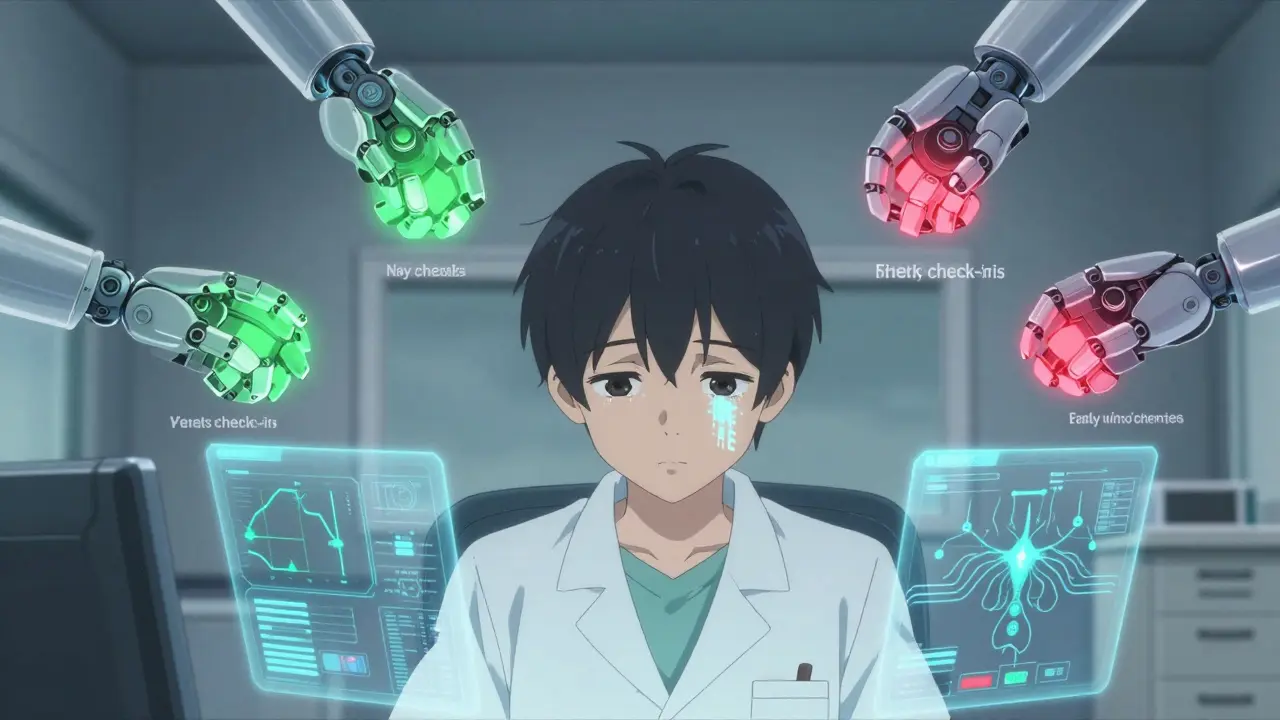
The Family’s Role
Parents and caregivers aren’t bystanders. They’re frontline observers. But too often, they’re not properly prepared. A 2021 AACAP survey found that 42% of child psychiatry fellows felt untrained in getting truly informed consent about suicide risk. That means families are sometimes signing forms without understanding what they’re agreeing to. The NYC guidelines say: consent must include a clear discussion of suicidal ideation as a possible side effect. Not just a footnote. Not just a handout. A conversation. Families should be taught what to watch for:- Sudden mood shifts-not just sadness, but rage or agitation
- Writing or drawing dark themes
- Giving away prized possessions
- Talking about being a burden
- Withdrawing from all social contact
Where Systems Fail
The biggest gap isn’t in the guidelines-it’s in the gaps between them. A 2022 survey found that 68% of school-based mental health workers said they had no reliable way to communicate with outpatient psychiatrists about suicidal incidents that happened during school hours. A teen might be fine at the clinic, but falling apart at school. No one talks. No one shares. And no one gets the full picture. Also, many clinics still rely on paper charts. If a teen’s suicidal thoughts are noted in a paper file at one office but not entered into the electronic system at another, the next provider might miss it entirely. Even worse: some states focus on physical side effects-weight gain, blood pressure, tremors-but barely mention suicide risk. Florida’s 2017 guidelines, for example, prioritize metabolic monitoring over psychological safety checks. That’s like checking the engine while ignoring the driver’s mental state.
What’s Changing
Good news: things are improving. The American Academy of Child and Adolescent Psychiatry is finalizing updated guidelines expected in late 2023 that will require suicide risk monitoring for all psychiatric meds-not just antidepressants. That’s a huge shift. More clinics are using digital tools. By 2022, 38% of child psychiatry practices had adopted electronic suicide risk screens. But only 19% of those tools were built to track medication-related risk specifically. Most just ask, “Are you thinking of suicide?” without linking it to when the medication was started or changed. The National Institute of Mental Health is investing $28.7 million in research to find biological markers that predict suicide risk. Imagine a blood test or brain scan that could tell you if a teen is heading toward crisis before they even speak about it. That’s the future.What You Can Do Now
If you’re a parent, caregiver, or teen:- Ask the prescriber: What’s the plan if I start feeling worse?
- Request a written safety plan that includes emergency contacts and steps to take if suicidal thoughts appear.
- Keep a simple mood log: rate your mood 1-10 each day. Note sleep, energy, and any thoughts about death.
- Don’t stop meds cold turkey-even if you feel better. That can trigger relapse or withdrawal-induced suicidal thoughts.
- Make sure school staff know about the medication and the monitoring plan. Ask for a meeting with the school counselor.
- Don’t assume a teen is “fine” because they’re smiling in your office.
- Use direct, non-judgmental language: “Some people on this medication feel like life isn’t worth living. Have you had those feelings?”
- Document everything-even the small things. A comment like “I just want to sleep forever” matters.
- Coordinate with schools, therapists, and families. Use shared digital records if possible.
- Push for training. Only 34% of child psychiatry residents got the 8 hours of specialized training recommended by AACAP.
It’s Not About Avoiding Medication
This isn’t a warning to never give meds to teens. It’s a call to give them wisely. For many adolescents, these drugs are life-changing. They reduce panic attacks, stop self-harm, restore sleep, bring back the ability to focus in school. The goal isn’t to scare families away from treatment. It’s to make sure treatment is safe. The data shows something important: between 2010 and 2020, antidepressant use in teens rose 38%. Suicide attempts rose 51%. That doesn’t mean meds caused the increase. It means we’re seeing more teens in crisis-and we’re treating more of them. But we’re not always monitoring them well enough. The answer isn’t less treatment. It’s better monitoring. More communication. More honesty. More follow-up. Because for a teenager on the edge, the right medication-watched closely-can be the bridge back to life.Can psychiatric meds cause suicidal thoughts in teens?
Yes, in some cases, especially during the first few weeks of treatment or after a dose change. The FDA requires a black box warning on antidepressants for this reason. It’s not that the medication causes depression, but it can increase energy before improving mood, which may allow a teen with suicidal thoughts to act on them. This risk applies to several classes of psychiatric drugs, not just antidepressants.
How often should a teen be monitored when starting psychiatric medication?
Weekly for the first 4 weeks is the standard for teens starting any psychiatric medication. After that, if there are no warning signs, visits can extend to every two weeks, then monthly. But if suicidal thoughts appear at any point, go back to weekly-or even more frequent-check-ins. The risk is highest early on and again during dose changes or discontinuation.
What should parents watch for at home?
Watch for sudden mood shifts, especially increased agitation, rage, or withdrawal. Pay attention if your teen talks about being a burden, gives away favorite items, writes dark content, or suddenly seems unusually calm after a period of distress. Any change in sleep, appetite, or school performance should be noted. These aren’t normal ups and downs-they’re red flags.
Is it safe to stop psychiatric medication if suicidal thoughts start?
Never stop abruptly. Stopping cold turkey can cause withdrawal symptoms that mimic or worsen suicidal ideation. Always work with the prescriber to create a safe tapering plan. For high-risk teens, discontinuation may require more frequent visits, sometimes weekly, to catch early signs of relapse.
Do all states require the same monitoring for suicidal ideation?
No. Some states like California and New York have detailed, legally required protocols that include direct questions about suicidal thoughts, documentation of the teen’s perspective on the medication, and coordination with schools. Others focus mostly on physical side effects like weight gain or blood pressure. There’s no national standard, so families should ask their provider what their specific monitoring plan is.
What’s the role of schools in monitoring?
Schools are critical observers. A teen might seem fine at a clinic but struggle in class or with peers. Yet, 68% of school-based mental health workers report poor communication with outpatient providers. Families should request a meeting with the school counselor and share the treatment plan. Schools can help track behavior changes, attendance, and social withdrawal-key warning signs.
Are there tools to help track suicidal ideation?
Yes. Many clinics now use electronic suicide risk assessment tools. But only 19% of these are designed to track whether the risk is linked to medication changes. Simple daily mood logs-rated 1 to 10-can be very helpful. Parents and teens can record mood, sleep, energy, and any suicidal thoughts. This gives clinicians a clearer picture than a single 15-minute visit.


Sami Sahil
February 1, 2026 AT 14:02bro i swear my cousin started on adderall and went from zero to suicidal in 3 days. no one saw it coming. we thought he was just "being dramatic". turns out the doc never asked him the right questions. scary as hell.
franklin hillary
February 1, 2026 AT 19:59This is why we need mandatory suicide risk training for every single prescriber. Not optional. Not "if you feel like it." If you’re handing out psych meds to teens, you’re signing up for mental triage. No excuses. The FDA warning’s been out for 20 years. We’re still acting like this is new news.
Deep Rank
February 2, 2026 AT 17:31you know what really kills me? parents who think "they’re just being dramatic" and delay care until it’s too late. i had a friend who stopped her daughter’s meds because she said "she’s just moody" and then the girl tried to jump off a bridge. now she’s in a psych ward and her mom cries every night. it’s not about being harsh-it’s about being awake.
Naresh L
February 3, 2026 AT 03:58The real issue isn’t the medication-it’s the silence around it. We treat mental health like a taboo subject, then wonder why kids don’t speak up. If we normalized asking "have you thought about not being here?" the way we ask about headaches, we’d save lives. It’s not a scary question. It’s a human one.
Naomi Walsh
February 4, 2026 AT 19:10Honestly, most of these guidelines are laughably basic. Anyone with a psychology degree should know this. The fact that we’re even having this conversation in 2025 is a testament to how catastrophically undertrained the average clinician is. And don’t get me started on schools-they’re barely equipped to handle lunchroom fights, let alone suicidal ideation.
Melissa Melville
February 5, 2026 AT 19:05my little sister’s on an antidepressant. we do daily check-ins. i ask her: "rate your day 1-10" and she writes it on the fridge. it’s dumb but it works. she says it makes her feel seen. that’s all some kids need. just someone who notices.
Aditya Gupta
February 7, 2026 AT 15:43just had a kid on my team go from 0 to 10 in a week after a dose bump. we caught it because his teacher called us. schools need to be part of the team. not an afterthought.
Bob Cohen
February 8, 2026 AT 13:05Oh wow. So we’re supposed to believe that a 15-minute visit with a doctor who’s juggling 12 patients is enough to catch suicidal ideation? Cool. Cool cool cool. Meanwhile, the insurance company’s billing code for "suicide risk assessment" is still buried under 3 layers of paperwork. This system isn’t broken-it’s designed to fail.
Nancy Nino
February 8, 2026 AT 21:09I must emphasize: the absence of overt distress does not equate to safety. A sudden calm, especially following prolonged agitation, is often the most ominous indicator of imminent self-harm. This phenomenon, documented in peer-reviewed literature since 2007, remains tragically underprioritized in clinical practice.
Jamie Allan Brown
February 9, 2026 AT 02:10I’ve seen this too many times. A kid’s doing great at the clinic-smiling, answering questions, checking all the boxes. Then they go home, and the silence starts. No one talks to the school. No one talks to the parents. And then? The call comes. We need systems that talk to each other. Not silos. Not paperwork. Real connection.
Nicki Aries
February 9, 2026 AT 05:58I just want to say: if you’re a parent reading this, please don’t wait for the next appointment. If something feels off, call the doctor. Now. Don’t wait. Don’t second-guess. You know your child better than anyone. Trust that. And if they say the meds are making them worse? That’s not a complaint. That’s a signal. Listen.
Ed Di Cristofaro
February 11, 2026 AT 04:28stop giving kids pills like they’re candy. if your kid is that broken, maybe they need a therapist, not a prescription. i’ve seen too many families treat meds like a magic fix. they’re not. they’re a tool. and tools without supervision? dangerous.