
Medication Safety Checker
Check Your Medication Safety
Enter 1-3 medications to see potential interactions. This tool helps identify risks but is not a substitute for professional medical advice.
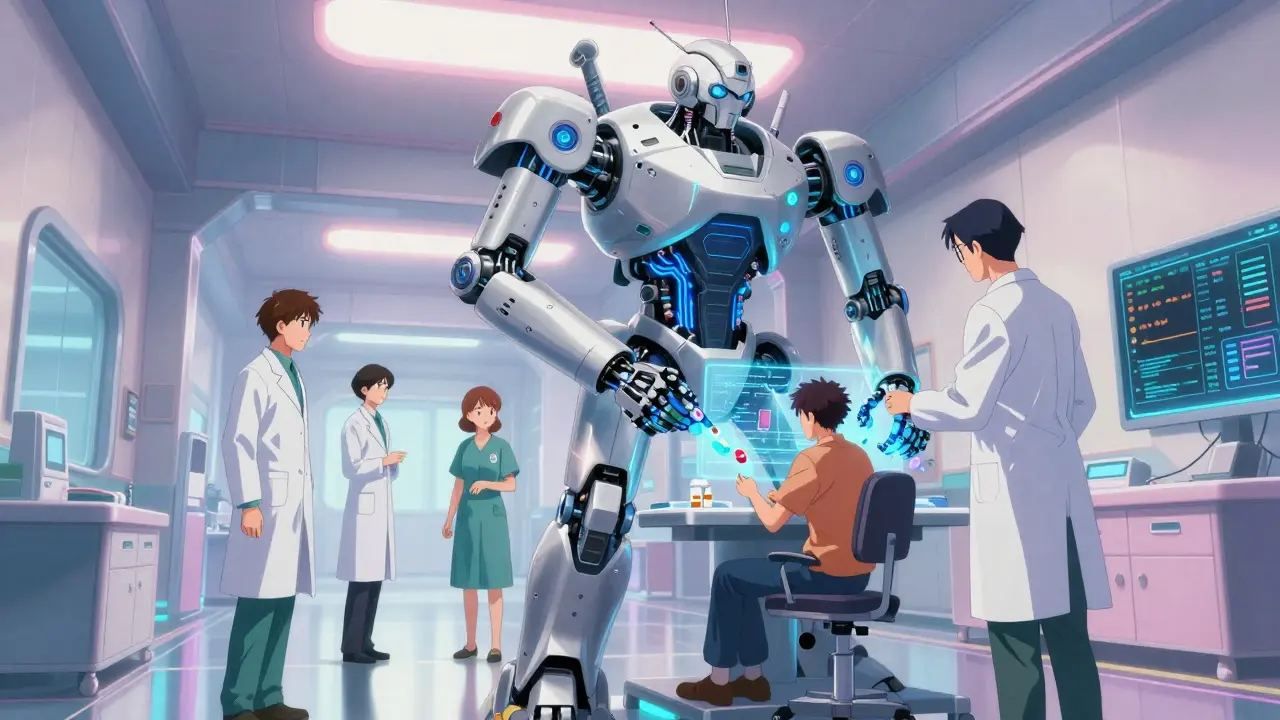
When Medications Go Wrong, Teams Step In
Imagine taking five different pills for high blood pressure, diabetes, and arthritis. One of them gives you dizziness. Another makes you nauseous. Your doctor prescribes the meds. Your pharmacist spots the clash between them. But neither can fix it alone. That’s where real change happens-not in one person’s office, but in a team that talks, listens, and acts together.
Side effects don’t just annoy patients. They lead to hospital trips, missed doses, and even death. In the U.S., preventable drug reactions cost the system over $500 billion a year. But when pharmacists, doctors, and specialists work as one unit, those numbers drop. Fast.
Who Does What? Clear Roles, Better Outcomes
People often think doctors prescribe, pharmacists dispense. That’s outdated. In modern care, roles overlap-on purpose.
Doctors diagnose. They decide what’s wrong and which drugs might help. But they don’t always know how every pill interacts with every other one, especially when a patient takes five or more. That’s where pharmacists come in. Trained in drug chemistry, metabolism, and side effect profiles, they spot hidden risks. A 2022 study in JAMA Internal Medicine found pharmacist-led medication reviews cut errors by 67%.
Specialists-like cardiologists, endocrinologists, or oncologists-bring deep knowledge of complex conditions. But they rarely see the full picture of what a patient is taking outside their specialty. A cancer patient on chemo might also be on blood thinners and antidepressants. If the oncologist doesn’t know about the other meds, a deadly interaction can slip through.
Pharmacists sit in on rounds. They review charts before the doctor even walks in. They flag: “This combo raises risk of kidney damage.” Or: “This antidepressant will make her blood pressure worse.” Then the team adjusts-before the patient leaves the clinic.
How They Talk: The SBAR Method That Saves Lives
Teams don’t just work together-they talk the same language.
One tool that’s changed everything is SBAR: Situation, Background, Assessment, Recommendation. It’s simple.
- Situation: “Mr. Lee, 72, started on warfarin last week. Now he’s bruising badly.”
- Background: “He has atrial fibrillation. Also takes lisinopril and ibuprofen for back pain.”
- Assessment: “Ibuprofen increases bleeding risk with warfarin. His INR is 5.8-dangerously high.”
- Recommendation: “Stop ibuprofen. Switch to acetaminophen. Adjust warfarin dose.”
That’s not a suggestion. It’s a protocol. In hospitals where SBAR is used, communication errors dropped by 50%. And when pharmacists use it to speak up, doctors listen. A 2023 survey showed 82% of physicians now say they “value pharmacist input as much as nursing input.”

Real Impact: Blood Pressure, Diabetes, and Beyond
The numbers don’t lie.
In a landmark 2019 study published in the New England Journal of Medicine, African-American men with uncontrolled high blood pressure were split into two groups. One got standard care. The other had a pharmacist working side-by-side with their doctor. The pharmacist adjusted meds, checked adherence, called patients weekly. Result? 94% reached target blood pressure. The control group? 29%.
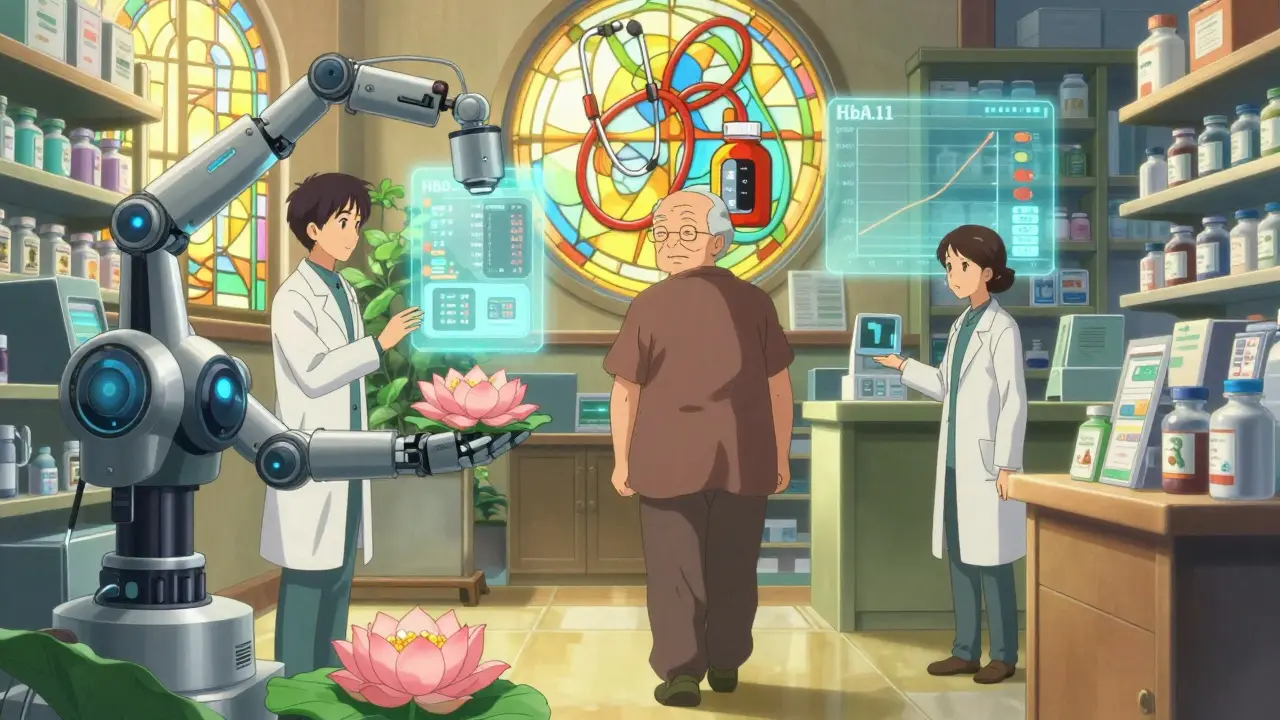
Same story with diabetes. A 2022 meta-analysis in Diabetes Care showed collaborative teams lowered HbA1c levels by 1.2% more than doctors working alone. That’s not a small difference-it’s the gap between preventing nerve damage and watching it progress.
And it’s not just chronic diseases. In cancer care, pharmacists help manage chemo side effects like nausea, mouth sores, and fatigue. They recommend anti-nausea drugs that won’t interfere with treatment. They track lab results to adjust doses before toxicity hits. One oncology clinic in Ohio cut hospitalizations for side effects by 38% in two years using this model.
Barriers Still Exist-But They’re Breaking Down
It’s not perfect.
Some doctors still see pharmacists as “pill counters.” A 2021 ASHP survey found 37% of pharmacists reported resistance from physicians early on. It takes time to build trust. One physician in Texas told a colleague: “I didn’t think they could do anything I couldn’t.” Then his patient had a dangerous interaction. The pharmacist caught it. He now sends every new prescription to the pharmacist first.
Reimbursement is another hurdle. Only 28 states pay Medicaid for pharmacist-led medication reviews. Medicare only started covering these services in team settings in 2022. But that’s changing. In 2025, CMS plans to pay pharmacists directly for comprehensive medication management-opening access for 28 million Medicare patients.
Technology helps. Electronic health records now talk to each other using HL7 FHIR standards. A pharmacist in a community pharmacy can see what a cardiologist prescribed-without the patient calling in. Real-time alerts flag dangerous combos before the prescription is filled.
What Patients Notice-And Why They Love It
Patients don’t care about protocols or billing codes. They care if they feel better.
A 2023 study in the Journal of the American Pharmacists Association found 89% of patients in collaborative care models were satisfied. Why?
- They got fewer pills. Pharmacists consolidated meds when possible.
- They got called when their labs looked off.
- They didn’t have to guess which drug caused their headache.
One woman in North Carolina told her pharmacist: “I used to take 12 pills a day. Now I take four. And I haven’t been to the ER in a year.”
Community pharmacists are especially valuable. Nine out of ten Americans live within five miles of a pharmacy. That’s more accessible than most doctors’ offices. And pharmacists are often the first to notice when a patient stops picking up meds-signaling a side effect, cost issue, or depression.
The Future Is Team-Based-And It’s Already Here
By 2030, the Institute for Healthcare Improvement predicts 75% of U.S. primary care will use team-based models. Right now, 41% already do-up from 22% in 2018.
Integrated health systems like Kaiser Permanente and Mayo Clinic have had pharmacists on care teams for over a decade. CVS and Walgreens now have embedded pharmacists in over 1,200 clinics nationwide. Academic medical centers are training future doctors to work with pharmacists from day one.
The goal isn’t to replace doctors. It’s to add expertise where it matters most: medication safety.
Side effects aren’t just a medical problem. They’re a systems problem. And the fix isn’t a new drug. It’s better teamwork.
What You Can Do-As a Patient or Caregiver
If you’re managing multiple medications:
- Ask your doctor: “Can I see the pharmacist for a full med review?”
- Bring all your pills-prescription, OTC, supplements-to your next appointment.
- Ask: “Is there a simpler way to take these? Can any be cut?”
- If you’re having side effects, don’t just stop the pill. Call your pharmacist first.
Pharmacists don’t just fill prescriptions. They’re your medication safety net. And they’re now part of the team.


Darren Gormley
January 29, 2026 AT 15:17LMAO another feel-good article about pharmacists saving the world. Where’s the data on how many of these ‘teams’ actually exist outside of fancy academic hospitals? 90% of pharmacies still just hand out pills while scrolling TikTok.
Claire Wiltshire
January 29, 2026 AT 23:48While it's true that interdisciplinary collaboration improves outcomes, we must acknowledge the structural barriers-particularly in rural and underserved areas-where pharmacists aren’t even licensed to adjust therapies. The model works brilliantly in integrated systems like Kaiser, but scalability remains a challenge without policy reform.
Mike Rose
January 31, 2026 AT 22:02pharmasists? like the guy who gives you tylenol and says 'have a nice day'? lol. doctors know what they doing. why we need extra people?
April Allen
February 1, 2026 AT 15:43The SBAR framework is a clinical communication scaffold rooted in aviation safety protocols-its adoption in healthcare represents a paradigm shift from siloed decision-making to systems-based thinking. What’s underreported is how pharmacists, as medication experts, function as cognitive offloaders for overburdened clinicians, reducing diagnostic drift and polypharmacy cascades.
Diana Dougan
February 2, 2026 AT 17:25Oh wow, a 67% error reduction? Must be nice when you have 12 people reviewing every script. Meanwhile, my local pharmacy didn't even notice I was taking 3 different blood pressure meds. Guess I'm just not important enough for the dream team.
Lily Steele
February 2, 2026 AT 19:04My grandma’s pharmacist called her last week because her labs were weird. She didn’t even ask. Just said 'hey, stop the ibuprofen, you’re bleeding internally.' Saved her trip to the ER. These people are heroes.
Russ Kelemen
February 3, 2026 AT 20:49It’s funny how we treat medicine like a solo sport. We glorify the lone genius doctor, but no one’s an island. Every pill has a story-what it interacts with, how the body absorbs it, whether the patient can afford it. The pharmacist isn’t just checking boxes. They’re reading the full novel while everyone else is skimming the first page.
Diksha Srivastava
February 4, 2026 AT 14:45This is so beautiful! In India, we don’t have this kind of system yet, but I believe it’s coming. Every patient deserves to feel safe with their meds. Thank you for sharing this hope 🌱❤️
Sidhanth SY
February 4, 2026 AT 19:32I’ve seen this work in my uncle’s cancer treatment. The pharmacist caught a drug interaction the oncologist missed. No drama, no blame-just a quick call, a tweak, and he stayed out of the hospital. Teamwork isn’t soft. It’s survival.
Adarsh Uttral
February 4, 2026 AT 20:04i work at a pharmacy and we do this stuff daily. no one ever says thanks. but we still do it. because someone’s life might depend on it.
Bobbi Van Riet
February 6, 2026 AT 09:25I used to think pharmacists just handed out pills, but after my dad had a bad reaction to his meds and the pharmacist spent 45 minutes on the phone with his cardiologist, his neurologist, and his primary care doc-figuring out which one was causing the confusion, which one was making the dizziness worse, which one he could drop entirely-I realized they’re not just experts. They’re the glue. They’re the ones who actually listen to the whole story, not just the diagnosis. And honestly? That’s the part of medicine we’ve been missing for decades. We need more of this. Not less.