

What compulsory licensing really means
Compulsory licensing isn’t about stealing patents. It’s about letting someone else make a drug when the patent holder won’t, or can’t, meet public need. Governments use it when people are dying because a life-saving medicine is too expensive or unavailable. The patent still belongs to the original company, but the government says: "You have the right to control this invention, but you don’t have the right to let people die because of it." This isn’t new. The idea dates back to the 1883 Paris Convention, but it became a global standard in 1994 with the TRIPS Agreement. Under TRIPS, countries can issue compulsory licenses as long as they pay the patent owner "adequate remuneration." That means fair compensation - not free. And in emergencies, like a pandemic, they don’t even need to ask the patent holder first.
When and why it’s used
Over 95% of all compulsory licenses issued since 2000 were for medicines. That’s not a coincidence. When a drug costs $1,000 a month and a patient earns $2 a day, the system breaks. Compulsory licensing kicks in when the market fails.
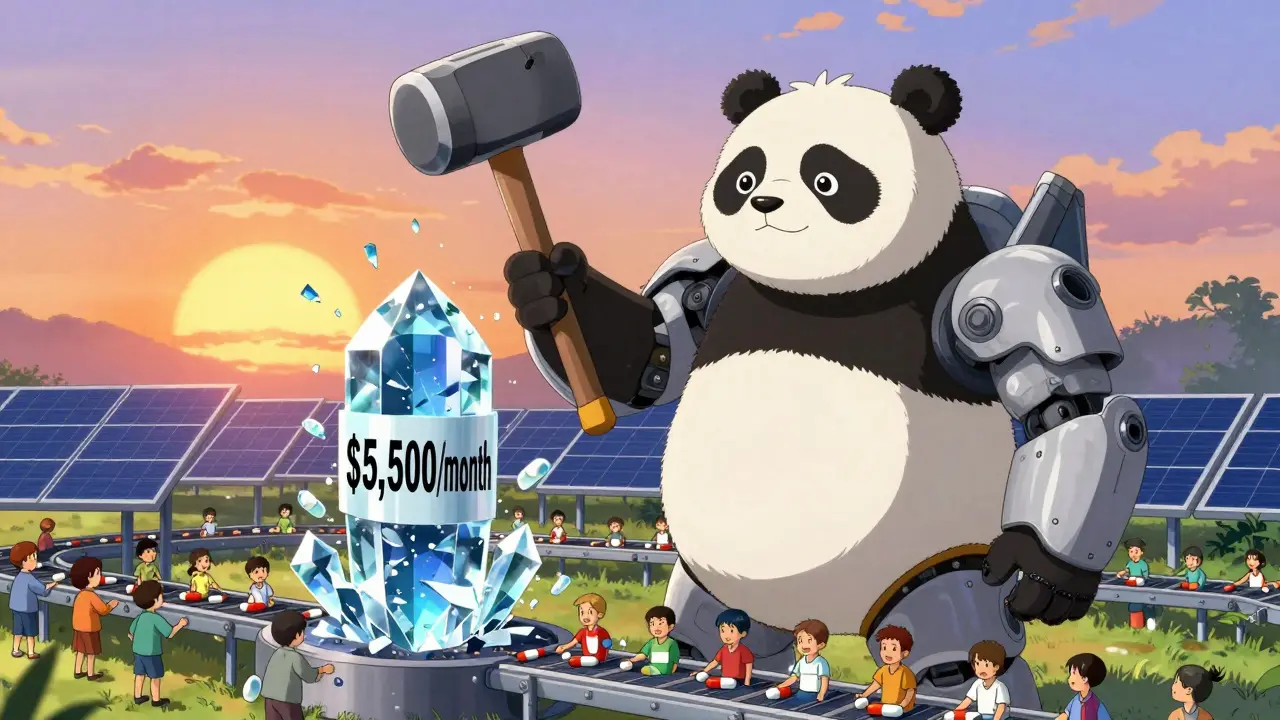
Thailand used it in 2006 to cut the price of HIV drugs by 80%. Brazil did the same with efavirenz, slashing the cost from $1.55 per tablet to $0.48. India issued its first compulsory license in 2012 for Nexavar, a kidney cancer drug priced at $5,500 a month. After the license, a generic version sold for $175. People lived. Companies didn’t go bankrupt. The patent holder, Bayer, fought it in court for eight years - and lost.
During the COVID-19 pandemic, 40 countries - including Germany, Canada, and Israel - prepared to use compulsory licensing for vaccines and treatments. Some actually issued them. Spain passed emergency rules in 2020 allowing compulsory licenses without prior negotiation. The U.S. didn’t use it for vaccines, but it did for other technologies under its own laws.
How it works in the U.S., EU, and India
The U.S. has three ways to override patents. The most common is Title 28, U.S.C. § 1498. It lets the federal government use any patented invention - from a military sensor to a cancer drug - without permission, but it must pay damages later. Between 1945 and 2020, the U.S. issued only 10 such licenses. All were for government use. The government never used the Bayh-Dole Act’s "march-in rights," even though it funded the research for drugs like Sovaldi, which sold for $84,000 a course. The NIH received 12 march-in petitions. It denied all of them.
In the European Union, each country sets its own rules. Germany’s law allows compulsory licenses for "public interest," but it’s never been used. France can do it for national defense or health emergencies. The UK lets it happen if the public’s needs aren’t being met. Spain, during the pandemic, bypassed the negotiation step entirely.
India is the most active user. Since 2005, it’s issued 22 compulsory licenses - almost all for cancer drugs. The process is strict: applicants must prove they tried to get a voluntary license, show the drug is needed for public health, and prove they can make it. The Intellectual Property Appellate Board takes 18 to 24 months to decide. But when it does, prices drop fast. Natco Pharma’s generic version of Nexavar cost 97% less than Bayer’s.
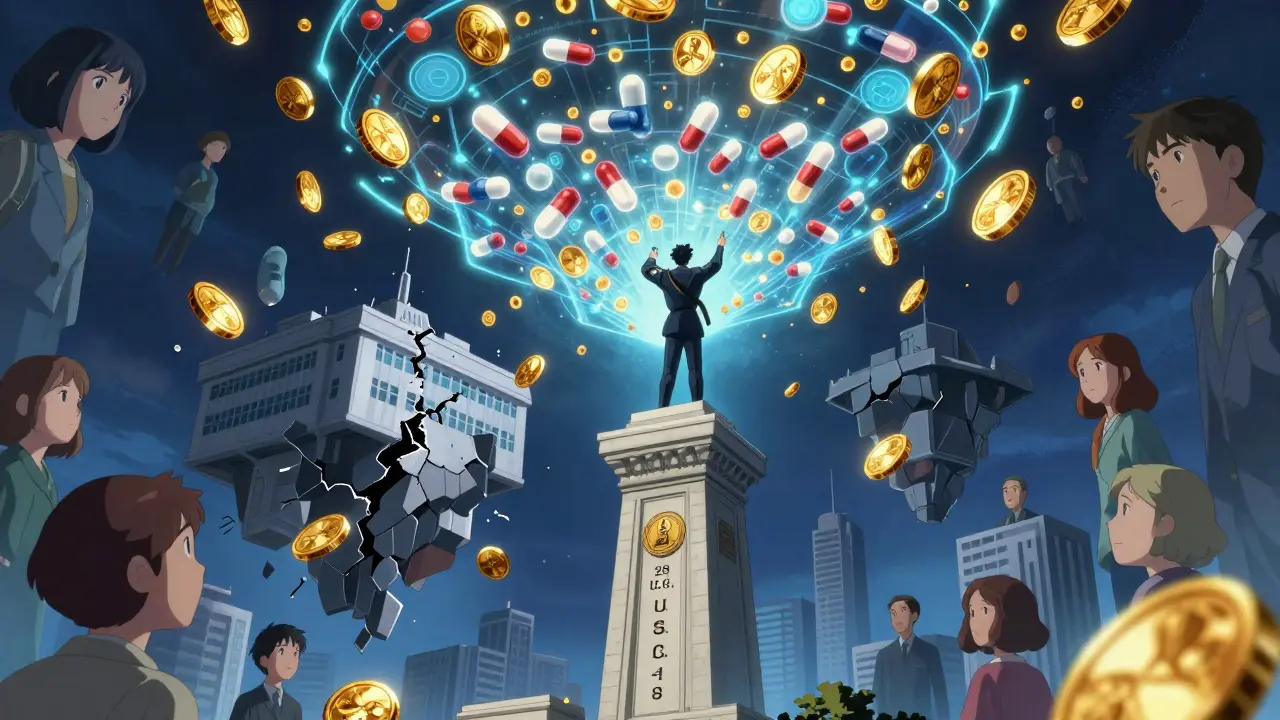
The price drop effect
When compulsory licensing works, prices collapse. In low- and middle-income countries, first-line HIV drugs fell by 92% between 2000 and 2020. That’s not magic. That’s policy.
Here’s how it plays out: A drug costs $1,200 a year. The patent holder says: "That’s our fair return." A generic maker says: "We can make it for $230." The government steps in. The patent holder gets paid - but not at monopoly rates. The patient gets treatment. The healthcare system saves millions. In Thailand, Abbott’s lopinavir/ritonavir went from $1,200 to $230 annually. Bristol-Myers Squibb’s efavirenz dropped from $550 to $200. The companies didn’t vanish. They got paid. But they stopped holding people hostage to price.
Studies show that in 83% of cases, compulsory licensing cuts drug prices by 65% to 90%. The only thing that stops it? Legal delays and political fear.
Why big pharma fights it
Pharmaceutical companies argue that compulsory licensing kills innovation. They say if you can’t charge high prices, you can’t fund new drugs. The International Federation of Pharmaceutical Manufacturers & Associations claims each compulsory license announcement causes an 8.2% drop in stock prices for the affected company.
There’s truth to that. A 2018 study in the Journal of Health Economics found that countries with active compulsory licensing programs saw 15-20% less R&D investment in pharmaceuticals. But here’s the other side: the threat of compulsory licensing has forced companies to lower prices voluntarily in 90% of HIV drug cases since 2000. That’s right - just the possibility of a license got them to negotiate.
And innovation doesn’t die. India still produces 40% of the world’s generic drugs. Brazil and South Africa have thriving generic industries. The U.S. still funds the most R&D in the world - even though it rarely uses compulsory licensing. Innovation isn’t tied to monopoly pricing. It’s tied to market size, government funding, and patient demand.
The export loophole and why it matters
One of the biggest breakthroughs in patent law came in 2005, when the WTO allowed countries without drug-making capacity to import generics made under compulsory license. Before that, a country like Rwanda couldn’t get affordable HIV drugs because it couldn’t produce them. The solution? Canada made a deal in 2012: it issued a compulsory license to a generic maker, and shipped the drugs to Rwanda. Only one country has ever used this export mechanism. But it proved the system can work.
Now, in 2023, the WHO is drafting a Pandemic Treaty that would make compulsory licensing automatic during global health emergencies. No more waiting. No more negotiations. If the WHO declares a Public Health Emergency of International Concern, countries can immediately license essential medicines.
Who actually uses it?
It’s not private companies. It’s governments. About 78% of compulsory licenses are issued at the government’s request. Only 22% are initiated by manufacturers. That’s because the legal process is complex, slow, and expensive. It takes 12 to 18 months of specialized legal work to navigate the rules. Firms like Fish & Richardson say 78% of applicants need attorneys with five or more years in patent litigation.
And even when the law allows it, many countries don’t use it. Of the 34 countries with compulsory licensing laws, only 12 have ever issued one for pharmaceuticals. Why? Lack of legal capacity. Lack of political will. Fear of trade retaliation. The U.S. puts countries that issue compulsory licenses on its "priority watch list" - but it hasn’t punished anyone since 2012.
The real barrier isn’t law - it’s fear
Compulsory licensing isn’t a weapon. It’s a safety valve. It’s there when the market fails. When a drug is too expensive. When a pandemic hits. When children can’t get insulin because of pricing.
The law is clear. The evidence is clear. Compulsory licensing saves lives. It doesn’t destroy innovation. It forces fairness. The companies that resist it aren’t protecting R&D - they’re protecting profits. And in health emergencies, profits shouldn’t come before people.
The next pandemic won’t wait for negotiations. It won’t wait for stock prices to stabilize. It will wait for the next government brave enough to use the tool already in the law. And when it does, millions will live because someone chose to override a patent - not to punish, but to protect.
How to know if your country can use it
If you’re in a country facing high drug prices or a health crisis, ask these questions:
- Does our patent law allow compulsory licensing for public health?
- Has our government ever used it? If not, why not?
- Do we have the legal and technical capacity to issue one? (Many countries need help from NGOs or international agencies.)
- Are we prepared for backlash? Companies may threaten lawsuits or pull out of the market.
- Can we guarantee fair compensation? That’s required - but it’s not a free pass. It’s a price tag, not a penalty.
If you’re a patient, advocate, or public health worker, your job isn’t to wait for a miracle. It’s to demand the law be used. Because the law is already there. It’s just sitting, waiting for someone to turn it on.



steve rumsford
January 7, 2026 AT 14:40this is the most common sense thing i've read all year. why are we letting corporations decide who lives and who dies?
LALITA KUDIYA
January 9, 2026 AT 07:40in india we saw nexavar drop from 5k to 175 and people actually lived. no drama just medicine
Poppy Newman
January 10, 2026 AT 13:50the fact that we need to even debate this is insane 🤦♀️
Jonathan Larson
January 11, 2026 AT 23:46Compulsory licensing is not an act of hostility toward intellectual property; it is an assertion of the primacy of human life over market logic. The Paris Convention enshrined this principle nearly a century and a half ago precisely because the commodification of health was recognized as morally untenable. The TRIPS Agreement did not abolish this moral framework-it codified it under conditions of necessity. To suggest that compensation negates justice is to misunderstand the very nature of equitable remuneration. The patent holder retains ownership; the state merely ensures access. This is not theft. It is stewardship.
Anthony Capunong
January 13, 2026 AT 10:58so now america's innovation is being stolen by third world countries? i bet they're not making their own vaccines. they just want free stuff.
Vince Nairn
January 14, 2026 AT 11:14the us has the law but won't use it because they're too busy funding billion dollar drug companies that charge 100x production cost. ironic much?
Ayodeji Williams
January 15, 2026 AT 19:33nobody cares about your patents when your kid is dying of insulin. just give the damn drug
Kyle King
January 16, 2026 AT 13:13this is all part of the globalist agenda. the wto is pushing this so they can take away our freedom and give drugs to illegal immigrants. mark my words.
Kamlesh Chauhan
January 17, 2026 AT 17:16india always cheats on patents anyway. why do you think they have so many fake drugs? they just copy and sell
Emma Addison Thomas
January 18, 2026 AT 00:34It’s remarkable how often the same arguments arise-fear of innovation collapse, claims of theft-when the reality is so clearly otherwise. The data shows that when access is expanded, innovation adapts. The market doesn’t vanish. It recalibrates. And in doing so, it becomes more humane.
Mina Murray
January 19, 2026 AT 11:50you people don't understand. if you let generics in, big pharma will stop researching cures for cancer. it's not about price, it's about the future of medicine. you're destroying science for a few dollars.
Rachel Steward
January 19, 2026 AT 19:34Let’s be brutally honest: the pharmaceutical industry doesn’t invent cures-they invent pricing strategies. The R&D numbers they tout? Mostly marketing. The real innovation is in patent evergreening, litigation, and lobbying. The fact that the NIH funded Sovaldi but let Gilead charge $84k is proof the system is rigged. Compulsory licensing isn’t the problem-it’s the only check left on a runaway monopoly.
Christine Joy Chicano
January 20, 2026 AT 03:36The export mechanism is quietly revolutionary. Rwanda couldn’t make the drugs. Canada didn’t force them to. They made them, shipped them, and saved lives without violating a single patent. That’s not theft. That’s cooperation. That’s the kind of global solidarity we need more of-not tariffs and threats.
Adam Gainski
January 21, 2026 AT 15:06I’ve worked in public health for 15 years. I’ve seen kids go without insulin because their parents couldn’t afford it. I’ve watched families choose between rent and medicine. Compulsory licensing isn’t radical. It’s basic. The law is there. The will isn’t. We need to stop treating access to medicine like a privilege and start treating it like a right.
Anastasia Novak
January 23, 2026 AT 15:01oh wow. so now the rich countries are supposed to just give away their hard earned science? next you’ll tell me we should give free housing to everyone who asks. this is socialism with a lab coat.