
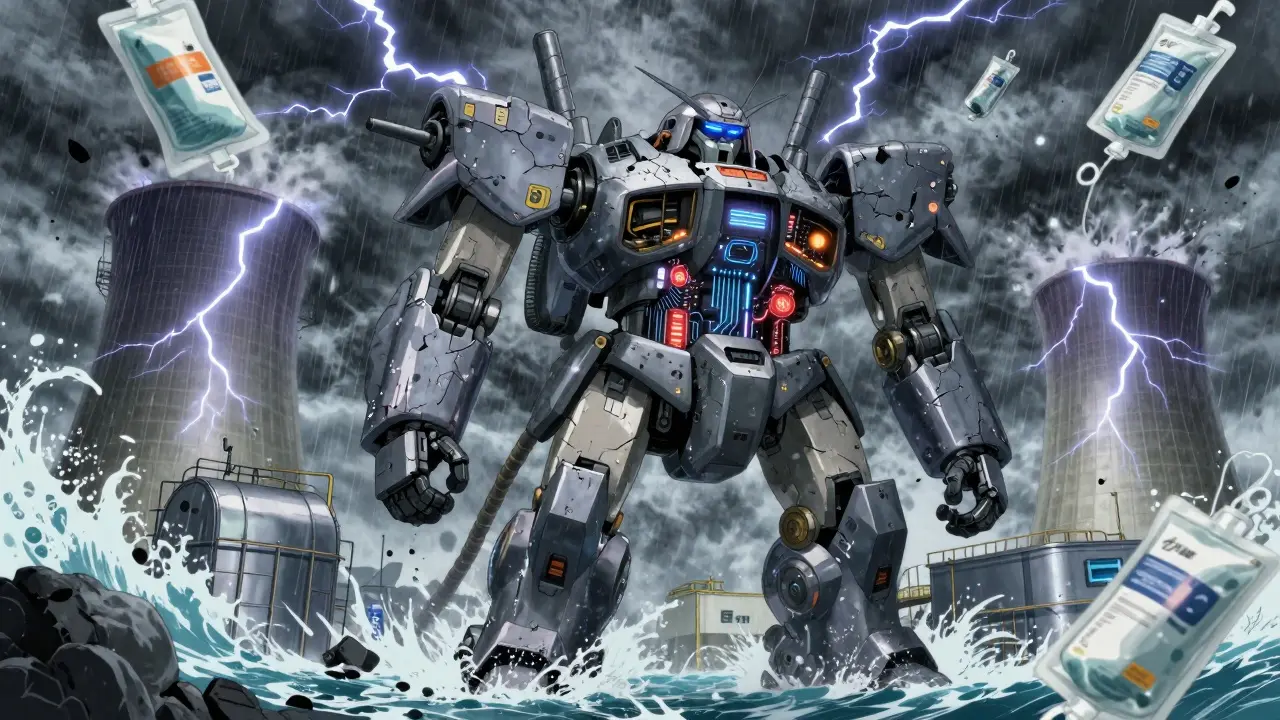
When Hurricane Maria hit Puerto Rico in 2017, it didn’t just knock out power and destroy homes-it also shut down the production of drug shortages that would last for years. At the time, one in ten FDA-approved drugs in the U.S. came from that island. One in four sterile injectables. Insulin. Saline. Antibiotics. All of it stopped. Hospitals scrambled. Patients waited. Some died because the medicine they needed simply wasn’t there.
That wasn’t an accident. It was a warning.
Today, climate change isn’t just about rising seas or hotter summers. It’s about whether your next prescription will be available. And the system is still dangerously unprepared.
Why Your Medicine Could Vanish After a Storm
Most people think drug shortages happen because of cost, profits, or bad management. But increasingly, they happen because of weather.
Over 65% of U.S. pharmaceutical manufacturing facilities sit in counties that have experienced a federally declared weather disaster between 2018 and 2023. Hurricanes, floods, wildfires-they don’t just damage buildings. They wipe out power grids, flood storage tanks, break cooling systems, and shut down production lines that can’t be restarted overnight.
Take Baxter International’s plant in North Cove, North Carolina. In September 2024, Hurricane Helene smashed into the region. That single facility made 1.5 million IV fluid bags every day-60% of the entire U.S. supply. Within 72 hours, hospitals nationwide began rationing saline. Elective surgeries were canceled. Cancer treatments delayed. Emergency rooms started using less fluid, knowing they might not get more for months.
This isn’t rare. After Hurricane Maria, insulin shortages lasted 18 months. Why? Because the power grid took 11 months to fix. And without stable electricity, you can’t make sterile drugs. Not even close.
One Factory, One Drug, One Disaster
The pharmaceutical industry doesn’t just rely on weather-prone areas-it relies on too few factories.
For 78% of sterile injectable drugs in the U.S., there are only one or two manufacturers total. That means if one plant goes down, there’s no backup. No spare parts. No alternative supplier. Just silence.
Before Hurricane Maria, Puerto Rico had 55 FDA-approved drug factories. One of them made 80% of the nation’s insulin. When it went offline, no other facility in the world could scale up fast enough to replace it. It took years to rebuild capacity.
And it’s not just Puerto Rico. In Spruce Pine, North Carolina, 90% of the high-purity quartz used in medical devices is mined. In Marion, North Carolina, Baxter’s IV fluid plant sits in a floodplain. In Rocky Mount, a tornado in 2023 shut down Pfizer’s facility, knocking out 27 specific medicines for over six months.
These aren’t isolated incidents. They’re structural flaws.
Why Hurricanes Are the Biggest Threat
Not all disasters hit drug supplies the same way.
Hurricanes cause the worst damage-accounting for 47% of all climate-related pharmaceutical disruptions. Why? Because they combine high winds, flooding, long-term power outages, and transportation shutdowns. They hit manufacturing hubs hard and leave them out for weeks or months.
Wildfires (28%) and floods (19%) also cause major problems, but they’re often more localized. A wildfire might burn a warehouse, but not a whole production line. A flood might ruin a storage room, but not the clean rooms where sterile drugs are made.
Hurricanes? They take out the whole system. Power. Water. Roads. Communication. Cooling. Everything. And because pharmaceutical production requires constant temperature control and sterile environments, even a 24-hour outage can ruin an entire batch.
After Hurricane Helene, the FDA estimated IV fluid shortages would last until mid-2025. That’s nearly a year of crisis-just from one storm.
Why the System Can’t Recover Fast Enough
You can’t just build a new drug factory when one gets destroyed.
It takes 6 to 12 months to open a new pharmaceutical facility. Two to three years to get the specialized equipment-clean rooms, sterilizers, automated filling lines-installed and certified. And that’s if you have the land, the permits, the skilled workers, and the money.
Meanwhile, hospitals are left with a few weeks of stock. No one keeps more than that. It’s too expensive. Too risky. The industry runs on “just-in-time” inventory-meaning drugs arrive the day they’re needed, not before.
That model works fine in normal times. But when a hurricane hits, it collapses. There’s no buffer. No safety net. Just panic.
During Hurricane Maria, some hospitals resorted to reusing IV bags after sterilizing them-something never approved by regulators. Others switched to oral fluids, even for patients who couldn’t swallow. These aren’t solutions. They’re survival tactics.
Who’s Trying to Fix This?
Some people are trying. But progress is slow.
The FDA now officially lists climate disasters as a top cause of drug shortages. In 2024, they proposed a new rule: manufacturers of critical drugs must keep 90-day emergency stockpiles and submit climate risk plans. That’s a start. But it’s not mandatory yet. And even if it passes, it’ll cost drugmakers 4-7% more to produce each medicine.
Some companies are testing AI tools to predict disasters. Sensos.io used weather models to forecast Hurricane Helene’s impact on IV fluid supply 14 days in advance. That gave a few hospitals time to stockpile. But most didn’t know. Most still didn’t act.
The Strategic National Stockpile is running small pilots-storing emergency IV fluids and antibiotics in hurricane zones. Early results show it cuts shortage duration by 40%. But the program covers only a handful of drugs and a few states.
Hospitals with over 500 beds are 3.2 times more likely to map their supply chains than small clinics. That means rural hospitals, community health centers, and nursing homes are the most vulnerable. They don’t have the staff, the budget, or the connections to prepare.

What’s at Stake
It’s not just about saline or insulin.
It’s about cancer drugs. Antibiotics. Epinephrine. Insulin. Painkillers. Vaccines. All of them rely on the same fragile system.
The American Society of Clinical Oncology warns that by 2027, cancer patients will face treatment delays during 8 to 10 major climate disasters every year-if nothing changes.
And it’s getting worse. NOAA predicts a 25-30% increase in Category 4 and 5 hurricanes by 2030. That means more storms hitting the same coastal and southern manufacturing zones.
Right now, only 31% of major drugmakers have done more than assess their climate risks. Most still treat it like a future problem. But the future is here.
What Needs to Happen
This isn’t about blaming companies or regulators. It’s about redesigning a system that was built for a different world.
Here’s what’s needed:
- Geographic diversification: No single drug should come from one region. Production must be spread across multiple climate-resilient zones-like the Midwest, Mountain West, or Northeast-away from floodplains and hurricane paths.
- Strategic stockpiles: The government must fund and maintain emergency reserves of critical drugs-not just for hospitals, but for pharmacies, clinics, and nursing homes.
- Regulatory flexibility: The FDA needs faster pathways to approve alternative suppliers during disasters. The 28-day delay during Maria was deadly. It can’t happen again.
- Supply chain transparency: Every hospital and pharmacy must know where their drugs come from-not just the brand name, but the factory, the country, the backup plan.
- Public investment: The U.S. needs to spend $12-15 billion over the next decade to rebuild this system. That’s less than 1% of annual healthcare spending. But it could prevent 70% of future shortages.
These aren’t radical ideas. They’re basic safety measures. Like fire codes for buildings. Or backup generators for hospitals. We accept them in other areas of public health. Why not for medicine?
What You Can Do
As a patient, you can’t fix the supply chain. But you can be prepared.
- If you take a critical drug-like insulin, epinephrine, or heart medication-ask your pharmacist: “Is there a backup source if this runs out?”
- Keep a 30-day supply on hand if possible. Insurance often allows early refills during emergencies.
- Sign up for alerts from your local health department or the FDA’s drug shortage page.
- Advocate. Call your representative. Ask them to support the FDA’s proposed rule on emergency stockpiles.
Medicine shouldn’t be a gamble. Not when we know the storms are coming.
Can natural disasters really cause drug shortages?
Yes. Natural disasters like hurricanes, floods, and wildfires directly damage pharmaceutical manufacturing facilities. After Hurricane Maria in 2017, 30% of U.S. drug production stopped because Puerto Rico housed 10% of all FDA-approved drugs. In 2024, Hurricane Helene shut down a single plant that made 60% of the U.S. IV fluid supply, triggering nationwide shortages.
Why don’t drug companies have backup factories?
Making drugs is expensive and tightly regulated. Most companies rely on a few high-efficiency factories to keep costs low. Building new ones takes years and millions of dollars. With low profit margins on generic drugs, there’s little financial incentive to create redundancy. This creates single points of failure-meaning if one plant goes down, the drug disappears.
Which drugs are most at risk during climate disasters?
Sterile injectables are the most vulnerable-things like IV fluids, insulin, antibiotics, and epinephrine. These require clean rooms, constant refrigeration, and precise manufacturing. They can’t be easily switched to oral forms or substituted. Generic drugs are especially at risk because they’re made by fewer companies and have thinner profit margins, so there’s less investment in resilience.
Is the FDA doing anything to prevent this?
Yes. In 2024, the FDA proposed a rule requiring manufacturers of critical drugs to maintain 90-day emergency stockpiles and submit climate risk plans. They’ve also created faster approval paths for imports during emergencies. But these measures aren’t yet mandatory, and implementation is slow. Many hospitals still lack the tools or funding to prepare.
What can patients do if their medicine runs out?
If you rely on a critical medication, keep a 30-day supply on hand when possible. Ask your pharmacist about alternative brands or sources. Contact your doctor immediately if you’re at risk of running out. Sign up for FDA drug shortage alerts. And don’t hesitate to advocate-contact your elected officials to support stronger supply chain protections.
Climate change isn’t a future threat to medicine. It’s a present danger. And the longer we wait to fix the system, the more lives we’ll risk.

Maggie Noe
January 9, 2026 AT 04:54This hit me right in the feels. 🥺 I’ve been on insulin for 12 years. Imagine not knowing if your life-saving med will be there next week. Climate change isn’t ‘future stuff’-it’s in my fridge right now. 💔
Darren McGuff
January 10, 2026 AT 21:39The UK’s NHS has been quietly building regional drug redundancy hubs since 2021. We’re not perfect, but we’ve got backup production lines in Wales and Northern England for critical injectables. The US system is terrifyingly centralized. This isn’t just infrastructure failure-it’s a moral one.
Ashley Kronenwetter
January 12, 2026 AT 05:08The FDA’s proposed rule is a step in the right direction, but without enforceable penalties and mandatory stockpile thresholds, it remains performative. Regulatory agencies must move from advisory to authoritative in matters of public health resilience. The cost of inaction is measured in lives, not balance sheets.
Heather Wilson
January 12, 2026 AT 08:47Let’s be real-this whole thing is just capitalism failing to account for externalities. Pharma companies don’t invest in redundancy because it cuts profits. Patients don’t stockpile because insurance won’t cover it. Governments don’t act because it’s not politically sexy. Everyone’s happy to blame the weather while ignoring the system that made it deadly. Classic.
Jeffrey Hu
January 13, 2026 AT 17:24You guys are missing the real issue. It’s not about hurricanes-it’s about the fact that 80% of API manufacturing is in India and China. Puerto Rico? That’s just the tip of the iceberg. If a cyclone hits Gujarat or a factory in Shanghai gets shut down for safety violations, you’re looking at global shortages. This isn’t a U.S. problem-it’s a global supply chain collapse waiting to happen.
Matthew Maxwell
January 14, 2026 AT 09:11I’m sorry, but this is what happens when you let corporations run healthcare. If insulin were a public utility like water or electricity, we wouldn’t be having this conversation. You want resilience? Nationalize the production. Stop letting greedy CEOs treat medicine like a commodity. People are dying because someone’s quarterly earnings report was a little soft.
Kiruthiga Udayakumar
January 15, 2026 AT 02:49I work in a hospital in Bangalore. We’ve seen Indian-made insulin and antibiotics vanish because of monsoon floods in Hyderabad. The same thing is happening here. You think this is just an American problem? Wake up. This is global. And the rich countries? They hoard stockpiles while we beg for scraps. It’s colonialism with IV bags.
Patty Walters
January 16, 2026 AT 00:25i’ve been keepin a 30-day stash of my blood pressure med since last year. my pharmacist said it’s fine if i ask for early refills during storm season. just… don’t wait till the last minute. also, the fda alert site is kinda clunky but it works. 🤞
Jenci Spradlin
January 16, 2026 AT 22:03I work in pharma logistics. The real nightmare? The cooling chains. One power outage = entire batch ruined. Even if the building’s fine. And no, you can’t just ‘reroute’ insulin. It’s not Amazon. You need sterile, cold, certified transport. One broken fridge = 10,000 people without meds. We’re one storm away from a national crisis every damn year.
Gregory Clayton
January 18, 2026 AT 00:34America’s got the best damn scientists and factories in the world. Why are we letting a few hurricanes shut us down? Build the plants in Texas, Arizona, or the Midwest. Stop cowering in flood zones. We’re not weak. We’re just lazy. Time to get tough.
Catherine Scutt
January 19, 2026 AT 18:43Honestly? If you’re on insulin or epinephrine and you didn’t prepare for this, you kinda brought it on yourself. People need to stop being so passive. This was predictable. You didn’t act? Too bad.