

When you take a generic medication, you expect the same results as the brand-name version. And for most people, that’s exactly what happens. But sometimes, something unexpected occurs - a rash that won’t go away, sudden dizziness, or a strange reaction that doesn’t match the side effects listed on the label. If you’ve ever wondered whether you should report it, especially if it’s rare or seems linked to a generic drug, the answer is yes. Generic drugs are held to the same safety standards as brand-name drugs, and reporting unusual reactions isn’t just helpful - it’s critical for protecting others.
Why reporting rare side effects matters
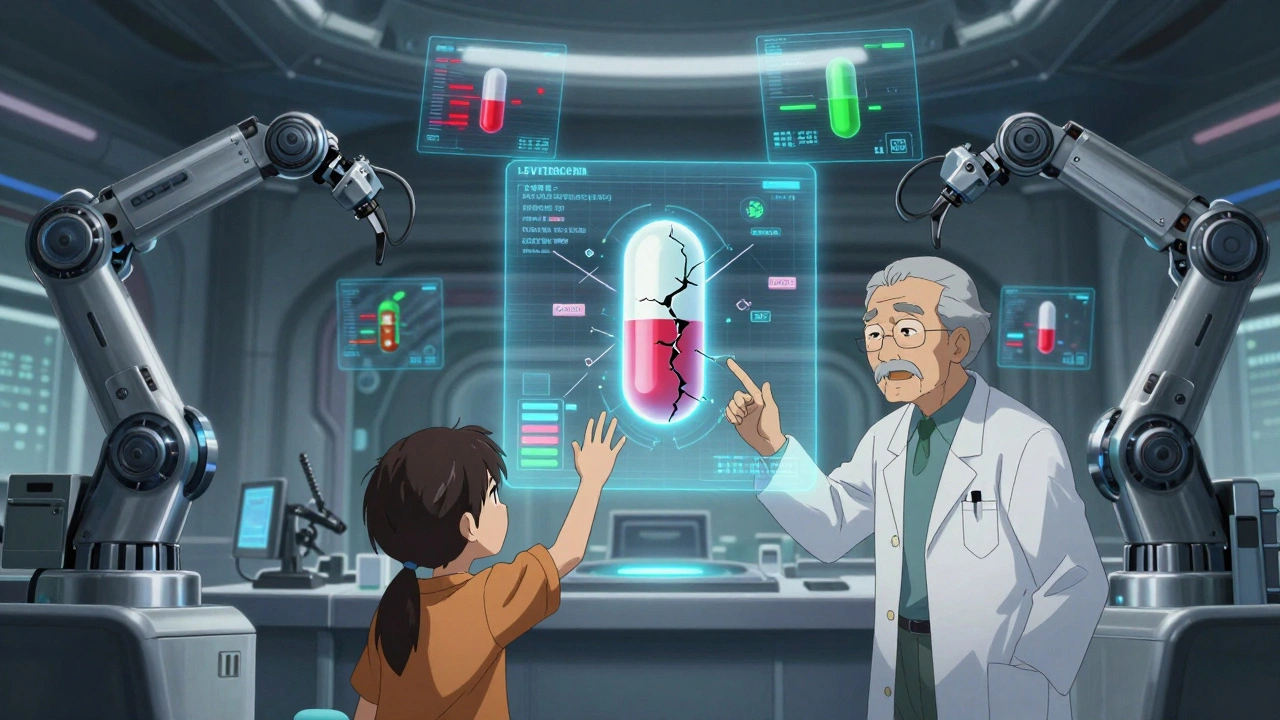
Many people assume that because a generic drug is cheaper, it’s less rigorously tested. That’s not true. The FDA requires generics to have the same active ingredient, strength, dosage form, and route of administration as the brand-name drug. They must also prove they work the same way in the body. But here’s the catch: clinical trials for generics are done on a few hundred people. That’s enough to catch common side effects - like headaches or nausea - but not rare ones that might affect one in 10,000 or even one in 100,000 people. That’s where real-world use comes in. Once a drug is on the market and thousands, even millions, of people are taking it, rare reactions start to show up. These aren’t always caught until someone reports them. In 2021, 17 reports of QT prolongation (a heart rhythm issue) linked to generic citalopram led the FDA to update the label, warning doctors not to prescribe more than 20 mg per day for patients over 60. That change likely prevented serious heart problems in others. The same thing happened with generic levetiracetam. Between 2019 and 2022, 42 reports of severe joint pain popped up. That’s not something listed in the original label. But because people reported it, the FDA started a safety review. Without those reports, the issue might have gone unnoticed for years.What counts as a rare adverse event?
The FDA defines rare adverse events as reactions that occur in fewer than 1 in 1,000 people based on clinical trial data. But in practice, post-marketing reports often reveal even rarer reactions - one in 5,000, one in 10,000, or worse. These aren’t just random coincidences. They’re signals. Here’s how to tell if your reaction might be rare and worth reporting:- The reaction wasn’t listed in the drug’s official side effect information.
- You started the medication recently - say, within the last few weeks - and the symptom appeared soon after.
- No other explanation makes sense. For example, if you developed severe skin blistering after starting a new generic lamotrigine, and you haven’t changed anything else in your routine, that’s a red flag.
- The reaction is serious: hospitalization, life-threatening symptoms, permanent damage, or congenital defects.
Who should report and how
Anyone can report - patients, caregivers, pharmacists, doctors. You don’t need to be a medical professional. The key is to provide clear, accurate details. If you’re a healthcare provider, use MedWatch Form 3500. If you’re a patient or family member, use Form 3500B. Both are free and available online at fda.gov/medwatch or by calling 800-FDA-1088. What to include in your report:- Your age, weight, and any existing health conditions (like kidney disease or heart problems).
- The exact name of the generic drug - including the manufacturer if you know it (check the pill bottle or pharmacy label).
- The lot number. This is critical. Generic drugs from different manufacturers can have slightly different inactive ingredients, and sometimes those cause reactions. Only 12.4% of consumer reports include lot numbers, which makes it hard to trace the issue.
- When you started and stopped the drug, and the dosage.
- Other medications you’re taking. Interactions can cause unexpected side effects.
- A description of the reaction: when it started, how bad it was, how long it lasted, and whether it improved after stopping the drug.
- Any lab results or doctor’s notes related to the event.
Why consumer reports often fall short
The FDA analyzed over 1.2 million adverse event reports and found something troubling: only 28.7% of consumer-submitted reports had enough detail to be useful. Compare that to 63.2% of reports from healthcare providers. Why the gap? Most patients don’t know what information matters. They might say, “I felt weird after taking the pill,” but not mention the exact time frame, the dose, or that they were also taking blood pressure meds. Others don’t know where to find the lot number. Or they assume, “It’s just a generic - it probably doesn’t matter.” That’s a dangerous assumption. In 2022, the FDA found that 90.2% of prescriptions for diabetes, anticoagulants, and opioids in Medicare Part D were generics. That’s tens of millions of people. If even a tiny fraction have rare reactions, the numbers add up fast.What happens after you report
Your report goes into the FDA’s Adverse Event Reporting System (FAERS), a database with over 25 million entries. It’s not just a filing cabinet - it’s a live surveillance tool. The FDA uses AI and machine learning to scan for patterns. Since 2020, these tools have spotted potential safety signals 4.8 months earlier than before. If enough similar reports come in - say, five people reporting the same rare skin reaction with the same generic brand - the FDA may investigate further. They might request new studies, update the drug label, or even ask the manufacturer to change the formulation. In 2023, the FDA used electronic health records from 300 million patients through its Sentinel Initiative to detect a new risk: certain generic metformin formulations were linked to higher rates of low blood sugar in older adults. That discovery came from analyzing real-world data, not clinical trials.Common myths about generics and side effects
There are a few myths floating around that stop people from reporting:- Myth: Generics are less safe than brand-name drugs. Fact: The FDA requires them to be bioequivalent. The active ingredient is identical. Most side effects are the same.
- Myth: If it’s not on the label, it’s not the drug’s fault. Fact: Labels are based on clinical trial data. Rare events only show up after widespread use. That’s why reporting is essential.
- Myth: Only doctors can report. Fact: Anyone can. You don’t need a prescription or medical training.
- Myth: Reporting won’t make a difference. Fact: Every report adds to the data. The citalopram and levetiracetam examples prove that individual reports lead to real changes.
What’s being done to improve reporting
The FDA knows consumer reports need improvement. Their 2024 action plan aims for a 25% increase in high-quality generic ADE reports by 2026. They’re simplifying the reporting form, creating video guides, and working with pharmacies to include reporting instructions on prescription labels. By December 2025, all manufacturers will be required to submit adverse event reports electronically - no paper forms allowed. That will speed up the process and improve data quality. But until then, the system still relies on you. Your report could be the one that catches the next hidden risk.What to do if you suspect a reaction
If you think a generic drug is causing a rare side effect:- Don’t panic. Most reactions are mild and go away.
- Write down everything: dates, symptoms, doses, other meds.
- Check the pill bottle for the manufacturer and lot number.
- Call your doctor - they can help determine if it’s serious or needs immediate attention.
- Report it to MedWatch. Even if your doctor reports it, file your own copy. It adds weight to the signal.
Final thought: Your voice matters
Generic drugs save the U.S. healthcare system billions each year. They’re safe, effective, and essential. But safety isn’t just about what happens in a lab - it’s about what happens when real people take them every day. Your report might seem small. But in a system that tracks tens of millions of prescriptions, your voice is part of the signal. It could prevent someone else from having the same reaction. It could lead to a label change, a better formulation, or even a recall. If you’ve had an unusual side effect - no matter how rare, how mild, or how confusing - report it. It’s simple. It’s free. And it might save a life.Do I need to prove the generic drug caused my side effect before reporting?
No. You don’t need to prove causality. The FDA encourages reports even when you’re unsure. Many major safety findings started with reports where the connection wasn’t clear at first. Your report helps experts identify patterns - you’re not expected to be a doctor.
Can I report a side effect from a generic drug if I don’t know the manufacturer?
Yes. If you don’t know the manufacturer, report what you do know: the drug name, dosage, and lot number if available. The FDA can often trace the manufacturer from the lot number. If you don’t have that, just report the generic name and your symptoms. Even incomplete reports are valuable.
Are generic drugs more likely to cause side effects than brand-name drugs?
No. A 2021 FDA study of 1.2 million adverse event reports found no statistically significant difference in reporting rates between generic and brand-name cardiovascular drugs. The active ingredient is the same, so the side effect profile is nearly identical. Any differences in reactions are usually due to inactive ingredients or individual patient factors, not the drug’s quality.
What if my doctor says the reaction isn’t serious - should I still report it?
Yes. Doctors may not always recognize rare reactions, especially if they’re uncommon or poorly documented. Your report adds to the national database and may help others. If you believe something is wrong, trust your instincts. The FDA’s goal is to catch signals early, even if they seem minor at first.
How long does it take for a reported side effect to lead to a label change?
There’s no fixed timeline. It depends on how many similar reports come in and how strong the signal is. For example, it took 17 reports of QT prolongation with generic citalopram over several months before the FDA updated the label in 2021. Other changes may take years. But every report counts - even if you don’t see immediate results.
Can I report side effects for over-the-counter (OTC) generics too?
Yes. The MedWatch system accepts reports for all medications, including OTC generics like ibuprofen, loratadine, or omeprazole. If you experience a serious or unexpected reaction - like a severe allergic response or liver damage - report it. Even common drugs can cause rare, serious reactions in some people.
What if I report and nothing happens? Was it a waste of time?
No. Reporting isn’t about getting a personal response - it’s about contributing to public safety. One report might not change anything, but 100 reports from the same drug can trigger a full safety review. You’re helping build the evidence that protects others, even if you never hear back.
Are there any side effects that are more common with generics?
Not in terms of active ingredients. But some people report reactions to inactive ingredients - like lactose, dyes, or fillers - that vary between manufacturers. For example, a person with lactose intolerance might have digestive issues with one generic version of metformin but not another. Always check the inactive ingredients on the label if you have known sensitivities.




Scott Butler
December 13, 2025 AT 08:16This whole post is just pharma propaganda. Generics are cut-rate junk made in India and China with who-knows-what filler. I’ve had three different generics for my blood pressure and each one made me feel like I was drugged up on cheap vodka. Report? Hell yes I reported - and nothing happened. Because the system’s rigged.
They say ‘same active ingredient’ - yeah, right. My body knows the difference. And no, I don’t care if it’s ‘FDA approved.’ I’ve seen the factories on YouTube.
Emma Sbarge
December 14, 2025 AT 06:35My sister had a full-body rash after switching to a generic levetiracetam. The doctor blew it off as ‘stress.’ She kept a log - dates, doses, lot numbers - and filed a MedWatch report herself. Three months later, the FDA sent her a thank-you note. Turns out three others had the same reaction with that exact lot. She didn’t get compensation, but she saved people from the same nightmare.
Don’t underestimate your own experience. You’re not just a patient. You’re data.
nina nakamura
December 15, 2025 AT 17:13Stop romanticizing consumer reports. The FDA’s system is a garbage fire. 70% of reports are useless because people can’t tell the difference between a hangover and a drug reaction. Lot numbers? Most don’t even know where to find them. You think your ‘weird feeling’ after taking a pill is a safety signal? It’s probably caffeine withdrawal.
And yes, I’ve read the 2021 FDA study. The data doesn’t support your fear-mongering. Stop giving ammunition to anti-generic conspiracy theorists.
Also stop using emoticons. You’re not a teenager on TikTok.
Rawlson King
December 16, 2025 AT 17:49As a Canadian pharmacist who’s filled thousands of generic scripts, I’ve seen it all. The inactive ingredients vary wildly between manufacturers - and yes, that matters. I had a patient with severe GERD who only reacted to one brand of omeprazole because of the coating. Switched to another - problem vanished.
Don’t blame the active ingredient. Blame the filler. And always check the label. Most pharmacies won’t tell you unless you ask. Knowledge is power. And power isn’t free.
Constantine Vigderman
December 18, 2025 AT 11:08OMG THIS IS SO IMPORTANT!!! I had this weird tingling in my hands after switching to a generic gabapentin and I was like ‘nah it’s prob just stress’ but then I remembered this video I saw and I was like ‘wait no’ so I checked the bottle and found the lot number and I REPORTED IT ON MEDWATCH AND IT WAS SO EASY LIKE I DID IT IN 5 MINUTES AND NOW I FEEL LIKE A HERO 😍
Also my cousin’s dog had a reaction to a generic flea med so we reported that too lol
YALL NEED TO DO THIS. IT’S FREE. IT’S FAST. IT’S LIFE SAVERING. 🙌
Cole Newman
December 19, 2025 AT 18:36Bro you’re telling me to report a rash but you don’t even say how to find the lot number on the bottle? That’s like telling someone to fix their car but not showing them where the hood latch is.
Also why is everyone acting like the FDA’s some magical oracle? They take years to act. Meanwhile I’m stuck with the same bad generic because my insurance won’t cover the brand. So what’s the point? Report it? Cool. Then what? I still gotta take the damn thing.
And yeah, I know the active ingredient is the same. But my body ain’t a lab rat. Stop pretending it is.
Casey Mellish
December 21, 2025 AT 15:09As an Australian who’s taken generics for 15 years, I’ve had zero issues. But I report every single weird symptom anyway. Why? Because the system only works if people participate. We’re not just consumers - we’re public health partners.
And yes, I know where the lot number is. It’s on the blister pack, bottom right, usually in tiny font. If you can’t find it, call your pharmacist. They’ll show you. No excuse.
Also, don’t confuse correlation with causation. Just because you felt weird after taking a pill doesn’t mean the pill caused it. But if it happens again? Report it. Then try the next batch. Track it. Be the detective.
Tom Zerkoff
December 23, 2025 AT 02:32Thank you for this comprehensive and meticulously researched post. The distinction between active and inactive ingredients is critical, and the data on reporting efficacy is both compelling and underutilized.
I would like to emphasize that healthcare providers must actively educate patients on the importance of documenting lot numbers and symptom onset timelines. Many patients are unaware that the FDA’s surveillance system relies on granular, longitudinal data - not anecdotal impressions.
Furthermore, the integration of electronic health records into FAERS, as demonstrated by the Sentinel Initiative, represents a paradigm shift in pharmacovigilance. We are moving from reactive surveillance to predictive analytics. This is not merely a procedural update - it is a public health revolution.
To those who feel their reports are insignificant: each data point contributes to a statistical signal. The absence of your voice is the true risk.
Yatendra S
December 24, 2025 AT 17:21life is a cycle 🌱
we take pills to fix our bodies
but our bodies scream back in silence
who listens?
the FDA? maybe
but the real truth? we are all just ghosts in a machine
your report won’t change the world
but it might change one person’s tomorrow
so you report… not for them
but for the version of you who didn’t know
and now you do 💙
kevin moranga
December 25, 2025 AT 02:33Hey everyone - I just want to say how proud I am of you all for even thinking about this. Seriously. Most people just swallow the pill and move on. But you? You’re paying attention. You’re asking questions. That’s huge.
And listen - if you’re nervous about reporting, I get it. I was too. I thought ‘what if they laugh at me?’ But guess what? The FDA doesn’t laugh. They take notes. And they need your notes.
Don’t wait until you’re hospitalized. Don’t wait until someone else gets hurt. Write down the date, the dose, the lot number - even if you’re not sure. That little bit of info? It’s gold. It’s a breadcrumb trail that leads to someone else’s safety.
And if you’re feeling overwhelmed? Start small. One report. One bottle. One moment of courage. That’s all it takes to start changing the system. You’ve got this. I believe in you. 💪❤️
Alvin Montanez
December 26, 2025 AT 03:48Let’s be honest - most of these reports are from people who don’t understand pharmacology and are looking for someone to blame. You get a headache after taking a generic? It’s not the drug. It’s your lifestyle. You’re stressed. You’re not sleeping. You’re drinking too much coffee. You’re blaming the pill because it’s easier than taking responsibility for your own health.
And don’t get me started on the lot number obsession. The FDA doesn’t need your lot number. They need real science. Controlled trials. Peer-reviewed studies. Not some guy in Ohio who says he ‘felt weird’ after taking a pill on a Tuesday.
Stop turning medicine into a conspiracy board. The system works. It’s not perfect, but it’s not broken either. Stop trying to fix it with emotional anecdotes.
Lara Tobin
December 27, 2025 AT 19:47I took a generic version of sertraline last year and started crying uncontrollably at work. I didn’t tell anyone. I thought I was just ‘being dramatic.’ But then I remembered my mom had the same thing with a different generic. So I dug out the bottle - lot number, date, everything - and reported it. I didn’t expect anything to happen.
Two months later, my pharmacist called me. ‘We switched manufacturers on that one,’ she said. ‘We had three other patients report the same thing.’
I didn’t save the world. But I helped my pharmacist make a better choice. And that’s enough for me.
It’s not about being loud. It’s about being quiet and consistent. Your voice matters - even if you whisper it.