
When you’re tired all the time, even after a full night’s sleep, something deeper might be going on. Snoring loudly, waking up gasping, or feeling exhausted despite sleeping eight hours? These aren’t just annoyances-they could be signs of a sleep disorder. That’s where polysomnography comes in. It’s not just another test. It’s the most detailed way doctors can see what’s really happening while you sleep.
What Exactly Is a Polysomnography?
Polysomnography, or PSG, is a sleep study that records your body’s activity while you sleep. The word itself breaks down into three parts: poly (many), somno (sleep), and graphy (recording). So it’s a multi-parameter sleep recording. Unlike a quick home test that only checks breathing, a polysomnography watches your brain, eyes, heart, muscles, breathing, and oxygen levels-all at once. This isn’t just about spotting sleep apnea. It can catch narcolepsy, restless legs syndrome, night terrors, sleepwalking, and even seizures that happen while you’re asleep. The American Academy of Sleep Medicine says it’s the gold standard because it tracks sleep stages-something simpler tests can’t do. You can’t diagnose narcolepsy without seeing if you’re entering REM sleep too fast. You can’t tell the difference between obstructive and central sleep apnea without watching chest and abdominal movement. That’s why PSG is still the go-to test, even with newer home options available.What Happens During the Test?
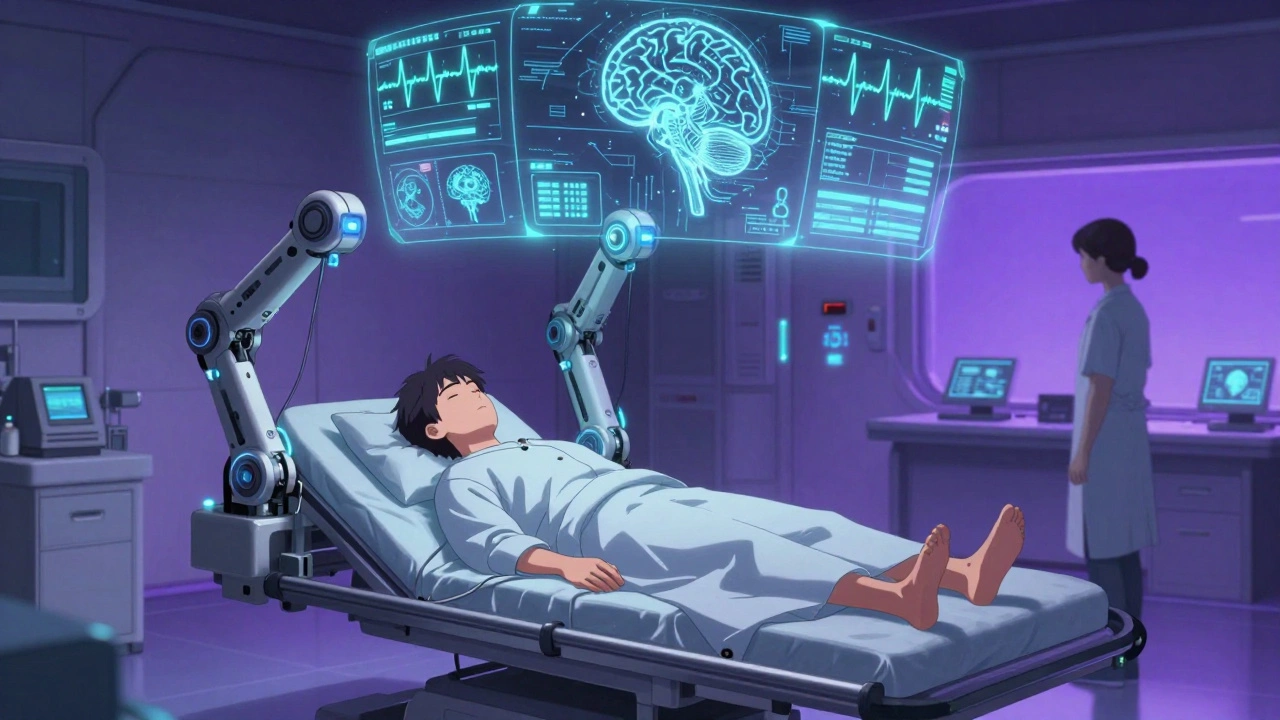
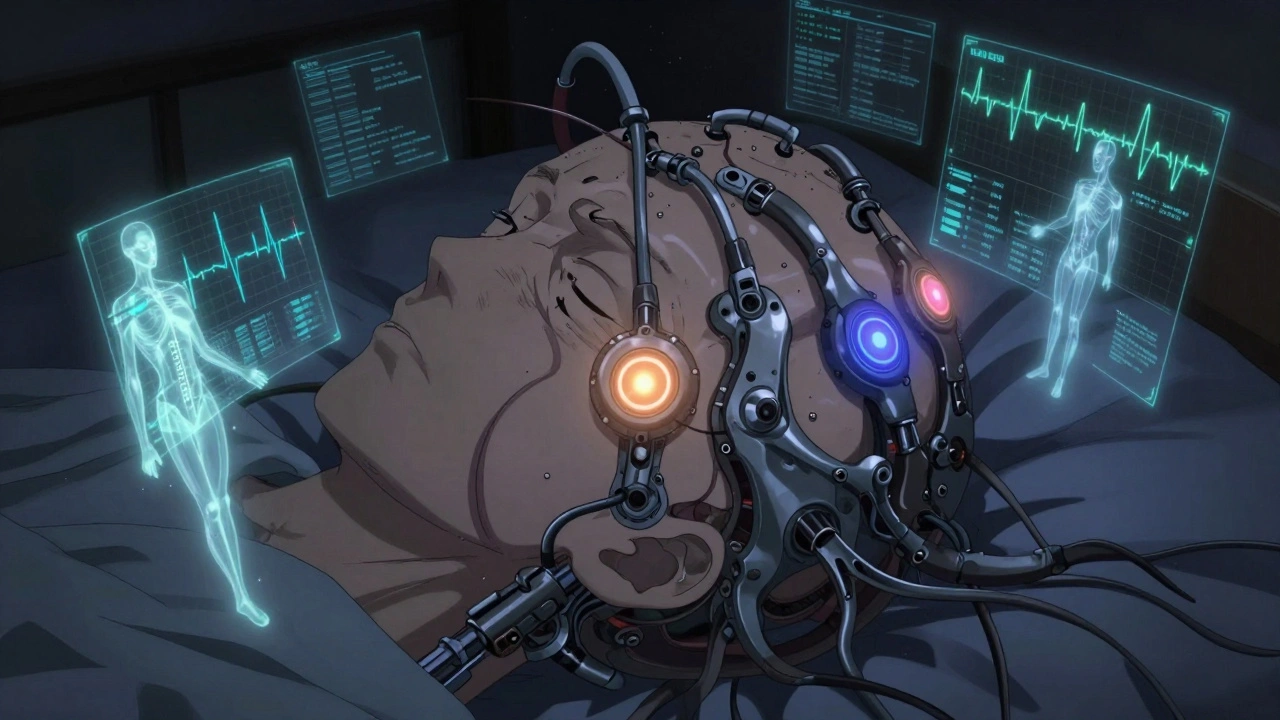
You show up at a sleep center about an hour before your usual bedtime. The room looks like a hotel room-quiet, dark, with a comfortable bed. No machines hanging from the ceiling. Just a few wires and sensors. A sleep technologist attaches around 22 sensors to your body. These aren’t needles. They’re sticky patches and soft bands. One on your scalp to read brain waves (EEG). Two near your eyes to track movement (EOG). A small sensor on your chin and legs to measure muscle activity (EMG). Belts around your chest and belly to detect breathing effort. A tiny tube under your nose to measure airflow. A clip on your finger to check blood oxygen (pulse oximetry). And a camera in the corner to record any unusual movements or sounds. You might feel weird at first. Like you’re wearing a weird hat with wires. Some people can’t fall asleep the first night-this is normal. About 85% of patients get enough sleep for a valid result. The technologist is watching you from another room, ready to help if a sensor comes loose or you need to use the bathroom. You can talk to them anytime. The whole test lasts 6 to 8 hours. You’re not locked in. You can get up if you need to. The room is kept between 68 and 72 degrees Fahrenheit so you’re not too hot or cold. No caffeine after noon the day before. No naps. Just try to sleep like you normally would.How Is the Data Analyzed?
After the test, you go home. The real work starts for the sleep doctor. The machine records over 1,000 pages of raw data. That’s not an exaggeration. Every second of your sleep is broken down into 30-second chunks. Each chunk gets scored: Were you in light sleep? Deep sleep? REM? Did you have a breathing pause? Did your oxygen drop? Did your leg jerk? Did your heart skip? Sleep specialists look for patterns. For example:- If you stop breathing 15 times an hour, that’s moderate sleep apnea.
- If your oxygen drops below 90% during those pauses, that’s a red flag.
- If you enter REM sleep within 15 minutes of falling asleep, that’s a sign of narcolepsy.
- If your legs kick every 20 seconds, that’s restless legs syndrome.
- If you scream or punch the air during sleep, it could be REM sleep behavior disorder.
Polysomnography vs. Home Sleep Tests
Home sleep tests are cheaper and more convenient. But they’re limited. Most only measure breathing, airflow, oxygen, and heart rate. That’s it. They can’t tell if you’re sleeping at all. They can’t catch narcolepsy. They can’t diagnose parasomnias. And they fail 15-20% of the time because sensors fall off or you don’t wear them right. In-lab polysomnography fails less than 5% of the time. It’s more accurate. It’s more complete. Insurance companies know this. Medicare and most private insurers will only cover a home test if you have a high likelihood of moderate-to-severe obstructive sleep apnea and no other sleep disorders. If you have high blood pressure, heart disease, or neurological symptoms? You’ll likely need a full PSG. There’s also split-night PSG. If you have severe apnea in the first half of the night, the technician might wake you up and fit you with a CPAP mask. Then they’ll adjust the pressure while you sleep the rest of the night. That means you don’t need to come back for a second test.What Do the Results Mean?
Your doctor will sit down with you and explain the numbers. Here’s what common results mean:- AHI 5-15: Mild sleep apnea. Might need weight loss, positional therapy, or a mouthpiece.
- AHI 15-30: Moderate. CPAP is usually recommended.
- AHI over 30: Severe. CPAP is almost always needed.
- Oxygen below 90%: Your body isn’t getting enough air. This raises your risk for heart problems.
- Low sleep efficiency (under 85%): You’re not sleeping well even if you’re in bed long enough.
- Short REM latency (under 15 minutes): Could mean narcolepsy or other neurological sleep disorders.
What If the Test Is Normal?
Sometimes, the results come back normal. You’re not apneic. Your oxygen is fine. Your sleep stages look normal. But you’re still tired. That doesn’t mean it’s all in your head. It means the cause might be outside the scope of PSG. Maybe you have circadian rhythm disorder. Maybe your thyroid is off. Maybe you’re not getting enough deep sleep because of stress or anxiety. Your doctor might recommend a second test-like a Multiple Sleep Latency Test (MSLT)-to check for narcolepsy. Or they might look at your mental health, diet, or medication side effects. Don’t dismiss a normal PSG. It’s still valuable. It rules out major sleep disorders so you can focus on other causes.
What’s New in Sleep Studies?
Technology is changing. New wireless sensors mean fewer wires. Instead of 20 cables, you might have just five. Some labs use AI to help score data faster and more accurately. Cloud-based systems let specialists review results from anywhere. But the core hasn’t changed. You still need to sleep in a lab with sensors on your head. Why? Because nothing else can capture the full picture of your sleep. Home tests are growing, but they’re not replacements. They’re shortcuts-for simple cases only. The American Academy of Sleep Medicine says polysomnography will remain the standard through at least 2030. Why? Because sleep isn’t just about breathing. It’s about brain waves, muscle control, heart rhythm, oxygen flow, and behavior-all happening at once. Only PSG sees it all.How to Prepare for Your Sleep Study
You don’t need to do much-but do these things:- Avoid caffeine after noon the day before.
- Don’t nap during the day.
- Wash your hair-no gels or oils. Sensors need clean skin.
- Bring comfortable pajamas, your own pillow if you like, and anything you need for a good night’s sleep.
- Write down your symptoms: When do you snore? Do you wake up choking? Do you feel sleepy during the day?
- Bring a list of all your medications. Some affect sleep.
Insurance and Cost
In the U.S., Medicare covers 80% of the cost if your doctor documents symptoms like loud snoring, witnessed apneas, or excessive daytime sleepiness. Private insurers usually require prior authorization. The test can cost $500 to $3,000 without insurance. Home tests are $150 to $500-but again, they’re not always enough. If your doctor says you need a PSG, don’t delay. Untreated sleep apnea raises your risk for stroke, heart attack, and diabetes. Poor sleep affects your mood, memory, and even your job performance. Getting this test done could change your health for years to come.Is polysomnography painful?
No, polysomnography is not painful. Sensors are attached with adhesive patches and soft belts. There are no needles or invasive procedures. Some people feel awkward or uncomfortable at first, but most adjust quickly. The goal is to make you as comfortable as possible so you can sleep normally.
Can I use the bathroom during the test?
Yes, you can get up to use the bathroom anytime. The technologist will disconnect the main cable from your belt, so you can walk to the bathroom without pulling wires. Most people do this once or twice during the night. It’s completely normal.
How long does it take to get results?
It usually takes 1 to 2 weeks to get your results. The data has to be scored by a sleep technologist and reviewed by a board-certified sleep physician. Each study generates over 1,000 pages of data, and analysis takes 2-3 hours per patient. Don’t rush it-accuracy matters more than speed.
Can a home sleep test replace polysomnography?
Not for most people. Home tests are only suitable for diagnosing moderate-to-severe obstructive sleep apnea in patients with no other health conditions. They can’t detect narcolepsy, parasomnias, or central sleep apnea. If you have heart disease, neurological symptoms, or unexplained daytime fatigue, you need a full polysomnography.
What if I can’t sleep during the test?
It’s common to have trouble sleeping the first night in a lab. This is called the “first night effect.” Even if you sleep less than usual, most studies still provide enough data for diagnosis. Technologists are trained to help you relax. If you’re extremely anxious, talk to your doctor beforehand-they may suggest a mild sleep aid.
Do I need to bring anything to the sleep center?
Yes. Bring comfortable pajamas, your own pillow if you prefer, toiletries, and anything you normally use before bed (like reading glasses or a book). Also bring a list of all your medications and a written summary of your sleep symptoms. This helps the doctor interpret your results accurately.


Matt Dean
December 1, 2025 AT 23:27I've had three sleep studies and honestly? The first night is always a nightmare. You're lying there thinking about every little wire, wondering if you're even sleeping. But guess what? You still get the data. That's the magic of PSG. No home test can tell you if you're having night terrors or leg jerks. It's not just about apnea. It's about the whole damn picture.
Walker Alvey
December 2, 2025 AT 15:42So we pay thousands for wires and cameras while people in developing countries die because they can't afford a CPAP machine? The system is broken. PSG is a luxury diagnostic. Not a necessity. And yet somehow it's the gold standard? Please.
Bee Floyd
December 3, 2025 AT 14:31I went in skeptical. Left feeling seen. The tech didn't just attach sensors-she asked if I liked my pillow, if the room was too cold, if I needed extra blankets. That human touch? It matters. I didn't sleep great but I slept enough. And when the report came back-mild apnea, normal REM latency-I finally had a name for why I felt like a zombie for years. No more 'it's just stress'.
Jeremy Butler
December 4, 2025 AT 08:13The polysomnographic methodology remains the most empirically valid modality for the comprehensive assessment of nocturnal physiological phenomena. Home-based alternatives, while economically advantageous, lack the multichannel neurophysiological fidelity required for differential diagnosis of parasomnias and central respiratory events. Consequently, their utility is inherently limited in populations with comorbid neurological or cardiovascular pathology.
Courtney Co
December 5, 2025 AT 17:39I had a PSG and I cried the whole night because I was so scared. I didn't sleep at all. I felt like a lab rat. And then the doctor said 'it's fine' and handed me a CPAP machine like it was a coupon. But I didn't want it. I just wanted someone to listen. Why does everyone just want to fix it with a mask? No one asks if I'm scared. No one asks if I'm lonely. It's all numbers. Always numbers.
Shashank Vira
December 6, 2025 AT 01:14In the grand tapestry of modern medicine, polysomnography stands as a monument to human ingenuity-yet it is also a monument to our collective failure to address the root causes of sleep deprivation: capitalism, digital overload, and the erosion of circadian rhythm as a sacred rhythm. We attach wires to the body while the soul screams in silence. The machine records your oxygen drop-but can it record your despair?
Adrian Barnes
December 6, 2025 AT 12:03Let's be clear: if you're getting a PSG because you 'feel tired,' you're wasting the system's resources. This test is for patients with documented apneas, witnessed choking, or severe daytime hypersomnolence. If you're just scrolling TikTok until 2 a.m. and blaming your sleep study? That's not a disorder. That's poor life choices. Stop medicalizing laziness.
Jaswinder Singh
December 7, 2025 AT 10:14Bro I did this in Delhi and it was wild. No fancy hotel room. Just a small room with a bed and a fan. But the guy who did the test? He stayed up with me until 3 a.m. because I kept waking up. He told me stories about his own sleep problems. We laughed. I slept. And yeah-I had apnea. But I didn't feel like a patient. I felt like a person. That’s what matters.
Eric Vlach
December 8, 2025 AT 06:42I got my results and they said mild apnea. So I lost 20 lbs, stopped drinking, and started sleeping on my side. No CPAP. Six months later I did another study. Normal. No apnea. No mask. Just changed my life. Don't let them scare you into a machine if you can fix it with a pillow and a little discipline. This isn't just tech-it's a wake up call.
Souvik Datta
December 9, 2025 AT 11:40Sleep is not a malfunction. It is a sacred space where the body heals, the mind integrates, and the soul reclaims itself. Polysomnography doesn’t just measure brain waves-it reveals the quiet battles we fight every night. If you’re afraid of the wires, remember: you’re not being monitored. You’re being honored. Your sleep deserves to be seen. And so do you.
Priyam Tomar
December 9, 2025 AT 13:58Everyone acts like PSG is the end-all. But have you seen the error rates? The same data gets scored differently by three different techs. And AI? It’s trained on mostly white, middle-class patients. What if you’re a shift worker? Or a night owl? Or a person of color with different sleep architecture? This ‘gold standard’ is just a biased snapshot. Don’t believe the hype.
Jack Arscott
December 10, 2025 AT 15:27I was nervous AF but the room was actually chill 🌙 The tech gave me a weighted blanket and said 'just pretend you're at home' 😌 I slept 4 hours and they said it was enough. Got my results-mild apnea. Got a mouthpiece. No mask. Life changed. I'm not a zombie anymore. 🙌
Irving Steinberg
December 11, 2025 AT 01:14I did the home test first. Failed. Then did the PSG. Same results. But now I have a $2000 bill and a mask I hate. Why not just skip the middleman? If the home test says apnea, just give me the CPAP. Why make me sleep in a weird hotel? This whole thing feels like a scam to sell machines.