
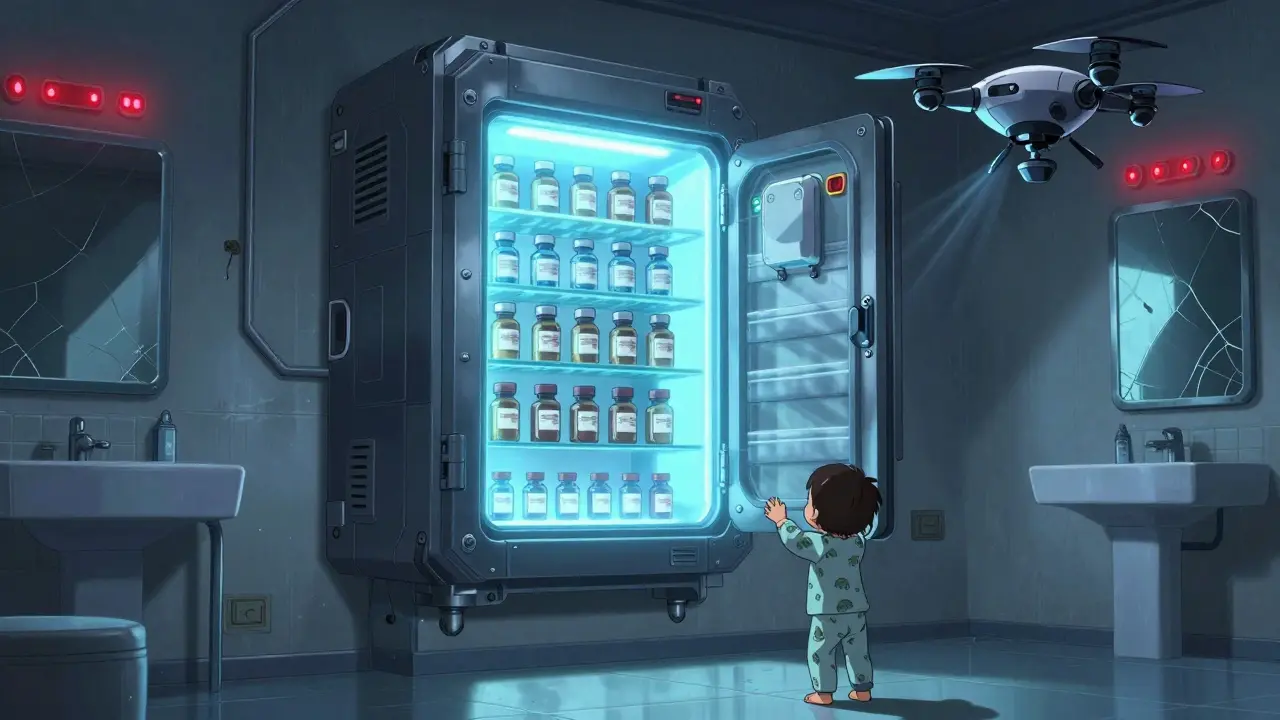
Every home in America holds medicine-pills, patches, syrups, inhalers. Some are for chronic conditions. Others sit unused, forgotten in drawers. But here’s the truth most people ignore: medication storage isn’t just about convenience. It’s the line between life and danger. A misplaced pill can poison a toddler. A damp bottle can turn your painkiller into useless sludge. And worse? Your prescription might not even be real.
Why Your Medicine Cabinet Is a Hazard Zone
Most families keep meds in the bathroom. It’s easy. It’s where you brush your teeth. But humidity from showers can wreck your pills. Aspirin breaks down into vinegar and salicylic acid in just two weeks. Ampicillin loses 30% of its strength in seven days at high humidity. Insulin? It degrades 15% every hour at room temperature. That’s not theory. It’s FDA data. And it’s not just about effectiveness. The CDC says 99.8% of U.S. homes store medications. That means kids are constantly within reach of drugs they shouldn’t touch. Emergency rooms see 48,000 pediatric poisonings every year-60% of them from medicines left in open cabinets, purses, or nightstands. One study found that 70% of teens who misuse prescriptions get them from home-often in under 15 minutes.The Locked Storage Standard
The gold standard isn’t a fancy box. It’s not even a lockbox. It’s a simple rule: lock it up. The EPA says 95% of accidental poisonings in kids could be prevented with proper storage. The American Academy of Pediatrics confirms: child-resistant caps alone cut risk by 45%. Add a locked cabinet? It jumps to 92%. You don’t need a vault. A simple, affordable lockbox works. Gun safes, fireproof document boxes, even a sturdy tool chest-any container that requires a key, combination, or code counts. Install it out of reach: above 5 feet (1.5 meters). That’s higher than most toddlers can jump. Keep it away from windows. Sunlight degrades tetracycline by 40% faster. For homes with elderly residents or chronic pain patients, accessibility matters. A combination lock with large dials, or a smart lock that responds to voice commands, balances safety and access. The Arthritis Foundation recommends these solutions-they’re designed for stiff fingers and shaky hands.Original Containers Only
Don’t dump pills into plastic organizers. It sounds tidy. It’s dangerous. FDA data shows that 78% of medication errors come from improper storage-and the biggest culprit is removing pills from their original bottles. Why? You can’t tell what’s what. A white pill in a pill organizer could be your blood pressure med, your child’s ADHD drug, or a fake. Counterfeit drugs are flooding the market. Fake opioids, fake insulin, fake antibiotics. They look real. They taste real. But they’re often made with chalk, rat poison, or industrial dyes. Original bottles have barcodes, batch numbers, and manufacturer details. If something looks off-wrong color, odd smell, missing label-call your pharmacist. Keep the bottle. It’s your evidence.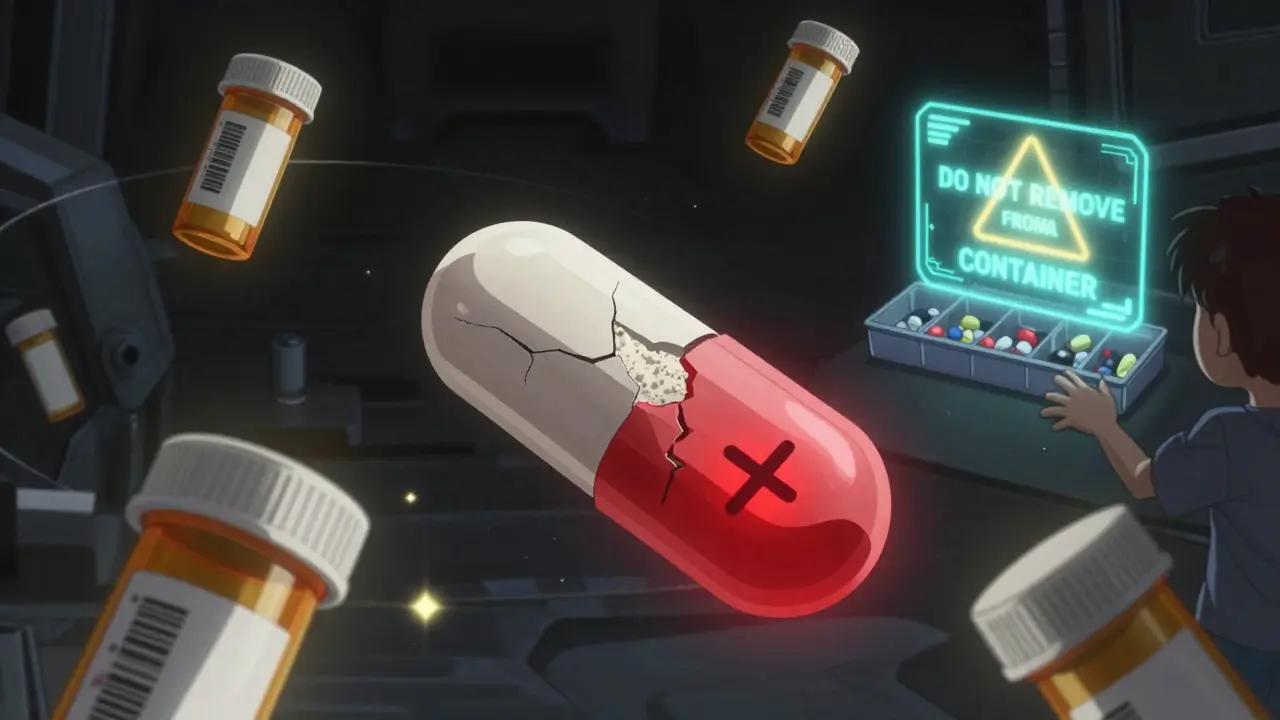
Temperature and Humidity: The Silent Killers
Medications aren’t like wine. They don’t age well. Heat, moisture, and light are enemies. - Room temperature: 68-77°F (20-25°C). Not warmer. Not colder. Your bedroom drawer, a closet shelf, or a locked cabinet on the wall-these are ideal. - Humidity: Below 60%. Bathrooms? 80% or higher. Kitchens? Near the sink? Too damp. Basements? Often moldy. Avoid them. - Light: Tetracycline, folic acid, and nitroglycerin degrade fast in sunlight. Store them in dark places. - Refrigeration: Only if the label says so. Insulin, some antibiotics, and biologics need cold-but not the fridge door. That’s too warm. Put them in the back, on the middle shelf. And lock them in a separate container. Don’t mix meds with food. A toddler doesn’t know the difference.Counterfeit Drugs: The Hidden Threat
You think fake pills only come from shady websites. But they’re showing up in pharmacies, mail-order deliveries, and even discounted online retailers. A 2025 FDA report found that 1 in 10 prescription pills sold online were counterfeit. Some contained fentanyl. Others had no active ingredient at all. How to spot a fake:- Changed color or shape
- Strange smell or taste
- Missing or smudged imprint code
- Package looks cheap, torn, or misprinted
- Price is way too low
Disposal: Don’t Flush It
Unused meds don’t vanish when you stop taking them. They sit around. And when you throw them in the trash or flush them? They end up in rivers, lakes, and drinking water. The EPA says pharmaceutical pollution is a growing crisis. Use a take-back program. There are over 14,000 permanent collection sites across the U.S.-pharmacies, police stations, hospitals. The DEA runs National Prescription Drug Take Back Days twice a year. But you don’t have to wait. Find your nearest drop-off at www.dea.gov/drug-disposal. No drop-off nearby? Mix pills with coffee grounds or cat litter. Put them in a sealed bag. Toss in the trash. Never crush pills unless instructed. Never pour liquids down the drain.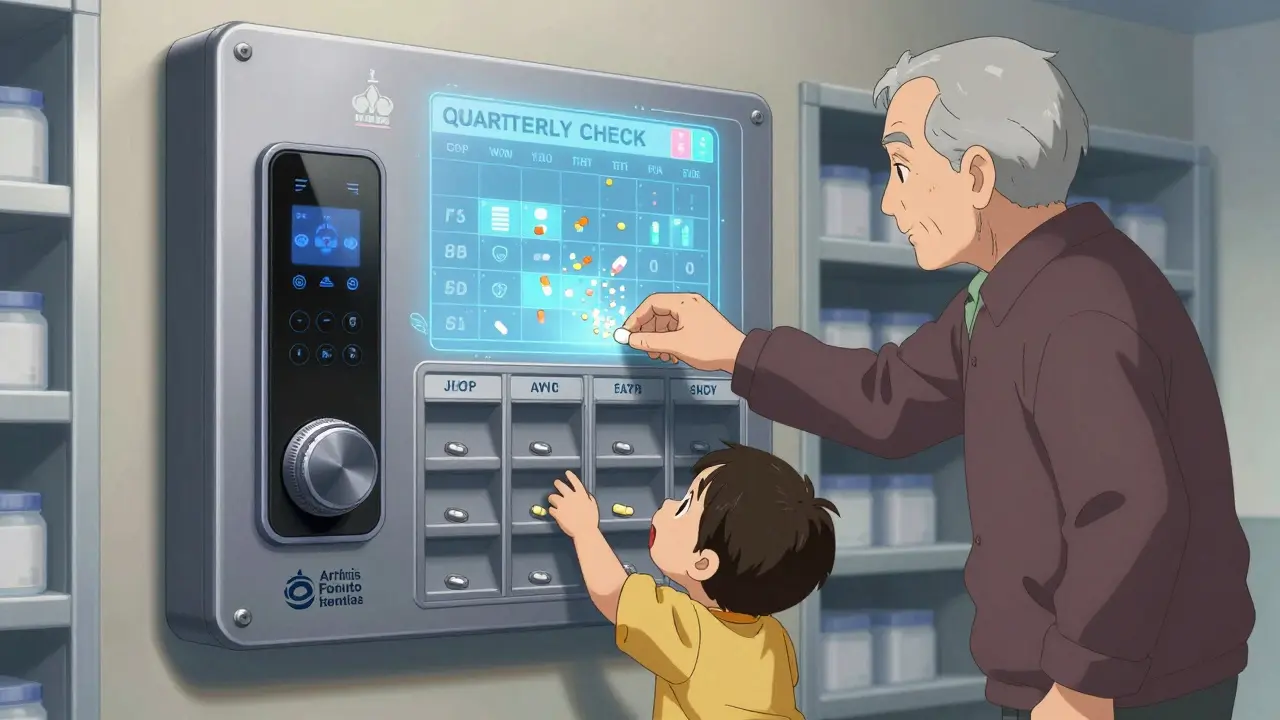
4 Steps to a Safer Home
1. Audit your meds. Go through every drawer, cabinet, purse, and car. Collect everything. Count it. Check expiration dates. Discard anything older than a year (unless your doctor says otherwise). 2. Choose your storage. One locked container. One location. No exceptions. Use a wall-mounted safe, a small lockbox, or a locked cabinet. Keep it out of sight but easy for adults to reach. 3. Reset your habits. Never leave pills on the counter while taking them. Never store them in a purse. Never put them in a child’s backpack. Make it a ritual: take your meds, put them back, lock the box. 4. Check quarterly. Every three months, open the box. Look for new pills. Check for leaks. Discard expired meds. Update your list. If you’re managing meds for someone else, make it a team habit.Real Stories. Real Results.
One parent on Reddit, u/MedSafetyMom, installed a Gunvault MicroVault on her nightstand. Her 3-year-old had been climbing onto the dresser. After two weeks, she said her anxiety dropped 90%. Another user, u/PainPatient87, mounted a wall safe at 6 feet high. He can reach it with one hand. His two toddlers can’t. He sleeps better. Washington State data shows households with locked storage report 83% fewer emergency room visits for accidental poisonings. The first month is awkward. The second? You forget it’s there. The third? You wonder how you ever lived without it.What’s Next?
By 2026, visiting nurses will start checking medication storage during home visits. New home safety ratings will include secure storage as a requirement. Smart safes with fingerprint access are rising fast. And blockchain systems are being tested to verify drug authenticity from factory to pharmacy. But you don’t need to wait. The tools are here. The science is clear. The cost of doing nothing? Thousands of emergency visits. Billions in healthcare spending. And worst of all-children who never get to grow up. Start today. Lock it. Keep it cool. Keep it original. And never forget: your medicine isn’t just a pill. It’s your family’s safety.Can I store my medications in the bathroom?
No. Bathrooms are too humid and too warm. Showers spike humidity to over 80%, which causes pills like aspirin and ampicillin to break down. Insulin and other temperature-sensitive drugs lose potency fast. Store meds in a cool, dry place like a bedroom drawer or locked cabinet instead.
How do I know if my medication is fake?
Check the packaging: Is the label clear? Is the imprint on the pill matching what your pharmacy says? Does it smell or taste odd? Fake pills often have blurry text, wrong colors, or no lot number. Buy only from licensed U.S. pharmacies. If something feels off, call your pharmacist with the lot number to verify.
What’s the best way to lock up medications if I have both kids and elderly family members?
Use a combination lockbox with large, easy-to-turn dials or a smart lock that responds to voice commands. Place it at waist-to-shoulder height so adults can reach it easily, but children can’t. The Arthritis Foundation and AAP recommend these solutions-they’re designed for limited dexterity while still preventing access by young children.
Do I need to lock up over-the-counter medicine too?
Yes. Tylenol, ibuprofen, allergy pills, and sleep aids are common in accidental poisonings. Teens often misuse OTC drugs. A 2023 SAMHSA report found that 70% of adolescent misuse starts at home-even with non-prescription meds. Treat them all the same: lock them up.
How often should I check my medication supply?
Every three months. Look for expired pills, broken seals, or bottles that are empty but still on the shelf. Discard safely. Update your list. This habit reduces the risk of accidental ingestion and helps you stay aware of what’s in your home. Many families make it part of their spring and fall cleaning routine.
Can I throw old pills in the trash?
Only if you mix them first. Crush pills (unless instructed not to), mix them with coffee grounds or cat litter, seal them in a plastic bag, then toss in the trash. Never flush them. Never leave them loose in the bin. Use a take-back program if you can-it’s safer for the environment and prevents misuse.


Jefferson Moratin
March 23, 2026 AT 23:44Medication storage is less about convenience and more about epistemological responsibility. We treat pharmaceuticals as commodities, yet they are precision-engineered chemical entities with narrow therapeutic windows. The bathroom cabinet isn't just suboptimal-it's ontologically inappropriate. Humidity doesn't just degrade aspirin; it erodes the epistemic trust we place in pharmaceutical institutions. If we cannot safeguard the integrity of our medicine, what does that say about our broader relationship with science, authority, and bodily autonomy?
There is no such thing as a 'minor' medication. OTC drugs are pharmacologically active substances. Their accessibility is not a feature-it's a vulnerability in a culture that confuses convenience with safety. The CDC's data isn't just statistics; it's a moral ledger. Every unsecured pill is a potential tragedy waiting for the right set of circumstances.
Locking isn't paranoia. It's protocol. The fact that we need to be told this in 2025 reveals a deeper failure: we have outsourced vigilance to institutions that are themselves compromised. The solution isn't a lockbox-it's a cultural recalibration of what we owe to our bodies and those who depend on them.
winnipeg whitegloves
March 25, 2026 AT 09:00Man, this post hit like a punch to the gut wrapped in velvet. I never thought about how my grandma’s insulin was slowly turning into soup in her bathroom cabinet. I just thought she was forgetful. Now I’m ordering one of those fancy voice-activated lockboxes for her-big dials, no keys, just ‘Hey Siri, unlock meds.’ She’s gonna roll her eyes, but she’ll thank me in six months when she doesn’t have to squint at labels anymore.
And hey-forgot to mention: I threw out three expired allergy pills I’d been keeping ‘just in case.’ Turns out ‘just in case’ is just a fancy way of saying ‘I’m hoarding poison.’ Thanks for the nudge, OP. You’re a real one.
Korn Deno
March 27, 2026 AT 03:22Lock it up. Keep it cool. Keep it original. That’s the whole thing. No fluff. No drama. Just three rules that save lives. I did it last year after my nephew got into my Advil. Now I have a wall safe. I don’t even think about it anymore. That’s the point.
Anil Arekar
March 28, 2026 AT 01:15It is with profound respect for the wisdom conveyed in this post that I offer my observations. In many cultures, particularly in the Global South, the concept of pharmaceutical security is not merely a matter of domestic safety, but a profound act of intergenerational stewardship. In India, where polypharmacy is common and multi-generational households are the norm, the responsibility of secure storage is often shared among family members, with elders guiding younger ones not through fear, but through ritual-such as placing medicines in a locked wooden box during evening prayers, symbolizing both reverence and protection.
The emphasis on original containers is not merely regulatory-it is cultural. A pill without its label is not just an unknown substance; it is an orphaned identity. In a world where counterfeit drugs are a growing menace, the barcode is not just data-it is lineage. To discard it is to sever a thread in the tapestry of trust between patient, pharmacist, and healer.
I urge all readers to consider not only the physical safety of storage, but the moral architecture of care. When we lock our medicines, we are not merely preventing harm-we are affirming the sacredness of healing.
Elaine Parra
March 28, 2026 AT 05:39Let’s be real-this whole post is just woke corporate propaganda dressed up as public health. You think locking up Tylenol is gonna stop teens from getting high? They’ll break into your house. They’ll steal your dog’s flea meds if they’re desperate. This isn’t about safety-it’s about control. You want to protect kids? Teach them responsibility. Don’t turn your home into a prison because you’re too lazy to have a conversation.
And don’t get me started on the ‘fake drugs’ fearmongering. The FDA is a regulatory capture machine. Most of these ‘counterfeit’ claims are just Big Pharma trying to kill off generic competition. If your pill looks different, it’s probably because you’re on a generic now. That’s not poison-that’s capitalism.
Stop infantilizing adults. Stop scaring parents. And stop treating medicine like it’s nuclear launch codes. It’s not a crime scene. It’s a pharmacy.
Brandon Shatley
March 29, 2026 AT 01:09i never thought bout how humid the bathroom is. i kept my dad’s blood pressure pills in there for years. he had a stroke last year. i dont know if it was the meds or not but now i got a little lockbox on the wall. its dumb but feels better. also i threw out like 12 bottles. felt like a hoarder.
Blessing Ogboso
March 29, 2026 AT 06:48As a nurse and a mother of four in Lagos, I can attest that this issue transcends borders. In Nigeria, where access to licensed pharmacies is inconsistent and economic hardship forces many to rely on street vendors, the risk of counterfeit drugs is not hypothetical-it is daily reality. We teach our children that medicine is not candy, but we also know that even the most well-intentioned parent may not have a locked cabinet. So we adapt: we hide pills inside a sealed plastic container inside a locked shoebox inside a high closet. We use the same logic that keeps our children from the kitchen knife or the electric socket.
What struck me most is the call to audit quarterly. In our household, we do it on the first Sunday of every month. We gather around the table. We sort. We talk. We laugh. We cry. We remember Uncle Tunde who passed because he took fake malaria pills. We remember Amina who survived because she recognized the wrong color on her insulin vial.
Security isn't about fear. It's about love made visible. It's about the quiet act of choosing safety over convenience, again and again, day after day. This isn't an American problem. It's a human one.
Rama Rish
March 29, 2026 AT 20:13my mom uses those pill organizers and i always freaked out. now i got her a lockbox. she says it’s annoying but she’s not forgetting her meds anymore. win win.
Kevin Siewe
March 31, 2026 AT 16:43Just wanted to say thank you for this. I’m a caregiver for my mom with dementia, and this post gave me a clear, doable plan. I used to leave her meds on the kitchen counter because she’d forget where she put them. Now I have a wall-mounted safe with a simple 4-digit code she can still use. I made a laminated chart with pictures of each pill and what time to take them. She doesn’t get confused anymore. And I sleep through the night. Small changes, huge difference.
Also-no more pill organizers. I threw them all out. Original bottles only. Even for her aspirin. It’s weird at first, but now it feels right.
Chris Farley
April 1, 2026 AT 06:52Let’s be honest-this whole ‘lock it up’ thing is just the beginning of a slippery slope. Next they’ll be requiring background checks to buy ibuprofen. Then fingerprint scans for Advil. Then we’ll need a federal permit to store cold medicine. This isn’t safety. It’s authoritarianism disguised as compassion. The government doesn’t trust us to handle our own medicine. So they take control. And once they control the pills, what’s next? The coffee? The sugar? The salt?
I’m not locking anything. I’m keeping it in the open. Let the kids learn. Let them make mistakes. That’s how we grow. You want to protect them? Teach them. Don’t turn your house into a bunker.
Sean Bechtelheimer
April 1, 2026 AT 19:59🚨 ALERT 🚨
Did you know the CDC is secretly funded by Big Pharma? The whole 'locked storage' thing? It's a distraction. Real talk: the real threat is the microchips in the pills. They track your usage. They sync with your smart fridge. They report your health data to the government. That’s why they want you to use original bottles-so they can scan the barcode and link it to your phone. You think the FDA cares about your kid? They care about your data.
Don’t buy from pharmacies. Go to Canada. Or better yet-grow your own herbs. Turmeric for arthritis. Garlic for blood pressure. Natural is the only real medicine. The rest? Surveillance.
And if you’re using a smart lock? You’re already compromised. 🔐👁️
Seth Eugenne
April 3, 2026 AT 02:12Just wanted to say I’m so glad this was posted. My sister just had her second kid, and I sent her this whole guide. She cried. Said she had no idea how dangerous it was. We installed a lockbox last weekend. Took 20 minutes. Cost $35. Now she can nap without panic. I wish I’d known this when I was a new mom.
Also-thank you for the disposal tips. I used to flush everything. Now I mix with cat litter. Weird, but I feel better about it. 🌱
rebecca klady
April 3, 2026 AT 17:21i locked up my meds after my ex stole my Xanax. now i have a little safe. it’s weirdly empowering? like, i’m not just a person who takes pills. i’m someone who protects them. weirdly good feeling.