

When antidepressants don’t work, what’s next?
For about 1 in 3 people with major depression, standard antidepressants simply don’t help. No matter how long they try, or how many they switch, the sadness, numbness, and hopelessness stick around. This isn’t laziness. It’s not a lack of willpower. It’s treatment-resistant depression - a real, measurable condition that affects nearly 30% of people with major depressive disorder. And for these individuals, time isn’t just a factor - it’s a danger. Every day without relief increases the risk of suicide, job loss, broken relationships, and physical decline.
That’s where ketamine and esketamine come in. Unlike traditional antidepressants that take weeks to kick in, these drugs can lift the fog in hours. Not days. Not weeks. Hours. That’s why they’re changing the game for people who’ve run out of options.
What’s the difference between ketamine and esketamine?
Ketamine and esketamine sound similar - and they are. But they’re not the same drug. Ketamine is the original compound, a racemic mixture of two mirror-image molecules: (R)-ketamine and (S)-ketamine. It’s been used since the 1970s as an anesthetic, especially in battlefield medicine and emergency rooms. Esketamine is just one half of that molecule - the (S)-enantiomer - purified and packaged as a nasal spray under the brand name Spravato®.
That small chemical difference changes everything. Ketamine, given as an IV infusion, hits the brain harder and faster. Esketamine, delivered through the nose, is gentler. It’s designed to be safer, more controlled, and easier to manage in outpatient clinics. But that also means it’s slower to work.
Which one works faster?
In a major 2025 study of 153 patients with treatment-resistant depression at McLean Hospital, researchers found something clear: IV ketamine worked quicker and stronger.
- Patients on IV ketamine saw a 49.22% drop in depression scores after their final treatment.
- Those on esketamine saw a 39.55% drop - still meaningful, but noticeably less.
- With ketamine, improvement often started after the very first infusion.
- Esketamine needed at least two doses before most people felt any change.
That’s not a small gap. It’s the difference between feeling like you can get out of bed tomorrow - or waiting another week.
What about side effects?
Both drugs cause dissociation - that feeling of being detached from your body or surroundings. It’s not hallucinations, exactly, but it’s close. Some people describe it as floating, or watching yourself from outside your skin. It’s temporary, but it can be scary if you’re not prepared.
Here’s how they compare:
- 42.3% of IV ketamine patients reported dissociation - often intense, lasting 30 to 60 minutes.
- Only 28.7% of esketamine users had the same experience.
- Severe dissociative symptoms were 37.2% less common with esketamine, according to FDA trial data.
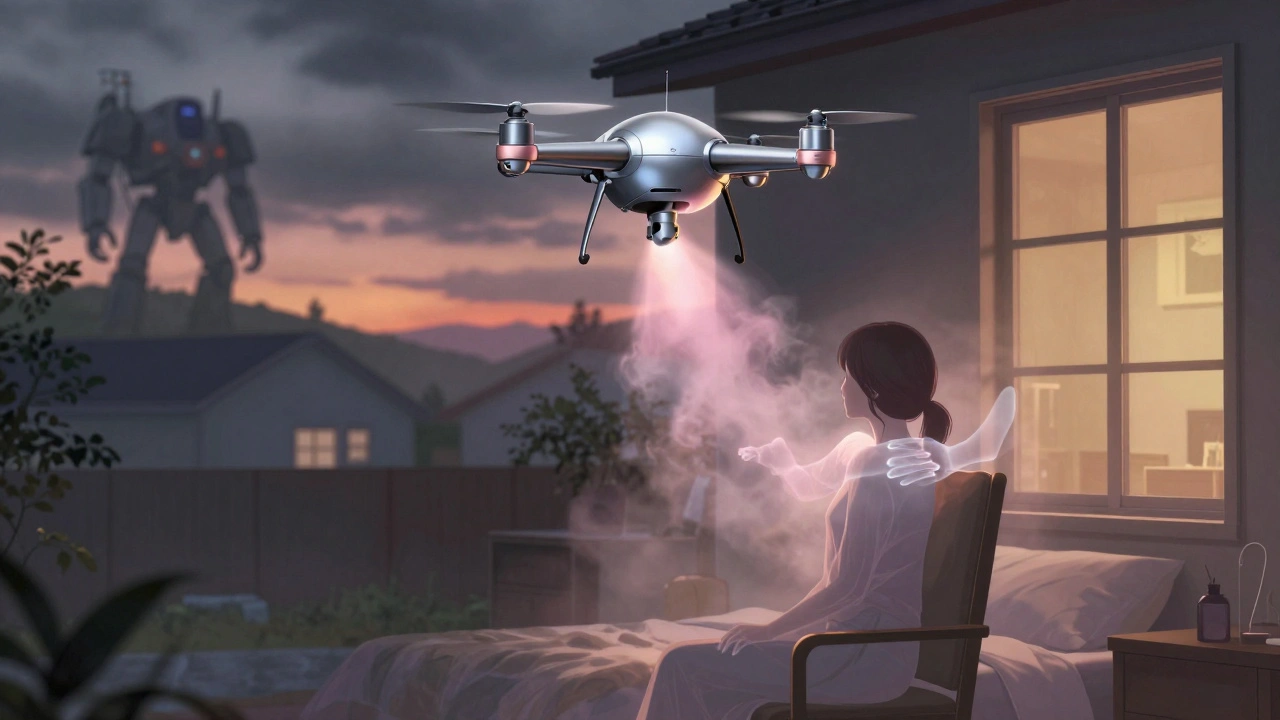
That’s why esketamine feels safer to many patients. You don’t need an IV line. You don’t need to sit in a hospital bed for an hour. You sit in a chair, spray the medicine into your nose, and wait. The clinic staff monitor you for two hours. Then you go home.
But IV ketamine? That requires a needle, a quiet room, a trained nurse, and a provider who knows how to handle airway emergencies. Not every clinic can do it. And not every patient wants it.
Cost and insurance: What you’ll actually pay
Money matters. A lot.
A full course of eight IV ketamine infusions typically costs between $4,200 and $5,600. That’s out-of-pocket unless your insurance covers it - and only 38.2% of commercial plans do. Many clinics offer payment plans, but it’s still a big hit.
Esketamine (Spravato®) costs more: $5,800 to $6,900 for the same number of doses. But here’s the twist - 67.4% of insurance plans cover it. Why? Because it’s FDA-approved for depression. Ketamine isn’t. It’s used off-label, even though it’s been studied for over 20 years.
And when you look at long-term value? IV ketamine wins. A 2025 JAMA Psychiatry analysis found it costs $14,327 per quality-adjusted life year gained. Esketamine? $18,764. That’s not just about upfront cost - it’s about how much life you get back.
Who’s it for? Real-world patient experiences
Patients aren’t just numbers. On forums like PatientsLikeMe, over 1,200 people shared their stories in 2025.
- 63.2% of IV ketamine users said they felt relief within 24 hours.
- 51.7% of esketamine users said the same.
- But 78.4% of esketamine users rated their overall experience as “good” or “excellent.”
- Only 62.9% of IV ketamine users said the same.
Why? Because even though esketamine works slower, it’s less intense. You don’t feel like you’re losing control. You don’t need someone holding your hand through a dissociative episode. For many, that peace of mind is worth the trade-off.
One woman in Ohio, who’d been suicidal for years, told her doctor: “I didn’t care if ketamine worked faster. I just didn’t want to feel like I was dying during the treatment.” She chose esketamine. Two months later, she went back to work.
Access is still a huge problem
Here’s the hard truth: even if these drugs work, you might not be able to get them.
As of 2025, only 12.4% of U.S. counties have a certified Spravato® center. For IV ketamine? Far fewer. Most are in big cities. Rural areas? Nearly none. That’s not a gap in medicine - it’s a gap in justice.
And even if you find a clinic, you need to commit. Both treatments require two-hour monitoring after every dose. That means taking time off work. Finding childcare. Arranging transportation. For someone already drowning in depression, that’s a mountain.
What does the future hold?
The science is moving fast. In late 2025, the FDA accepted a new application for a higher-dose version of Spravato® - 112 mg instead of 84 mg. That could mean faster results with fewer doses.
Researchers are also testing intramuscular ketamine - a shot in the butt, not an IV drip. It’s quicker than nasal spray, less invasive than an IV. Early results look promising.
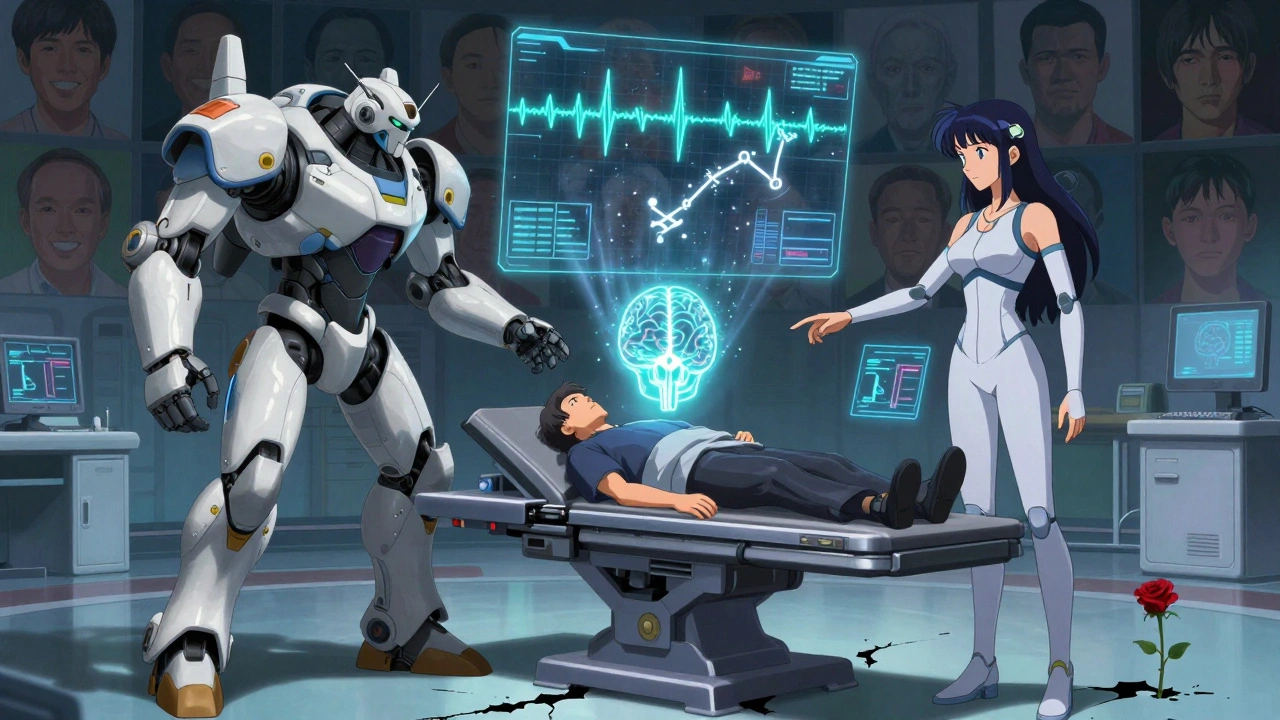
And now, brain scans are helping predict who will respond. A 2025 study in Nature Mental Health found that people whose brains showed increased gamma wave activity in the frontoparietal region after the first treatment were far more likely to improve long-term. That could mean blood tests or EEG scans guiding treatment choices - not guesswork.
Who should avoid these treatments?
Not everyone is a candidate. Both drugs are unsafe if you have:
- Uncontrolled high blood pressure
- A history of psychosis or mania
- Active substance use disorder
- Severe liver disease
Ketamine can raise blood pressure and heart rate. Esketamine can cause dizziness and nausea. Neither is a party drug. They’re medical treatments - used under strict supervision, with careful screening.
And they’re not a cure. They’re a bridge. Most people need maintenance doses - every few weeks - to stay well. Some combine them with talk therapy. Others add lifestyle changes. The goal isn’t to feel “high.” It’s to feel human again.
What do the experts say?
Dr. John Krystal at Yale says IV ketamine is the best option for life-threatening depression. “If someone is actively suicidal and needs help now, ketamine is the fastest tool we have,” he wrote in May 2025.
Dr. Christine Denny at Columbia disagrees. “Esketamine isn’t the strongest - but it’s the most sustainable,” she said in August 2024. “For people who need to keep working, parenting, living - it’s the better long-term choice.”
Both are right. It’s not about which drug is better. It’s about which one fits you.
What’s the bottom line?
If you’ve tried multiple antidepressants and still feel stuck - you’re not broken. You’re not failing. You’re just not ready for the old tools.
Ketamine and esketamine aren’t magic. But they’re real. And they’re here. For the first time, we have options that don’t ask you to wait months to feel better. They give you back hours - and sometimes, that’s enough to save a life.
Ask your psychiatrist if you qualify. Ask about insurance. Ask about local clinics. Ask about the risks. Ask about the hope.
Because depression doesn’t wait. And neither should you.
Is ketamine FDA-approved for depression?
Ketamine itself is not FDA-approved for depression - it was approved in 1970 as an anesthetic. But it’s widely used off-label for treatment-resistant depression, backed by decades of research. Esketamine, the purified (S)-enantiomer of ketamine, is the only FDA-approved form specifically for depression, sold as Spravato®.
How soon will I feel better after treatment?
With IV ketamine, many patients report improvement within hours - sometimes after the first infusion. Esketamine usually takes two doses before noticeable changes appear. Both work faster than traditional antidepressants, which can take 4-8 weeks to show effects.
Can I drive myself home after treatment?
No. Both ketamine and esketamine cause dissociation, dizziness, and impaired judgment. You must be monitored for at least two hours after each dose. You cannot drive, operate machinery, or make important decisions until the next day. A responsible adult must drive you home.
Are these drugs addictive?
Both ketamine and esketamine are Schedule III controlled substances, meaning they have potential for abuse. But under medical supervision, with controlled dosing and monitoring, the risk is low. Most patients use them as prescribed - not recreationally. The dissociative effects are not pleasurable for most people, which reduces misuse potential.
How long do the effects last?
The antidepressant effect typically lasts from days to weeks after a single dose. Most patients need maintenance treatments - every 1 to 3 weeks - to stay in remission. A 2024 study found that 56.3% of IV ketamine responders stayed in remission at 6 months with regular maintenance, compared to 48.7% for esketamine.
Can I use ketamine or esketamine if I’m pregnant?
There is not enough data to say these drugs are safe during pregnancy. Both are generally avoided unless the benefit clearly outweighs the risk. If you’re pregnant or planning to be, talk to your psychiatrist about alternatives. Some women switch to psychotherapy or electroconvulsive therapy (ECT) during pregnancy.
Do I need to stop my other antidepressants?
No. In fact, esketamine is FDA-approved only when used with an oral antidepressant. IV ketamine is often used alongside existing meds too. Stopping your current treatment can worsen symptoms. Always consult your doctor before making changes.
What if I don’t respond to either treatment?
There are other options. Electroconvulsive therapy (ECT) remains one of the most effective treatments for severe, treatment-resistant depression. Transcranial magnetic stimulation (TMS) is another non-invasive alternative. Some patients benefit from experimental therapies like psilocybin or deep brain stimulation - but those are still in clinical trials. Don’t give up. New options are emerging every year.


Frank Nouwens
December 11, 2025 AT 17:19This is one of the most balanced, well-researched pieces I’ve read on ketamine therapy in years.
The distinction between IV ketamine and esketamine is often blurred in popular media, but here it’s laid out with clinical precision.
I appreciate how you acknowledged the access disparities-this isn’t just a medical issue, it’s a socioeconomic one.
For someone in rural Appalachia, even knowing these options exist feels like a luxury.
The fact that insurance covers esketamine more readily than IV ketamine speaks volumes about how regulatory approval shapes care, not necessarily efficacy.
I’ve seen patients cry when they finally feel like themselves again after a ketamine infusion-no exaggeration.
It’s not about the high. It’s about the silence in their head finally stopping.
Thank you for writing this with both heart and rigor.
Stephanie Maillet
December 12, 2025 AT 02:00It’s fascinating, isn’t it?-how a molecule, so profoundly dissociative, can become the very bridge back to humanity for those who’ve lost all sense of it...
The (S)-enantiomer, purified, commodified, regulated-yet the original racemic form, wild and unpatented, remains the faster, cheaper, more potent force...
Is it the chemistry that heals-or the context? The quiet room. The trained nurse. The absence of judgment?
And yet, the cost barrier, the geographic exclusion... it’s not merely a flaw in the system-it’s a moral failure.
Who gets to feel human again? Who gets to breathe?
Perhaps the real question isn’t which drug works better-but who we, as a society, are willing to save.
And if the answer is ‘only those who can afford it,’ then we haven’t cured depression-we’ve just outsourced it to the privileged.
Paul Dixon
December 13, 2025 AT 16:59Man, I wish I'd had this info 5 years ago. I did 6 IV ketamine infusions back in '22 and it saved my life. The first time I felt normal in years was like 8 hours after the first dose. No joke. But the dissociation? Yeah, that part sucked. Felt like I was watching myself from the ceiling. Scary as hell. But worth it. My wife said I finally looked like me again. No insurance covered it. Paid outta pocket. Worth every penny.
Vivian Amadi
December 14, 2025 AT 23:02This article is dangerously misleading. You're acting like esketamine is some gentle, safe alternative-but it's still ketamine. The FDA approved it because pharma paid them off. IV ketamine is 60% cheaper and works better. Why are you pushing this overpriced nasal spray? And don't even get me started on the 'peace of mind' nonsense-people who choose esketamine are just scared of real medicine. You're normalizing fear.
Jim Irish
December 15, 2025 AT 08:00The data presented here is compelling and aligns with recent clinical observations. The distinction between off-label use and FDA approval carries significant legal and logistical weight in the U.S. healthcare system. Access remains unequal. This is not a failure of science but of policy. Patients in underserved communities deserve equitable care. The future lies in scalable delivery models such as intramuscular ketamine and telehealth monitoring. We must prioritize implementation over debate.
Mia Kingsley
December 15, 2025 AT 15:16ok but like... esketamine is literally just ketamine with a fancy nose spray and a 300% markup?? like why are we pretending this is science and not corporate greed?? also i read somewhere that the 2025 study was funded by Janssen?? like come on. and who even has time to sit for 2 hours after every dose?? my job doesn’t give me paid mental health days. this whole thing is a scam. also i think ketamine should be legal for home use. just saying.
Katherine Liu-Bevan
December 17, 2025 AT 12:32The 2025 McLean Hospital study had a robust methodology: double-blind, randomized, with MADRS as the primary endpoint and dissociation measured via CADSS.
It’s critical to note that while IV ketamine showed greater efficacy, the dropout rate was 18% due to adverse events, compared to 6% for esketamine.
Quality of life metrics from PatientsLikeMe reflect this trade-off: speed versus tolerability.
Long-term remission rates at six months remain comparable across modalities when maintenance dosing is adhered to.
Insurance coverage disparities stem from FDA labeling, not clinical superiority.
For patients with comorbid anxiety or PTSD, esketamine’s gentler profile often enables better integration into daily life.
Cost-effectiveness analyses must include indirect costs: lost wages, caregiver burden, suicide prevention.
Neither drug is a cure. Both are tools. The goal is restoring function-not just reducing scores.
Courtney Blake
December 19, 2025 AT 01:42I’m tired of this ‘ketamine is magic’ narrative. It’s a party drug. People are dying from abuse. You’re glorifying a controlled substance like it’s a wellness trend. And now we’re letting people spray it up their nose like it’s nasal spray for allergies? This is how countries fall apart. We’re replacing real therapy with chemical band-aids. What’s next? Prescribing cocaine for burnout? This isn’t progress. It’s surrender.
Eddie Bennett
December 20, 2025 AT 15:26I’m a therapist who’s watched patients go from bedridden to job-ready after ketamine.
But I also see the ones who can’t afford it.
One woman drove three hours each way for her infusions because her county had no clinic.
She missed three days of work each time.
She lost her job.
She still got better.
That’s not treatment.
That’s survival.
We need mobile units. We need telehealth monitoring. We need to stop treating mental health like a luxury.
And yes-I’ve seen esketamine work where IV didn’t.
Because sometimes, the gentler path is the one that lasts.