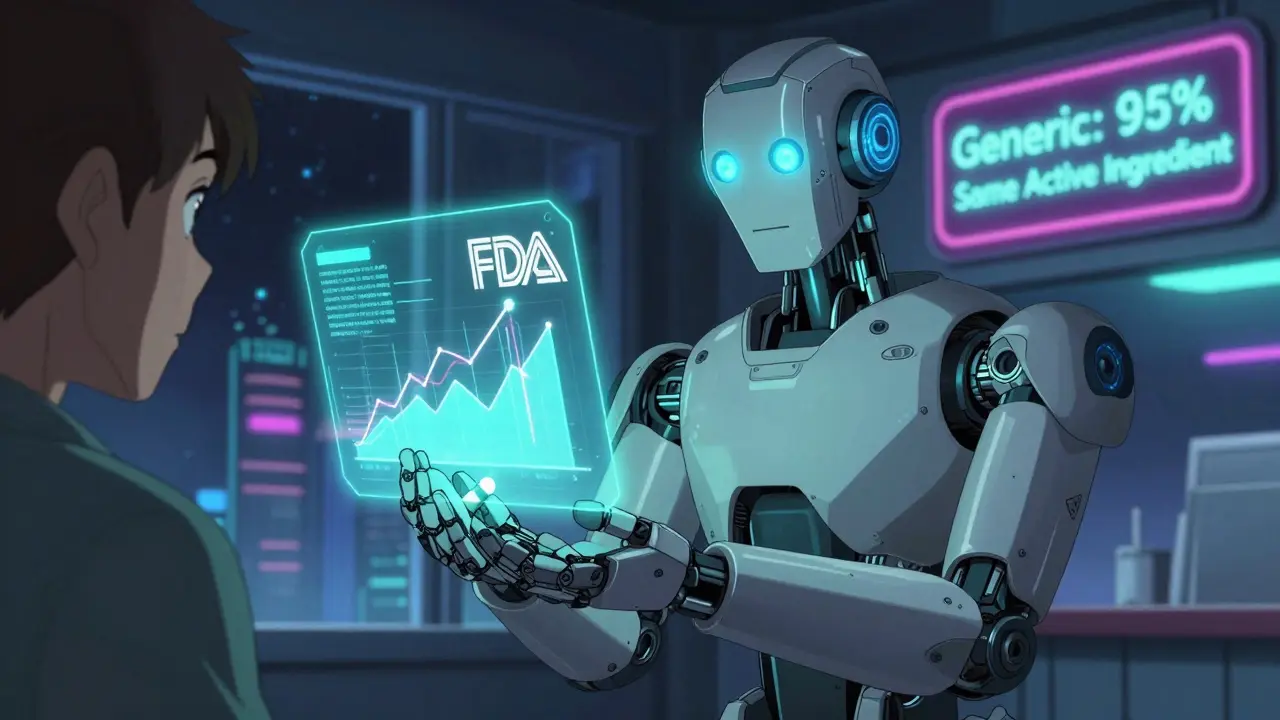
When you pick up your prescription, you might be handed a pill that looks completely different from what you’ve taken before. The name on the bottle isn’t the one you remember. And suddenly, you’re wondering: Is this going to work the same? You’re not alone. Millions of people get generic medications every day without issue-but many still feel unsure. The truth is, generics aren’t cheaper because they’re worse. They’re cheaper because they don’t need to pay for ads, fancy packaging, or patent lawsuits. But that doesn’t mean you shouldn’t ask questions.
What’s Actually in a Generic Drug?
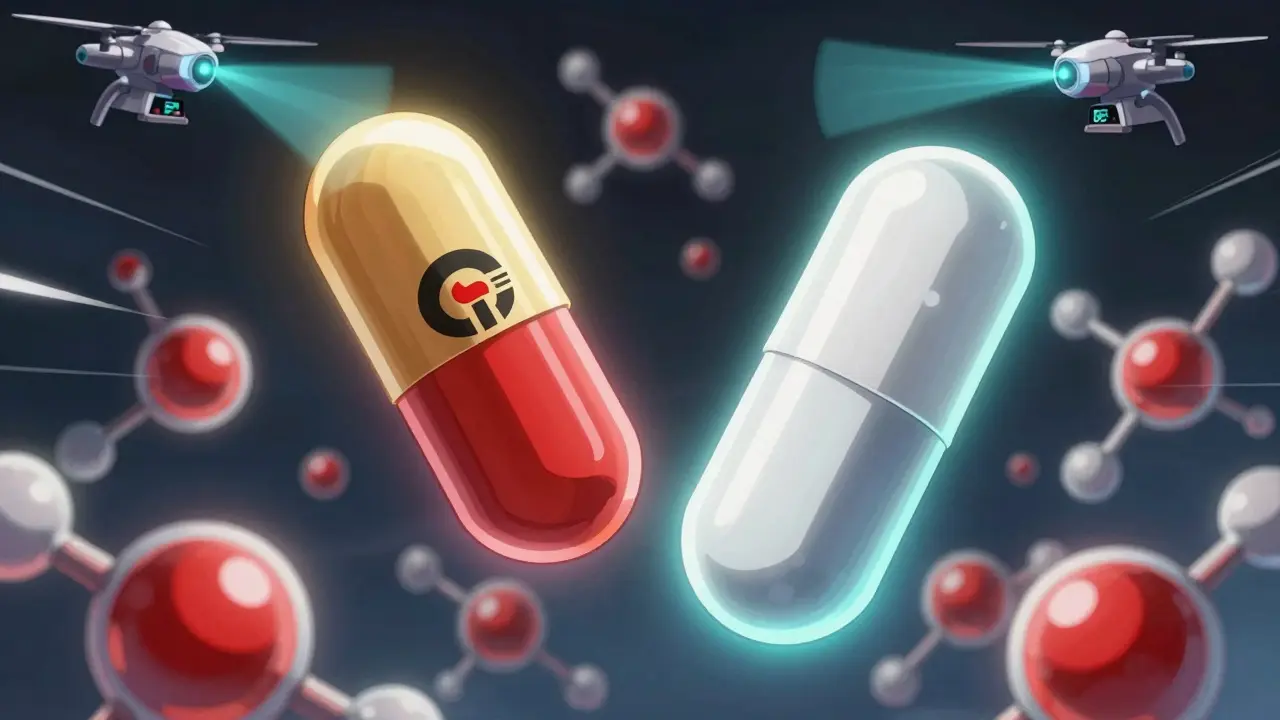
Generic drugs contain the exact same active ingredient as the brand-name version. That’s not a guess-it’s a legal requirement. The U.S. Food and Drug Administration (FDA) makes sure of it. Before a generic can hit the market, it has to prove it delivers the same amount of medicine into your bloodstream at the same speed as the brand. This is called bioequivalence. The FDA allows a small variation-up to 20%-in how much gets absorbed. In reality, most generics fall within 3.5% of the brand’s absorption rate. That’s tighter than the margin of error for many blood tests.What’s different? The color. The shape. The filler ingredients. The name on the pill. Generic manufacturers can’t copy the brand’s look because of trademark laws. So your blue oval pill becomes a white capsule. Your brand-name metformin turns into a red tablet labeled with a pharmacy’s name. None of that changes how the medicine works in your body.
Why Do Brand-Name Drugs Cost So Much More?
Brand-name drugs start out expensive because the company that invented them spent years and millions developing the drug, running clinical trials, and getting FDA approval. Once that patent expires-usually 20 years after filing-other companies can make copies. That’s when prices drop. Dramatically.On average, generic drugs cost 80-85% less than their brand-name equivalents. In 2022, generic medications saved the U.S. healthcare system over $1.6 trillion since 2007. That’s not just a savings for insurance companies. It’s money back in your pocket. A 30-day supply of brand-name Lipitor might cost $300. The generic, atorvastatin,? Often under $10. That’s the difference between filling your prescription and skipping doses because you can’t afford it.
When Might You Need the Brand-Name Version?
For nearly every condition-high blood pressure, diabetes, depression, asthma-generics are just as effective. But there are rare exceptions. These are called narrow therapeutic index (NTI) drugs. With these, even tiny changes in how much medicine enters your blood can cause problems. Examples include warfarin (a blood thinner), levothyroxine (for thyroid), and some seizure medications like phenytoin.Some doctors still prefer to keep patients on the same brand for these drugs, not because generics are unsafe, but because consistency matters. If you’ve been stable on one version for years, switching between different generic manufacturers might cause small fluctuations in your blood levels. Studies show this happens in less than 5% of cases, and most often it’s not the generic’s fault-it’s because you switched from one generic brand to another generic brand, not from brand to generic.
The FDA says approved generics are safe for NTI drugs. But if you’ve had a bad reaction after switching-or if your doctor has seen complications in patients-they may write “dispense as written” on your prescription. That means the pharmacy can’t substitute it without calling you back.
What to Say to Your Doctor
You don’t need to be a pharmacist to have this conversation. Here’s what to ask:- “Is there a generic version of this medication?”
- “Will it work the same for my condition?”
- “Are there any reasons I should stay on the brand-name version?”
- “Have you seen patients have issues switching to generics?”
Be honest about your budget. Say: “I’m worried I won’t be able to afford this if I have to pay full price.” Doctors hear this all the time. Many will immediately suggest a generic-or even check if a lower-cost brand exists. Some insurance plans require you to try the generic first before covering the brand.
Don’t be afraid to say, “I’ve heard generics are just as good, but I’m nervous.” That’s normal. Your doctor isn’t judging you. They want you to take your medicine. If you’re unsure, ask for a small supply of the generic to test it out.
What Happens at the Pharmacy?
In most states, pharmacists are legally required to substitute a generic unless the doctor says not to. That’s not a trick. It’s a cost-saving rule designed to help patients and the system. But if you get a pill you don’t recognize, don’t just take it or toss it. Ask the pharmacist.Pharmacists are trained to explain the differences. They can show you the FDA’s Orange Book listing, which confirms which generics are approved as equivalent to each brand. They can also tell you if this is your first time getting this generic version-or if you’ve had it before under a different label. In one study, 78% of patient concerns about generics were cleared up with a simple conversation at the pharmacy.
Why Do Some People Say Generics Don’t Work?
If you’ve heard stories-on Reddit, from a friend, or in a support group-that generics made them feel worse, it’s understandable to be worried. But most of the time, it’s not the medicine. It’s the mind.This is called the nocebo effect. If you believe something won’t work-or worse, that it’s inferior-your brain can make you feel symptoms you didn’t have before. One patient switched from brand-name Adderall to generic amphetamine and started having headaches and trouble sleeping. She stopped taking it. When she tried the brand again, she felt fine. Then she tried the generic again, knowing it was the same drug-and her symptoms disappeared.
Consumer Reports found that 89% of patients reported no difference in effectiveness after switching to generics. Only 17% initially felt uneasy about the change-and 92% of those were satisfied after talking to a pharmacist.
Another reason people notice differences? Sometimes, the generic comes from a different manufacturer. Two different companies can make generics of the same drug, and their fillers or coatings might affect how quickly the pill dissolves. That’s why your doctor might recommend sticking with the same generic brand if you’ve been stable on it.
What About Biologics and Biosimilars?
Not all complex drugs have generics. Biologics-like insulin, rheumatoid arthritis drugs, and cancer treatments-are made from living cells, not chemicals. You can’t copy them exactly. Instead, there are biosimilars: drugs that are highly similar, but not identical. They’re not called generics, and they’re not always cheaper right away. But they’re still a major step toward lowering costs. Ask your doctor if a biosimilar is an option for you if you’re on one of these drugs.Final Thoughts: It’s Your Right to Ask
You don’t have to accept whatever the pharmacy gives you without understanding it. You don’t have to pay more because you’re afraid to speak up. Generic medications are safe, effective, and heavily tested. They’re the reason millions of people can afford to manage chronic conditions. But your comfort matters too. If you’ve had a bad experience, or if you’re unsure, talk to your doctor. Ask questions. Request a trial. Get the facts from your pharmacist.The goal isn’t to pick the cheapest option. It’s to pick the one that works for you-safely, affordably, and consistently. And that’s a conversation worth having.
Are generic medications as safe as brand-name drugs?
Yes. Generic medications must meet the same strict FDA standards as brand-name drugs for safety, strength, purity, and effectiveness. The FDA requires that generics contain the same active ingredient, work the same way in the body, and have the same risks and benefits. There is no evidence that approved generics are less safe.
Why do generic pills look different from brand-name ones?
U.S. trademark laws prevent generic manufacturers from making pills that look identical to brand-name versions. So generics differ in color, shape, size, or markings. But these changes only affect appearance-not how the drug works. The active ingredient is identical.
Can I ask my doctor to prescribe only brand-name drugs?
Yes. You can ask your doctor to write “dispense as written” or “no substitution” on your prescription. This tells the pharmacy not to switch to a generic. Doctors may do this for certain medications, especially narrow therapeutic index drugs, or if you’ve had a bad reaction to a generic in the past.
Do generics take longer to work than brand-name drugs?
No. Generics must be bioequivalent, meaning they enter your bloodstream at the same rate and to the same extent as the brand-name version. Any delay in feeling effects is usually due to individual body differences-not the drug itself. If you notice a change after switching, talk to your doctor or pharmacist.
What if I can’t afford even the generic version?
Many pharmacies offer discount programs-like GoodRx or manufacturer coupons-that can bring generic prices down to $4-$10 for a 30-day supply. Ask your pharmacist about these options. You can also ask your doctor if there’s a different medication in the same class that’s cheaper or covered better by your insurance.
Next Steps
- Before your next appointment, write down the names of all your medications and check if generics are available.
- If you’re switching to a generic, note how you feel in the first week. Keep a simple journal: sleep, energy, side effects.
- When you pick up your prescription, ask the pharmacist: “Is this the same medicine I’ve taken before?”
- If you’re unsure, request a small supply of the generic to test it before committing to a full refill.
Medication is personal. Your body, your budget, your experience. You have the right to understand what you’re taking-and to ask for what works best for you. Don’t let cost or confusion stop you from speaking up.