
Why Your Medicine Cabinet Might Be Ruining Your Pills
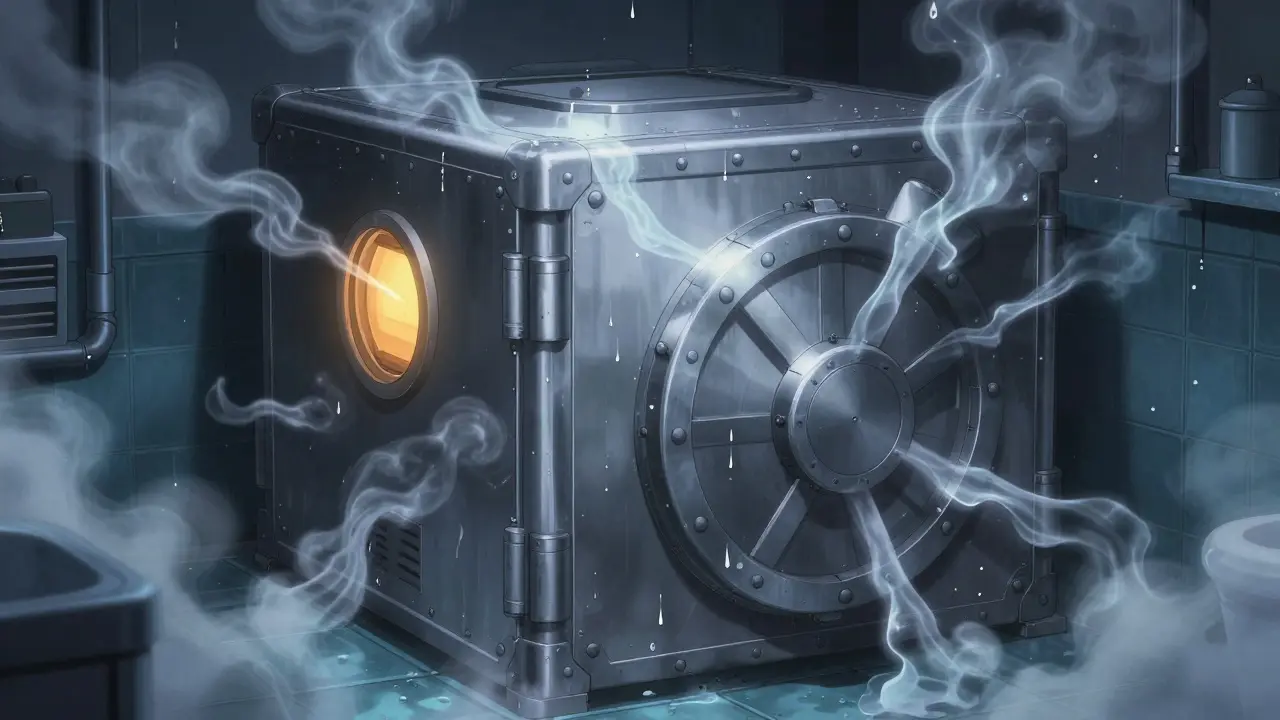
You've probably heard that keeping your medicines in the bathroom cabinet is just fine. You take your morning shower, grab your pills from the shelf above the sink, and go about your day. But here is the hard truth: that warm, humid spot is actually accelerating the decay of your medications. According to the American Pharmacists Association, households in the United States waste roughly $20 billion annually on prematurely expired medications. Most of this waste comes down to simple storage mistakes.
The Centers for Disease Control and Prevention (CDC) reports that improper storage conditions are responsible for 37% of premature medication expiration cases reported in homes. It isn't just about saving money; it is about ensuring the medicine actually works when you need it to save your life.
| Mistake | Consequence |
|---|---|
| Bathroom Cabinet Storage | Humidity spikes destroy tablet coatings |
| Kitchen Counters | Temperature fluctuations degrade antibiotics |
| Removing Original Bottles | Loss of UV protection and desiccants |
The Science Behind Shelf Life
To understand how to store your drugs correctly, you need to understand what an expiration date actually means. The U.S. Food and Drug Administration established formal requirements for these dates back in 1979. When you see a date on a bottle, it marks the final day the manufacturer guarantees the medication will retain between 90% and 110% of its labeled potency.
Medication Stability is defined as the ability of a pharmaceutical product to maintain its chemical strength, quality, and purity over time under specific storage conditions.This isn't a random guess. Drug manufacturers conduct rigorous stability testing to determine this timeline. If you store that drug incorrectly, you break the contract. The environment changes faster than the clock. Dr. Richard Klasco from Yale School of Medicine notes that while military stockpiles can sometimes last years past their dates under perfect vacuum conditions, typical household environments are nowhere near that controlled.
The Three Enemies of Medication Longevity
If you want to prevent early expiration, you have to fight against three main factors: temperature, humidity, and light. These aren't abstract concepts; they physically change the chemical structure of your pills.
1. Temperature Control
Most solid dosage forms, like tablets and capsules, require "controlled room temperature." This sounds vague, but the United States Pharmacopeia General Chapter <1151> specifies this clearly: temperatures should stay between 20°C and 25°C (68°F to 77°F). Anything consistently above this range speeds up chemical reactions inside the pill.
Think about where you live. In summer, does your house get hotter? In winter, is there a drafty corner? A Swedish Medical Center study found that storing common antibiotics near heat sources, like a stove or a sunny window, caused temperature fluctuations exceeding 15°C within just 30 minutes. This volatility degraded 42% of those antibiotics within 90 days. That means less than four months after picking them up, nearly half had lost significant potency.
2. Relative Humidity
Humidity is the silent killer. The ideal relative humidity level for medication storage is below 60%. This is difficult to achieve in many American homes naturally, especially in coastal areas or during rainy seasons.
When moisture gets into a tablet, two bad things happen. First, the binder holding the active ingredient together dissolves, causing the pill to crumble. Second, water triggers hydrolysis-a chemical breakdown where water molecules split the active drug compounds. UCHealth's 2023 stability study showed that aspirin stored in high-humidity environments experienced a hydrolysis rate 300% faster than standard rates. That vinegar smell you notice in old aspirin? That is the chemical acetylsalicylic acid breaking apart.
3. Light Exposure
UV rays are particularly damaging to certain drugs. This is why many prescription bottles are amber-colored. Research from the Journal of Pharmaceutical Sciences indicates that amber glass blocks 97% of UV light compared to clear containers.
Nitroglycerin sublingual tablets are a prime example. They must be kept in their original dark glass containers. If you transfer them to a plastic organizer or leave them out on a nightstand, exposure to ambient light can render them useless within weeks.
Where You Should Never Store Medicine
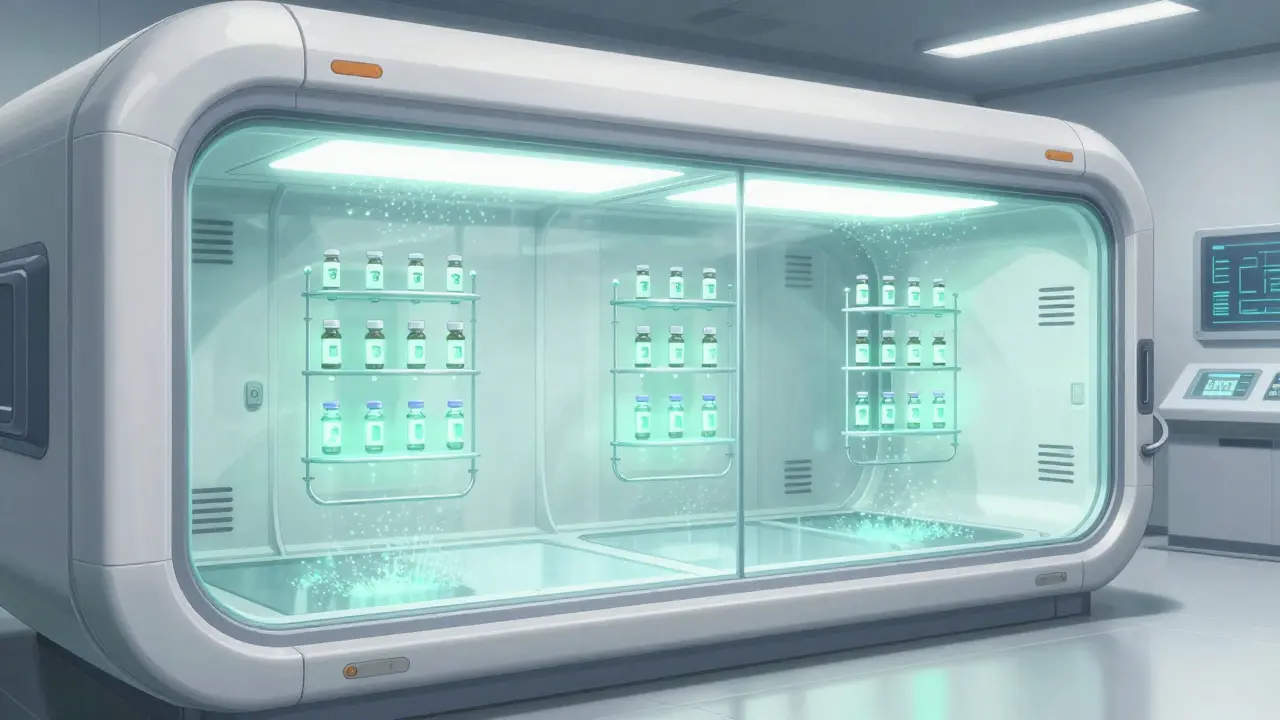
We all have places in our house that seem convenient but are actually hazardous. Identifying these spots is crucial for extending shelf life.
- Bathroom Cabinets: Despite being the most popular choice, bathrooms are the worst place for meds. During a hot shower, humidity levels can spike to 85-95%. This moisture penetrates bottle seals over time, leading to clumping and mold growth in liquids.
- Kitchen Pantry Near Appliances: Stoves, ovens, and dishwashers radiate heat. Even when not in use, they create microclimates that exceed safe storage temperatures. Place your cabinet away from any cooking equipment.
- Glove Boxes in Cars: In 2026, we still see too many people leaving insulin or EpiPens in cars. Summer car temperatures can soar well above 50°C (122°F). This destroys almost every liquid formulation instantly.
- Sunny Windowsills: Direct sunlight acts like an oven, raising the temperature significantly beyond room air temperature and exposing drugs to degrading UV radiation.
Special Handling for Sensitive Medications
Not all drugs play by the same rules. Some require stricter protocols that go beyond general room temperature storage.
Refrigerated Medications
Liquid antibiotics, certain eye drops, and insulins often require refrigeration. The National Institutes of Health guidelines specify a temperature range of 2°C to 8°C (36°F to 46°F).
Insulin Nuance: Unopened insulin vials usually need continuous refrigeration. Once you start using a vial, many formulations allow you to keep it at room temperature for up to 28 days. However, Merck released a heat-stable insulin variant in late 2023 that can withstand up to 30°C for 56 days, so always read the specific label. Never freeze insulin. Freezing denatures the protein chains, making it permanently ineffective.
Sterile Liquids and Eye Drops
Eye drops are incredibly risky once opened. The American Society of Health-System Pharmacists warns that liquid medications become contaminated with bacteria like Pseudomonas aeruginosa in 78% of cases when used past their expiration or stored improperly. Contaminated eye drops don't just stop working; they can cause bacterial conjunctivitis and serious infection.
A good rule of thumb is to discard multi-use eye drops one month after opening, even if the printed expiration date is years away. The preservative system is designed to work only for that short timeframe once exposed to air and eyelashes.

Organizing Your Supply for Safety
Keeping track of dates manually is prone to error. You need a system. A color-coding system developed by the University of Wisconsin-Madison uses simple dot stickers to manage inventory effectively.
- Red Sticker: Current Year (Use immediately)
- Blue Sticker: Next Year (Monitor closely)
- Green Sticker: Two Years Out (Safe reserve)
Designating one household member to conduct monthly checks prevents 89% of premature disposal cases according to Kaiser Permanente. This person should look for visual signs of degradation:
- Tablet discoloration exceeding 15% from the original hue.
- Faint vinegar-like odors (especially in aspirin).
- Particles floating in clear liquid suspensions.
- Cracks or chips in capsule shells.
Safe Disposal Options
Eventually, some medicines will expire. Do not flush them unless the label explicitly tells you to do so (which applies mostly to opioids). Flushing leads to water contamination. Instead, utilize collection sites.
The DEA holds National Prescription Drug Take Back events typically twice a year. If there is no event nearby, many local pharmacies offer permanent drop boxes. For small amounts, you can mix the pills with unappealing substances like coffee grounds or cat litter in a sealed bag before throwing them in the trash, though local community guidelines vary.
Future Technologies for Home Storage
As we move through 2026, technology is starting to help us monitor home environments better. Smart pillboxes like the MedMinder Pro now feature environmental sensors that track temperature and humidity with 95% accuracy. These devices alert you via app if a cabinet gets too warm or damp.
Furthermore, the FDA proposed new rules in 2025 requiring real-time stability indicators on high-risk medications. While universal adoption takes time, more pharmaceutical companies are integrating silica-gel packets directly into bottle caps to control internal humidity levels actively.
Can I take medication past the expiration date?
Generally, no. While some stable drugs might remain potent slightly longer under perfect conditions, you cannot verify this at home. The FDA states that expiration dates guarantee potency and safety up to that specific day. Taking degraded medication poses health risks ranging from reduced efficacy to toxic breakdown products.
Is the bathroom cabinet safe for vitamins?
Vitamins are supplements, not regulated drugs, but they suffer similar damage from humidity. Multivitamins are particularly vulnerable to clumping. For best results, keep vitamins in a cool, dry dresser drawer rather than the bathroom vanity.
Does taking pills out of the original bottle ruin them?
Yes, it often does. Original bottles protect against light (amber color), moisture (tight seal), and provide critical info. Pill organizers expose pills to air and humidity daily. Only transfer the amount you need for the next few days.
What temperature is ideal for a medicine cabinet?
Aim for 68°F to 77°F (20°C to 25°C) with humidity below 60%. Avoid placing cabinets near windows, doors, or heat vents where temperatures fluctuate frequently.
How do I know if my liquid medicine has gone bad?
Look for particles, separation that doesn't shake back together, or distinct odor changes. Clear liquids should remain clear. If the suspension settles and won't remix, or smells fermented, discard it immediately.
Can I take medication past the expiration date?
Generally, no. While some stable drugs might remain potent slightly longer under perfect conditions, you cannot verify this at home. The FDA states that expiration dates guarantee potency and safety up to that specific day. Taking degraded medication poses health risks ranging from reduced efficacy to toxic breakdown products.
Is the bathroom cabinet safe for vitamins?
Vitamins are supplements, not regulated drugs, but they suffer similar damage from humidity. Multivitamins are particularly vulnerable to clumping. For best results, keep vitamins in a cool, dry dresser drawer rather than the bathroom vanity.
Does taking pills out of the original bottle ruin them?
Yes, it often does. Original bottles protect against light (amber color), moisture (tight seal), and provide critical info. Pill organizers expose pills to air and humidity daily. Only transfer the amount you need for the next few days.
What temperature is ideal for a medicine cabinet?
Aim for 68°F to 77°F (20°C to 25°C) with humidity below 60%. Avoid placing cabinets near windows, doors, or heat vents where temperatures fluctuate frequently.
How do I know if my liquid medicine has gone bad?
Look for particles, separation that doesn't shake back together, or distinct odor changes. Clear liquids should remain clear. If the suspension settles and won't remix, or smells fermented, discard it immediately.




walker texaxsranger
March 29, 2026 AT 14:08the humidity kills the coating faster than you think most people leave bottles in the shower area this creates a microclimate that destroys potency chemical degradation happens silently inside the tablet water molecules initiate hydrolysis reactions immediately the binder dissolves before you notice any visual change color changes occur later when damage is already done original amber bottles block UV radiation effectively clear plastic organizers expose drugs to daily light cycles heat waves in summer exceed safe storage limits rapidly cars act as ovens during parking intervals insulin proteins denature permanently upon freezing events liquid suspensions separate permanently after vibration stress bacterial contamination grows unchecked in opened eye drops preservative systems expire sooner than labeled dates indicate you cannot rely on printed expiration guarantees alone manufacturers design these timelines for perfect conditions nobody achieves that in a home environment
Tony Yorke
March 30, 2026 AT 03:06Keep your medicine cool dry and away from sunlight exposure always.
Sarah Klingenberg
March 31, 2026 AT 22:36You really hit the nail on the head with the bathroom cabinet issue here :o I keep forgetting how much steam gets into those tiles sometimes lol Its crazy to think pills rot in plain sight we should just move everything to a bedroom drawer instead of fighting the shower humidity forever :) Thanks for the detailed science breakdown on why tablets crumble too
Devon Riley
April 2, 2026 AT 16:03That is such important info for everyone dealing with chronic conditions 💊 I feel like ignoring humidity stats is a major blind spot for patients 🌡️ Keeping insulin safe is super crucial for diabetes management ✨ The tip about amber glass bottles blocking UV rays is a game changer honestly 🔦 We all need to treat our meds like precious chemistry experiments instead of random trash drawers 🧪 Appreciate the reminder about bacterial risks in eye drops specifically 👀 Stay safe out there folks 🙏
Rachael Hammond
April 2, 2026 AT 18:01I never realized humdity was the silient killer until reading this stuff today My grandma kept her aspirin in the bath room cupbaord for yrs and it smelled like viniger I thoght it was just old but now I get it the wetnes ruins the pill structure inside out its scary thinking how many medicine cabs in houses are basically ruined shelves rn I gess my mom moves hers to the dresser tonight hopefully saves the money
tyler lamarre
April 4, 2026 AT 03:32Of course the average person thinks their bathroom cabinet is a sterile laboratory vault. You spend forty dollars on a bottle of antibiotics and then store it next to your hair spray and damp towels. It is practically a comedy of errors. The pharmaceutical industry knows this. They know you will degrade your own supply. That is why shelf life is aggressive. People complain about costs but waste billions due to stupidity. Do not trust your gut instinct on chemistry. Read the label or suffer the consequences.
Poppy Jackson
April 5, 2026 AT 04:18The sheer drama of a degrading tablet is quite tragic isnt it. Humidity strikes like a thief in the night destroying your peace of mind. We live in a world where science tells us one thing and habit dictates another. The vinegar smell is the sound of failure whispering through the cupboard. Please reconsider your storage habits for the sake of your future self darling. A cool dark corner is worth more than any convenience store.
Eva Maes
April 5, 2026 AT 07:36This is absolute garbage advice disguised as science literacy for the masses who cant read labels properly. Most folks lack the cognitive ability to track humidity spikes or temperature volatility. The data on hydrolysis rates is cherry picked to scare consumers into buying new smart boxes. Real pharmacological stability relies on sealed environments which bathrooms rarely provide naturally. Why bother discussing car glove boxes when people cant manage a fridge properly anyway? The economic waste is systemic not individual failure. Manufacturers shift blame to households instead of designing better packaging solutions. Everyone plays along pretending storage matters while pills sit in the sun anyway.
Jordan Marx
April 5, 2026 AT 12:02The pharmacokinetic profile of degradable compounds requires strict environmental control parameters. Ambient relative humidity exceeding sixty percent accelerates ester bond hydrolysis significantly in solid oral dosage forms. Photolytic degradation pathways are triggered by UV wavelengths found in typical residential lighting fixtures. Storage protocols must align with USP General Chapter specifications to maintain therapeutic indices. Smart monitoring devices provide real-time telemetry regarding local environmental variances. These metrics allow for proactive intervention before potency thresholds breach critical safety margins. Inventory management systems utilizing color coding streamline expiration tracking processes efficiently.
Austin Oguche
April 5, 2026 AT 15:44I appreciate the comprehensive overview on maintaining medication integrity through proper housing strategies. It is evident that household environmental conditions drastically affect chemical stability over time. Implementing consistent storage routines ensures therapeutic efficacy remains optimal throughout the designated shelf life period. Protecting active ingredients from moisture intrusion prevents premature decomposition events. Regular audits of personal medical supplies contribute significantly to long-term health outcomes.
Tommy Nguyen
April 5, 2026 AT 23:56We can totally manage this stuff if we just pay attention to where things go. The new smart boxes sound amazing for keeping track of everything safely. Just imagine having peace of mind knowing your meds are perfectly preserved every single day.
Kameron Hacker
April 6, 2026 AT 03:50Non-compliance with storage regulations is unacceptable behavior for responsible adults. Ignoring established guidelines regarding thermal and photostability invites preventable health risks. The community must enforce stricter discipline concerning pharmaceutical handling procedures. Weakness in organization leads directly to compromised medication safety profiles. Immediate action is required to relocate all sensitive stock from inappropriate zones.
Jeannette Kwiatkowski Kwiatkowski
April 7, 2026 AT 14:47Honestly common sense should cover most of this but apparently people need a degree in chemistry to handle a pill bottle. The obsession with expiration dates is kinda funny when you know what actually goes on in the lab. Still guessing most just toss it when the date hits because thats easier than checking. Whatever works i suppose. At least the humid air thing is something we all forget about constantly. Maybe next time someone buys a fancy organizer theyll actually read the manual.
Debra Brigman
April 8, 2026 AT 18:34There is a deep existential truth hidden within the decay of aspirin tablets sitting in warm darkness. Medicine becomes a metaphor for our own fragile existence against the entropy of the universe. We try to preserve vitality yet nature insists on breaking bonds inevitably. Perhaps the lesson lies in accepting impermanence rather than fighting every drop of moisture in our cabinets. The chemical timeline reveals a rhythm of loss that mirrors human aging patterns closely.
Shawn Sauve
April 9, 2026 AT 13:29Glad to see so many people sharing their thoughts on keeping meds safe :) Setting clear boundaries on where we put our supplies helps everyone stay healthy in the long run! Its nice to have a respectful space to talk about these serious topics without getting too heated :)