
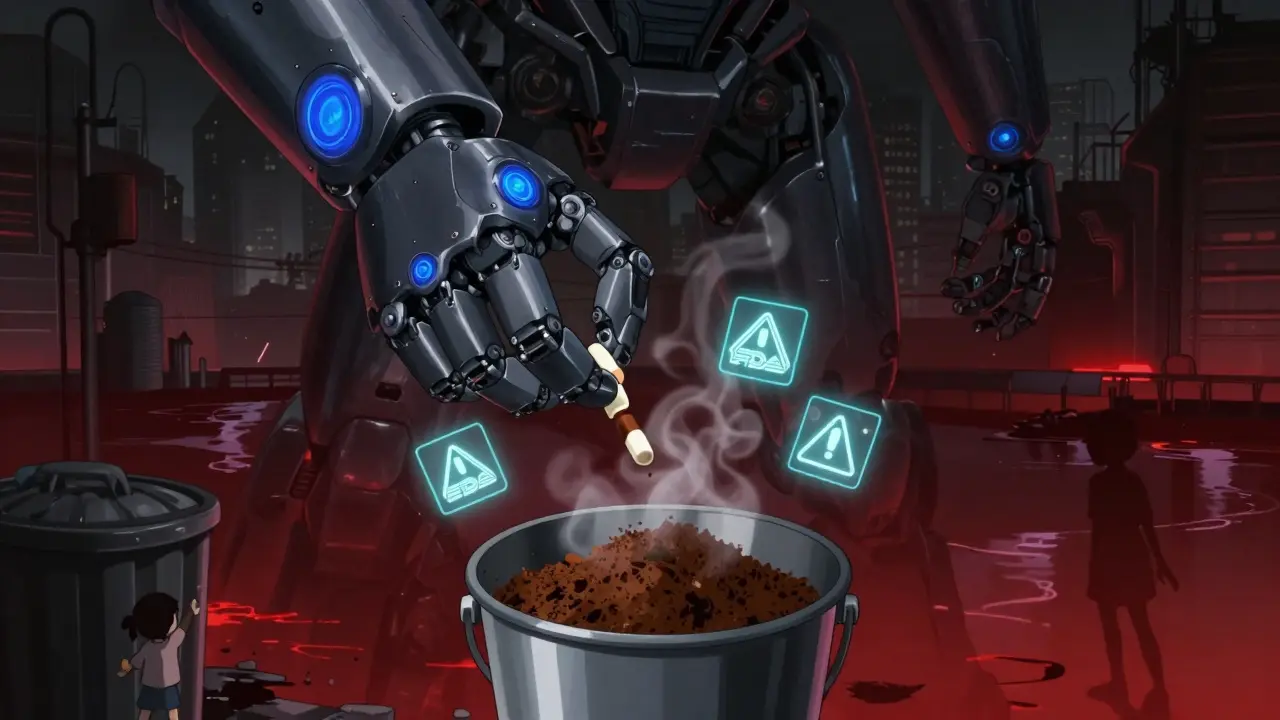
Keeping unused or expired medications in your medicine cabinet isn’t just messy-it’s dangerous. Every year, thousands of children accidentally swallow pills they find at home. Thousands more misuse drugs pulled from family medicine cabinets. And when you flush pills down the toilet or toss them in the trash without proper steps, those same chemicals can end up in your water supply or attract curious pets and people looking for a quick high.
Most people don’t realize that the safest way to get rid of old pills isn’t to flush them or just throw them in the bin. The Food and Drug Administration (FDA) and the Environmental Protection Agency (EPA) have clear rules for this. And if you don’t have access to a drug take-back program-which is true for many rural households-then disposing of medications in household trash is your next best option. But only if you do it right.
Step 1: Check if your medication is on the FDA’s Flush List
Before you even think about the trash, check if your drug is one of the 15 on the FDA’s Flush List. These are high-risk medications-mostly powerful opioids and sedatives-that can be deadly if someone else gets hold of them, even in small amounts. Flushing these specific drugs is the only safe option because it prevents misuse before the pill can be recovered.
Examples include fentanyl patches, oxycodone tablets, and buprenorphine. If your medication is on this list, flush it immediately. The FDA updated this list in November 2023, and it hasn’t changed since. You can find the full list on the FDA’s website, but if you’re unsure, look at the packaging. Some bottles still have a note that says, “Flush if no take-back program is available.”
If your medication isn’t on that list, don’t flush it. Flushing other drugs contributes to water pollution. The U.S. Geological Survey found pharmaceuticals in 80% of U.S. waterways. You’re better off with the trash method-if done correctly.
Step 2: Remove pills from original containers
Never throw away pills in their original bottles with your name and prescription number still visible. That’s a privacy risk. The Health Insurance Portability and Accountability Act (HIPAA) requires you to protect personal health information-even when you’re throwing it out.
Take the pills out of the bottle. You can dump them into a small bowl or onto a piece of paper. Leave the empty bottle aside for now. You’ll deal with it in the next step. This step alone cuts down on the chance that someone will find your pills and mistake them for their own-or worse, take them intentionally.
Step 3: Mix pills with an unappealing substance
This is the most important step. You can’t just dump pills into the trash. Someone might dig through it. A pet might eat them. A child might find them.
So mix them with something gross. The FDA recommends used coffee grounds, dirt, or cat litter. Why? Because no one-adult or animal-is going to want to dig through wet, smelly coffee grounds to find a pill. The mixture needs to be thick enough that the pills are fully covered. A 1:1 ratio works best: one part pills, one part coffee grounds. If you have a handful of pills, use a full cup of grounds.
Don’t crush pills. That’s a common mistake. Crushing can release dangerous dust, especially with strong medications like fentanyl. You don’t need to crush them. Just mix them whole. The goal isn’t to destroy the pill-it’s to make it unappealing and unsearchable.
Step 4: Seal the mixture in a leak-proof container
Now, scoop the mixture into something that won’t leak or break. A resealable plastic bag works fine. So does an empty yogurt tub, a margarine container, or even a jar with a tight lid. The key is that it’s sealed. No gaps. No openings.
This step keeps the mixture contained. It stops leaks. It keeps odors in. It makes it harder for someone to get into it. And it prevents the mixture from spilling in your trash bin. You’re not just hiding the pills-you’re making them physically hard to access.
Step 5: Hide your prescription bottle
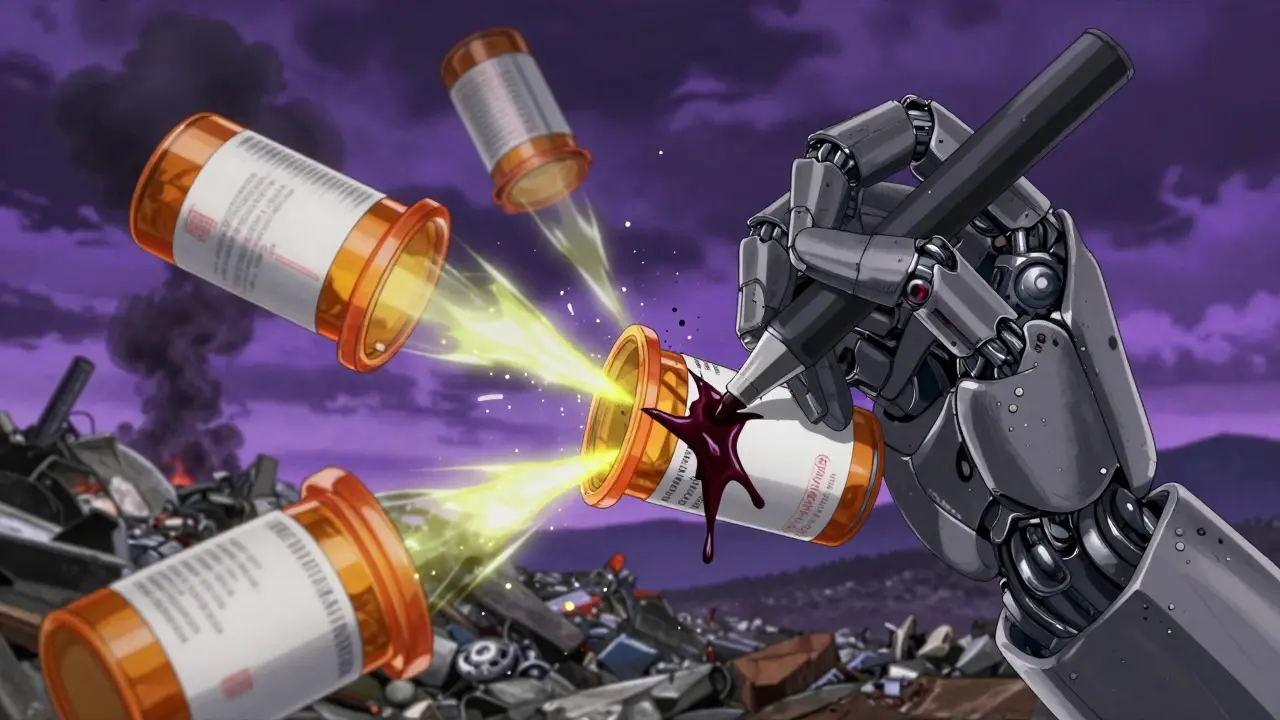
Remember those empty bottles you set aside? You can’t just toss them in the recycling. Most #5 amber prescription bottles aren’t recyclable in 87% of U.S. towns, according to the American Chemistry Council. So they go in the trash. But not with your name still on them.
Use a permanent marker to black out your name, address, prescription number, and the name of the medication. If you don’t have a marker, use duct tape to cover the label. Or scrape it off with a knife. Just make sure no one can read it.
If you’re feeling extra careful, cut the label off with scissors and throw it in a different trash bag than the one with the pills. That’s overkill for most people, but it’s what some pharmacists recommend.
Why this method works
Here’s what happens when you skip steps:
- Throw pills in the trash unsealed? 19% of improper disposal cases involve this mistake.
- Don’t mix with coffee grounds? 28% of people use too little-leaving pills exposed.
- Leave labels readable? 37% of cases involve privacy breaches.
When you do all five steps correctly, you reduce the risk of accidental poisoning and misuse by about 90%, according to Dr. Scott Gottlieb, former FDA Commissioner. The EPA says this method cuts environmental contamination by 75% compared to just tossing pills in the trash.
It’s not perfect. A 2023 study in the Journal of Environmental Quality found that 12-18% of some drug compounds still seep into landfill leachate. But that’s far better than flushing them into rivers or leaving them on your counter.
What about drug take-back programs?
If you can find one, use it. The DEA runs over 14,600 authorized collection sites across the U.S.-including pharmacies like Walgreens and CVS. These programs safely destroy medications without any environmental risk. They’re the gold standard.
But here’s the problem: 42% of rural counties don’t have consistent access to these sites. If you live in a small town or remote area, you might drive 30 miles to the nearest drop-off. That’s not realistic for most people.
That’s why the household trash method exists. It’s not ideal-but it’s safe when done right. And for millions of Americans, it’s the only option they have.
What NOT to do
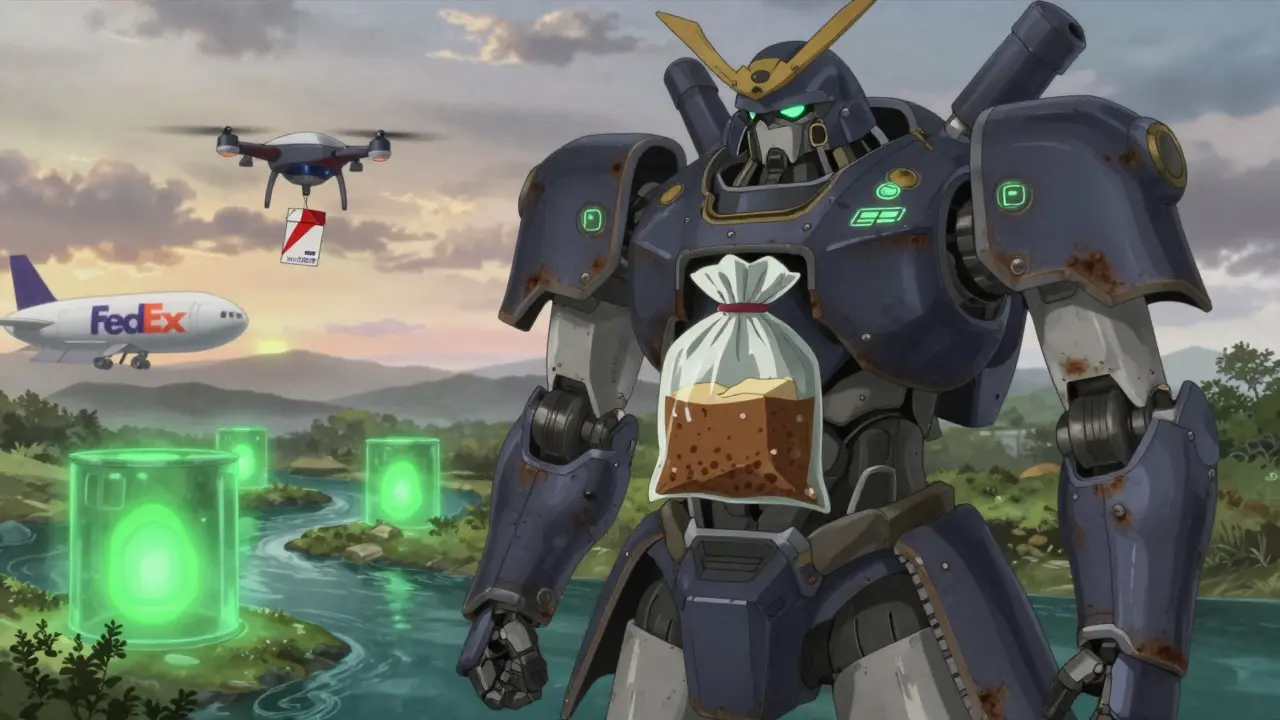
Don’t flush anything unless it’s on the FDA’s list. Even if your neighbor says it’s fine, don’t do it. Water treatment plants don’t remove most drugs.
Don’t give old meds to friends or family. That’s illegal and dangerous.
Don’t compost pills. They don’t break down like food. They poison soil.
Don’t burn them. That releases toxic fumes.
Don’t wait until they’re expired. The longer you keep them, the higher the chance someone will use them accidentally-or on purpose.
What’s changing in 2025?
California just passed SB 212, effective January 2024. All pharmacies with four or more locations must now offer free medication disposal kiosks. That means 98% of Californians now have easy access to safe disposal.
The FDA is testing curbside pickup in 12 communities. If it works, it could expand nationwide.
And in 2022, the Inflation Reduction Act started covering mail-back disposal kits under Medicare Part D. Now, 65 million seniors can order free envelopes to send old pills back to licensed disposal facilities.
These changes are helping. But until every American has easy access to take-back programs, the trash method remains a vital safety net.
Final checklist: Did you do it right?
Before you put your trash out, run through this quick list:
- Did I check if my meds are on the FDA Flush List? If yes, flush them.
- Did I remove pills from their bottles?
- Did I mix them with coffee grounds, dirt, or cat litter?
- Did I seal the mixture in a leak-proof container?
- Did I completely black out or remove my name and prescription info from the bottle?
If you answered yes to all five, you’ve done it right. You’ve protected your family. You’ve protected your privacy. And you’ve helped protect the environment.
It takes less than 15 minutes. And it’s one of the simplest, most effective ways to prevent harm in your home-and beyond.

Jody Kennedy
December 26, 2025 AT 21:12OMG I just did this last week with my grandma’s old pain pills-coffee grounds + sealed bag + marker on the bottle. Felt like a superhero. Seriously, everyone should do this. It’s so easy and it saves lives.
Also, cat litter works WAY better than I thought. Smells like a dumpster, but hey-safety first!
Alex Ragen
December 28, 2025 AT 10:51One must, of course, acknowledge the epistemological paradox inherent in pharmaceutical disposal: if we are to avoid contaminating waterways, yet cannot rely on infrastructure to facilitate safe disposal, then the individual becomes both the agent and the burden of ecological responsibility-this, dear interlocutor, is the tragic irony of late-capitalist pharmacopeia.
Also, coffee grounds? How quaint. Have you considered activated charcoal? Or perhaps a biochar matrix? The FDA’s guidelines are… inadequate.
Lori Anne Franklin
December 28, 2025 AT 19:57i did this and my dog didn’t even sniff the trash lol. i used old kitty litter and a ziplock. it’s kinda gross but like… worth it?
also my mom still flushes everything. i’m gonna print this out and tape it to her bathroom mirror. she’ll hate it but she’ll do it.
Bryan Woods
December 29, 2025 AT 10:19This is an excellent, well-structured guide. The distinction between flushing and trash disposal is critical, and the emphasis on privacy protection aligns with HIPAA’s spirit, even if not legally enforceable post-disposal.
For those without access to take-back programs, this method remains the most pragmatic and responsible option available. I have shared this with my local community board.
carissa projo
December 29, 2025 AT 11:22Let’s be real-this isn’t just about safety. It’s about dignity. Those pills? They held someone’s pain. They were part of someone’s story. And now, instead of letting them sit in a drawer like ghosts, we give them a quiet, respectful exit.
Mixing them with coffee grounds? That’s not just practical-it’s poetic. The same grounds that woke us up now help bury what once kept us down.
And yeah, maybe it’s not perfect. But doing something imperfect, with care? That’s how we heal communities.
Also, if you’re reading this and you’ve been putting it off? Do it today. Your future self-and your neighbor’s kid-will thank you.
Ellie Stretshberry
December 30, 2025 AT 04:30i never knew you had to take the label off the bottle i just threw it away
also my mom says flushing is fine but now i think shes wrong
so i did the coffee thing last night and it felt good
my cat is weirded out by the smell tho lol
Zina Constantin
December 30, 2025 AT 13:25As a global health advocate, I’m thrilled to see this guide. In rural Nigeria, we have zero take-back programs-so this trash method is literally lifesaving. I’ve translated it into Pidgin English and shared it with five community groups.
Also, cat litter? Genius. We use it for everything here. Even as toilet filler. So this? Perfectly adaptable.
Dan Alatepe
January 1, 2026 AT 10:12bro i just flushed my ex’s antidepressants last month 😭
now i feel like a monster
but also… she deserved it
anyway i’m doing this right now with my dad’s pain meds
coffee grounds + duct tape + crying
weird therapy session
Angela Spagnolo
January 3, 2026 AT 05:07Wait… so I’ve been doing it wrong? I just mixed them with used tea bags and threw the bottle in recycling… I thought that was fine?
Also, I’m terrified now. What if my toddler dug through the trash last week? Oh god. I need to check again. Please tell me I didn’t…
Thank you for this. I’m going to redo it tonight. I’m so glad I found this.
Sarah Holmes
January 4, 2026 AT 12:04This guide is dangerously irresponsible. The EPA and FDA are complicit in enabling environmental degradation by endorsing this 'trash method.' You are not 'protecting the environment'-you are merely delaying contamination. Landfills are not sinks; they are time bombs. This is a Band-Aid on a severed artery.
And yet, you call it 'safe'? Safe for whom? The child who finds it? The groundwater that absorbs it? The 12-18% of compounds still leaching? This is performative safety. It’s not ethics-it’s convenience dressed in pseudoscience.
Michael Bond
January 6, 2026 AT 05:06Do the steps. It takes 10 minutes. No excuses.
Kuldipsinh Rathod
January 7, 2026 AT 06:56in india we just give to local pharmacy but they don't care
so i do this now
used tea leaves + old shoe box
no label
my mom says i'm too serious about pills
i say she's too serious about not dying
SHAKTI BHARDWAJ
January 8, 2026 AT 20:34THIS IS ALL A LIE. THE FDA IS A PHARMA PUPPET. THEY WANT YOU TO THINK THIS IS SAFE SO YOU STOP DEMANDING REAL SOLUTIONS. FLUSHING IS BETTER THAN THIS GARBAGE. AND WHY DO YOU EVEN HAVE SO MANY PILLS? YOU’RE OBSESSED WITH MEDS. STOP BEING A ZOMBIE. #PHARMAFREE
Matthew Ingersoll
January 9, 2026 AT 18:27I’ve been using this method since 2020. No incidents. No leaks. No pets. No privacy breaches. Just quiet, responsible disposal.
It’s not glamorous. But it’s honest work.
And honestly? We need more of it.