

When you pick up your prescription, you might see a red or yellow sticker on the bottle. Or maybe your pharmacist pauses, looks at the screen, and says, "I see an alert about an allergy. Let’s talk about this." These aren’t just random warnings. They’re pharmacy allergy alerts-computer-generated flags in the system meant to keep you safe. But here’s the problem: most of them are wrong.
What You’re Seeing Isn’t Always an Allergy
Pharmacy allergy alerts pop up when a drug you’re about to take matches something in your electronic health record labeled as an allergy. But not every reaction is an allergy. Many people say they’re allergic to penicillin because they got a rash as a kid, or their stomach upset after taking amoxicillin. Those aren’t true allergies. They’re side effects. True allergic reactions involve your immune system. That means symptoms like hives, swelling, trouble breathing, or anaphylaxis. If you threw up after taking ibuprofen? That’s not an allergy. It’s an intolerance. But most EHR systems don’t make that distinction. They just see the word "allergy" and sound the alarm. A 2019 study in the Annals of Allergy, Asthma & Immunology found that only 12% of NSAID allergy alerts were actually for true immune reactions. The rest? Nausea, dizziness, headaches-things that have nothing to do with your immune system. Yet the system treats them all the same.How the Alerts Work Behind the Scenes
The system doesn’t just check the exact drug name. It looks at drug classes. If you’re labeled as allergic to penicillin, the system might block amoxicillin, ampicillin, and even some cephalosporins-even though cross-reactivity between penicillin and newer cephalosporins is less than 2%, according to a 2019 Cochrane review. EHR systems like Epic and Cerner use databases like First DataBank to map out these relationships. They know that ampicillin is a penicillin. They know that some people with penicillin allergies react to certain cephalosporins. But they don’t know if your reaction was mild or severe. They don’t know if you took it 20 years ago and never had another issue. They just see a label and trigger a warning. Alerts are usually split into two types: definite and possible. Definite means the drug is in the same class as something you’re labeled allergic to. Possible means there’s a chance of cross-reaction, like switching from one penicillin to another. About 90% of alerts are in the "possible" category. And most of those? Unnecessary.Why Doctors and Pharmacists Override Them
You might think, "Why don’t they just listen to the alert?" The answer is simple: they’re overwhelmed. A 2020 study in the Journal of Allergy and Clinical Immunology found that more than 75% of severe allergy alerts are overridden by clinicians. That’s not because they’re careless. It’s because they’ve been burned too many times. One doctor on Reddit described getting 17 allergy alerts for a single order of vancomycin because a patient once had a stomachache after taking penicillin as a child. Another pharmacist told the ASHP forum that over half the alerts they see are for reactions like "headache after taking metformin"-a side effect, not an allergy. The result? Alert fatigue. Clinicians start ignoring them. And that’s dangerous. Because when an alert is real-like a patient with a history of anaphylaxis to penicillin-the system needs to be heard. But if every alert is treated like a false alarm, the real ones get lost.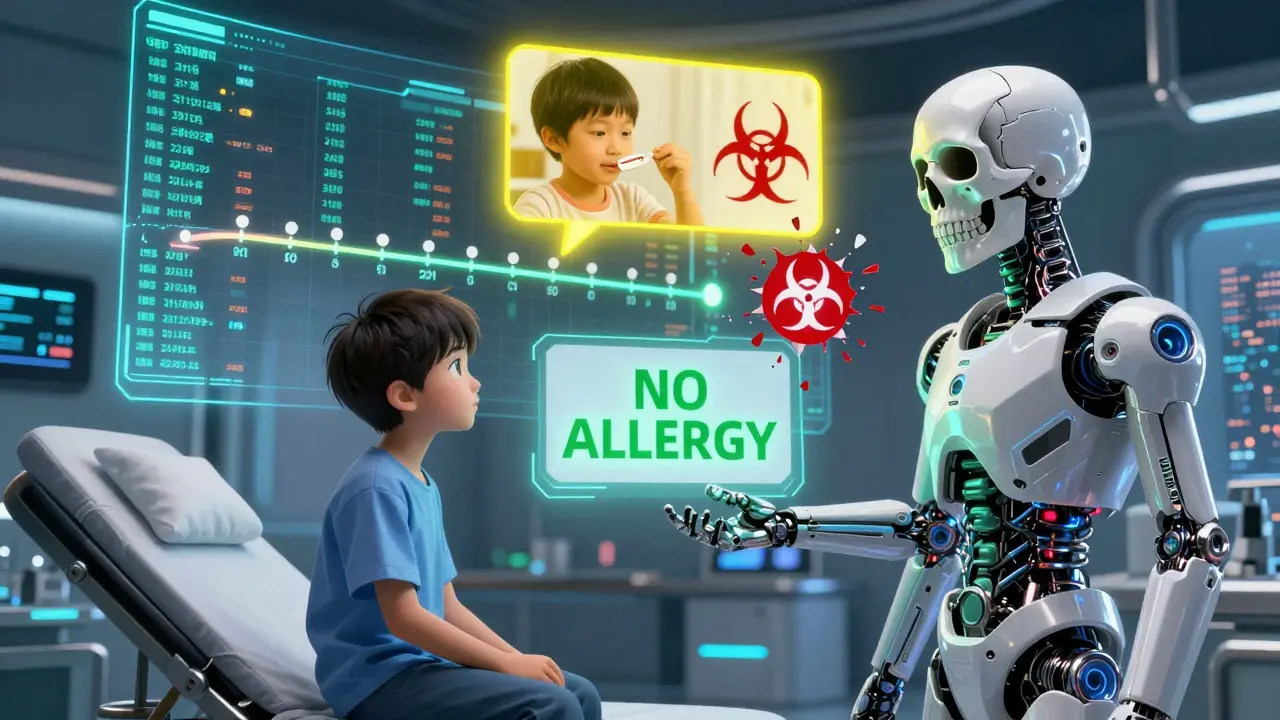
What the Color and Severity Levels Mean
Different systems use different colors and labels, but the general idea is the same:- Yellow = Mild reaction (rash, itching, nausea)
- Orange = Moderate reaction (swelling, wheezing, dizziness)
- Red or Black = Severe or life-threatening (anaphylaxis, angioedema, respiratory failure)
How to Make Your Allergy Info Accurate
The system is only as good as the data you give it. Here’s how to fix it:- Don’t just say "I’m allergic to penicillin." Say, "I got a rash on my arms after taking amoxicillin when I was 8. I’ve taken it since and never had a problem."
- If you’ve had a reaction, be specific: Was it hives? Swelling? Vomiting? Difficulty breathing?
- When was it? Allergic reactions usually happen within hours to two weeks after taking the drug. If it was 30 years ago and you’ve taken it since without issue, it’s probably not an allergy.
- Ask your doctor if you need an allergy test. Many people who think they’re allergic to penicillin aren’t. Skin testing can confirm it.
- Update your record every time you see a new provider. Don’t assume they’ll see what’s in your old chart.
What’s Changing in the Industry
The system is broken, but it’s getting better. In 2023, Epic rolled out something called "Allergy Relevance Scoring." It uses machine learning to predict which alerts are likely to be real based on how often doctors override them and what kind of reactions patients actually had. At Intermountain Healthcare, it cut low-value alerts by 37%. Cerner (now Oracle Health) launched a "Precision Allergy" tool that pulls in results from allergist visits. If you’ve had a drug challenge test and proved you’re not allergic, the system automatically lowers or removes the alert. The 21st Century Cures Act, effective January 1, 2023, now requires EHRs to collect structured allergy data-not just "allergy" as a checkbox. That means you’ll be asked to pick from options like: "Anaphylaxis," "Hives," "Nausea," "Headache," or "No reaction." This will make the alerts smarter.
What You Should Do Next
You don’t need to understand the tech. But you do need to understand your own history. - If you’ve ever been told you’re allergic to a drug, write down exactly what happened. Date. Symptoms. Severity. - Bring that list to every doctor, pharmacist, and ER visit. - If you’re being told you can’t take a drug because of an allergy you’re not sure about, ask: "Can I be tested?" - If you’ve taken a drug since your "allergy" and had no reaction, tell your provider. That’s powerful evidence. Most people who think they’re allergic to penicillin aren’t. Most people who think they’re allergic to NSAIDs aren’t. But if you’ve had a real anaphylactic reaction, the alert is your lifeline. The system isn’t perfect. But you can make it work for you.Common Misunderstandings About Allergy Alerts
- My allergy is to penicillin, so I can’t take any antibiotic. False. Many people can safely take cephalosporins, aztreonam, or even clindamycin.
- If I had a reaction once, I’ll always have one. False. Allergies can fade. Many children outgrow penicillin allergies by adulthood.
- Allergy alerts are always accurate. False. Over 90% of alerts are for cross-reactivity, and most are unnecessary.
- Pharmacists can ignore the alert if they want. True-but they shouldn’t. They’re legally and ethically responsible to verify it.
What to Do If You’re Given a Drug Despite an Alert
Sometimes, your doctor or pharmacist will say, "We’re going to give you this anyway. We’ve checked your history and it’s safe." That’s okay-if they’ve done the work. Ask:- "Did you check my past reactions?"
- "Was this drug ever confirmed as safe for me?"
- "Are you going to monitor me after I take it?"
What’s the difference between a drug allergy and a side effect?
A drug allergy involves your immune system reacting to the medication, often causing hives, swelling, trouble breathing, or anaphylaxis. A side effect is a non-immune reaction, like nausea, dizziness, or headache. Allergy alerts can’t tell the difference unless you specify it. That’s why so many alerts are wrong.
Can I outgrow a drug allergy?
Yes, especially with penicillin. Studies show that 80% of people who had a penicillin allergy as a child lose it within 10 years. But unless you get tested, you’ll keep being flagged in the system. Skin testing or a supervised drug challenge can confirm if you’re still allergic.
Why do I get allergy alerts for drugs I’ve taken before without issues?
Because your EHR system doesn’t know you took it safely before. It only sees the word "allergy" in your record and matches it to a drug class. If you were labeled allergic to penicillin and the system sees amoxicillin (a penicillin), it flags it-even if you’ve taken it 10 times since. You need to update your record with details about past tolerances.
Are allergy alerts required by law?
Yes, under the 21st Century Cures Act, all U.S. EHR systems must support structured allergy documentation as of January 1, 2023. That means providers must record not just "allergy," but the type of reaction, severity, and date. This is meant to reduce false alerts and improve safety.
What should I do if I think an allergy alert is wrong?
Don’t ignore it. Ask your pharmacist or provider to review your history with you. Bring your own notes: when the reaction happened, what symptoms you had, and whether you’ve taken the drug since. If needed, request a referral to an allergist for testing. It’s better to be safe-and correct-than to risk a real reaction or miss out on a needed medication.





Cara Hritz
December 21, 2025 AT 23:07i got a rash from amoxicillin at 7 and now im allergic to ALL penicillins. period. dont care what the study says. my body said no and thats that. also your spelling is sus.
Tony Du bled
December 22, 2025 AT 21:27my pharmacist just nods and gives me the meds anyway. been taking amoxicillin since 2008 with zero issues. they know i'm not lying but the system's just dumb.
Art Van Gelder
December 24, 2025 AT 15:32it's wild how we've outsourced our medical intuition to algorithms that can't tell the difference between a stomachache and anaphylaxis. we built a machine that screams at us every time we mention the word 'allergy'-but never asks, 'what did it feel like?' or 'when?' or 'has it happened again?' We treat data like scripture, but forget that human bodies don't follow flowcharts. The real tragedy isn't the false alerts-it's that we stopped trusting our own memories, our own stories, our own lived experience. The system doesn't care if you've taken penicillin ten times since you were eight. It just sees a red flag and moves on. And we let it.
Jamison Kissh
December 24, 2025 AT 20:20if you say 'allergic to penicillin' without context, you're basically telling the computer you're allergic to the entire alphabet. it doesn't know you're talking about a rash from 1999. it just sees 'penicillin' and goes full alarm mode. fix the input, not the system.
Johnnie R. Bailey
December 26, 2025 AT 18:25there's a quiet violence in how these systems treat patient history. they reduce years of lived experience to a checkbox. you don't just 'have an allergy'-you survived something. maybe it was a rash, maybe it was terror. but the system doesn't ask. it just blocks. and then we wonder why people stop trusting healthcare. it's not the meds-it's the silence behind the alert.
Jim Brown
December 28, 2025 AT 17:53the structural inadequacy of current electronic health record systems in discerning between immunologically mediated hypersensitivity and non-immunological adverse drug reactions represents a profound epistemological gap in clinical informatics. the ontological framing of 'allergy' as a binary, unqualified entity undermines the nuanced phenomenology of patient-reported outcomes and perpetuates systemic iatrogenic risk. structured, granular, temporally annotated data collection is not merely preferable-it is ethically imperative.
Vikrant Sura
December 30, 2025 AT 02:04another post about how computers are bad. newsflash: they're tools. stop blaming the machine and start fixing your own record.
Candy Cotton
December 31, 2025 AT 23:20as an American woman who has worked in healthcare for 22 years, I find it unacceptable that our nation's medical systems still allow such reckless data entry. This is not a tech problem-it's a cultural failure. We need mandatory training. We need penalties. We need discipline. This is why America's healthcare is falling behind.
Tarun Sharma
January 1, 2026 AT 11:45in india, we rarely see such alerts. doctors rely on patient history and clinical judgment. perhaps simplicity is sometimes more reliable than complexity.