

When you take an antibiotic, you expect it to kill the bad bacteria making you sick. But sometimes, it does something unexpected-it wipes out the good bacteria in your gut, too. And that’s when Clostridioides difficile, or C. diff, can slip in and take over. This isn’t just a mild upset stomach. It’s a serious infection that causes severe diarrhea, abdominal pain, and in worst cases, life-threatening colon damage. Every year, nearly half a million people in the U.S. get it. And the biggest trigger? Antibiotics themselves.
What Exactly Is Clostridioides difficile?
Clostridioides difficile is a spore-forming, bacteria that lives harmlessly in some people’s guts-but turns dangerous when the balance of gut microbes gets knocked out of whack. It’s not new. Doctors first noticed its link to antibiotic use in the 1950s, but it wasn’t until the 1970s, after a major outbreak tied to clindamycin, that scientists realized how serious it could be.
What makes C. diff so stubborn is its spores. These aren’t regular bacteria-they’re like tiny, hardened capsules that can survive for months on doorknobs, bed rails, toilets, and even hospital gowns. You don’t need to be sick to carry them. Up to 15% of healthy adults have C. diff spores in their gut without symptoms. But when antibiotics kill off the good bacteria that normally keep C. diff in check, the spores wake up, multiply, and release toxins that attack the colon lining. That’s when diarrhea, cramps, and fever start.
How Antibiotics Trigger C. diff Infection
Not all antibiotics are equal when it comes to triggering C. diff. Some are far more likely to cause trouble. Fluoroquinolones like ciprofloxacin, third- and fourth-generation cephalosporins like ceftriaxone, clindamycin, and carbapenems like meropenem are the biggest culprits. These drugs don’t just target one type of bacteria-they wipe out entire communities of microbes in your intestines.
That’s why C. diff infection is called antibiotic-associated diarrhea (AAD). The CDC defines AAD as three or more loose stools a day, starting anywhere from a few hours to eight weeks after starting antibiotics. For C. diff specifically, symptoms usually show up 5 to 10 days after starting the drug-but they can hit as early as day one or as late as two months later. Many people mistake it for a normal side effect. If you’re on antibiotics and suddenly have watery diarrhea, don’t assume it’s just your stomach being sensitive. It could be C. diff.
Recognizing the Symptoms
At first, C. diff might feel like a bad case of food poisoning: watery diarrhea, mild cramps, loss of appetite. But it can quickly get worse. In moderate to severe cases, you’ll have:
- Frequent watery diarrhea (10 to 15 times a day)
- Severe abdominal cramping and pain
- Fever above 101°F (38.3°C)
- Nausea and vomiting
- Bloody stools (in advanced cases)
- Rapid heart rate and low blood pressure
When it gets really bad, the colon swells, the body goes into shock, and the risk of a ruptured colon rises. This is called fulminant colitis. It’s rare but deadly. About 12,800 people died from C. diff in the U.S. in 2017 alone. Older adults-especially those over 65-are at highest risk. They make up 80% of all cases and are 10 to 15 times more likely to die from it than younger people.

Diagnosis Isn’t Always Straightforward
Testing for C. diff is trickier than you’d think. Just finding the bacteria in your stool doesn’t mean you’re infected. Up to 50% of hospitalized patients carry C. diff without symptoms. So doctors don’t just test for the bug-they test for the toxins it produces.
The CDC recommends a two-step process:
- Start with a glutamate dehydrogenase (GDH) test-it’s fast and catches most C. diff strains.
- If that’s positive, follow up with a toxin test (EIA) or a nucleic acid amplification test (NAAT) to confirm active infection.
Using just one test can miss up to 30% of real cases. And if you’re not having diarrhea? Don’t get tested. Testing people without symptoms leads to false positives and unnecessary treatment. Diagnosis always links lab results to clinical signs. No symptoms? Probably not C. diff-even if the test says yes.
How C. diff Is Treated Today
Treatment has changed dramatically in the last five years. Ten years ago, metronidazole was the go-to drug. Now? It’s no longer recommended. Studies showed it fails more often than other options and increases the chance of recurrence.
The 2021 guidelines from the Infectious Diseases Society of America (IDSA) and the Society for Healthcare Epidemiology of America (SHEA) now say:
- Fidaxomicin (200 mg twice daily for 10 days) is the first-line choice. It’s more expensive, but it cuts recurrence rates by nearly half compared to vancomycin.
- Vancomycin (125 mg four times a day for 10 days) is the backup option, especially if fidaxomicin isn’t available.
Why does fidaxomicin work better? It targets C. diff more precisely and leaves most of the good gut bacteria alone. Vancomycin still kills a lot of other microbes, which gives C. diff a better chance to come back.
For people who keep getting C. diff-two or more recurrences-there’s a game-changing option: fecal microbiota transplant (FMT). This isn’t sci-fi. It’s a procedure where stool from a healthy donor is delivered to the patient’s colon, usually via colonoscopy or capsules. Studies show FMT cures 85-90% of recurrent cases. That’s way better than repeating antibiotics, which only works about 40-60% of the time.
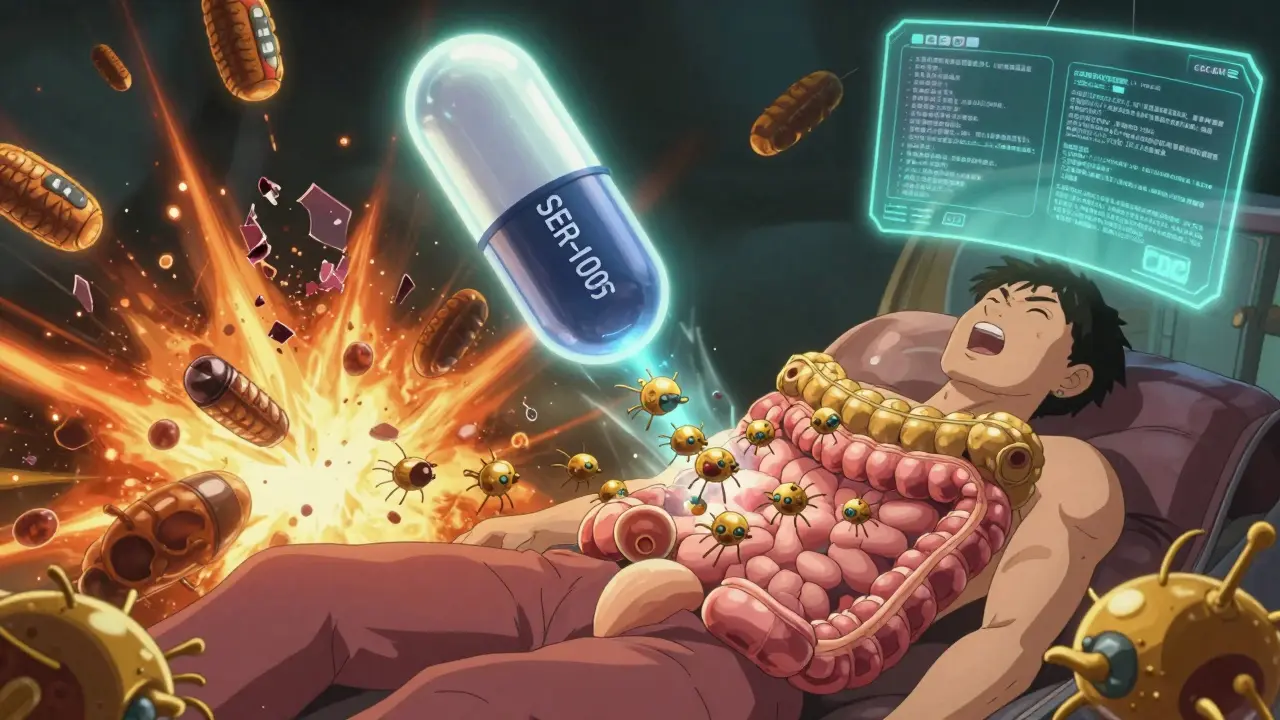
In April 2023, the FDA approved SER-109, the first FDA-approved microbiome therapy. It’s a capsule made of purified bacterial spores from healthy donors. In clinical trials, it prevented recurrence in 88% of patients over eight weeks. This isn’t just a treatment-it’s a new way to rebuild your gut after C. diff.
Why Prevention Is More Important Than Ever
Here’s the hard truth: you can’t prevent every case of C. diff. But you can cut your risk dramatically by doing two things: use antibiotics wisely and clean smarter.
Antibiotic stewardship-using antibiotics only when truly needed-is the #1 way to prevent C. diff. Hospitals that have cut unnecessary antibiotic use by 25-30% have seen C. diff rates drop by the same amount. Don’t ask for antibiotics for a cold or the flu. They don’t work. And if you’re prescribed one, ask: Is this really necessary? Is there a narrower-spectrum option?
And don’t believe the myth that probiotics prevent C. diff. A 2022 Cochrane review of nearly 10,000 people found no strong evidence that probiotics reduce C. diff risk. Some might help with general antibiotic-related diarrhea, but they don’t stop C. diff. The American College of Gastroenterology explicitly says not to use them for prevention.
When it comes to cleaning, regular disinfectants won’t cut it. C. diff spores survive on surfaces for months. Only EPA-registered disinfectants on List K work-these include bleach-based cleaners or hydrogen peroxide products. In hospitals, rooms with C. diff patients must be cleaned with these. At home, if someone has C. diff, clean the bathroom with bleach after each use. Wash hands with soap and water-alcohol-based hand sanitizers don’t kill the spores.
Who’s Most at Risk?
Some people are far more vulnerable:
- People over 65 - 80% of cases, highest death rates
- Those on antibiotics - especially broad-spectrum ones
- Hospitalized patients - each extra day in the hospital raises risk by 1.5%
- People with IBD - Crohn’s or ulcerative colitis increases risk 4.2-fold
- Post-surgery patients - especially after bowel surgery, where risk jumps to 8-12%
If you fall into one of these groups, be extra cautious. Talk to your doctor before starting antibiotics. Ask about alternatives. Monitor for diarrhea. Don’t wait for it to get bad.
The Bigger Picture
C. diff isn’t just a hospital problem anymore. Community cases are rising. People who never set foot in a hospital are getting sick after taking antibiotics at their doctor’s office or pharmacy. The economic cost? Nearly $5 billion a year in the U.S. alone.
The future of C. diff management isn’t just about stronger drugs. It’s about protecting your gut microbiome. That means smarter antibiotic use, better infection control, and therapies that restore the good bacteria-not just kill the bad ones. FMT and SER-109 are just the beginning. In the next few years, we’ll see more precision microbiome therapies, faster diagnostics, and better tools to predict who’s at risk before they even get sick.
Right now, the best defense is simple: don’t take antibiotics unless you need them. And if you do, watch for diarrhea. It’s not just a side effect. It could be your body’s warning sign.
Can you get C. diff without taking antibiotics?
Yes, but it’s rare. Most cases are linked to antibiotics, but you can catch C. diff from contaminated surfaces, especially in hospitals or long-term care facilities. People with weakened immune systems or recent gastrointestinal surgery are at higher risk even without antibiotics.
Is C. diff contagious?
Yes. C. diff spreads through fecal-oral contact. Spores from an infected person’s stool can land on surfaces, then transfer to hands, food, or objects. Others touch those surfaces and accidentally swallow the spores. That’s why handwashing and disinfecting surfaces are so critical.
Can C. diff come back after treatment?
Yes. About 20-30% of people have at least one recurrence, and 40-60% of those have more. That’s why treatment now focuses not just on curing the current infection, but preventing it from returning. Fidaxomicin and fecal microbiota transplant are both designed to reduce recurrence.
Do probiotics help prevent C. diff?
No, not reliably. A major 2022 review of 39 studies found no strong evidence that probiotics prevent C. diff infection. Some may help with general antibiotic-related diarrhea, but they don’t stop C. diff. The American College of Gastroenterology advises against using them for prevention.
What’s the best way to clean surfaces if someone has C. diff?
Use EPA-registered disinfectants from List K, which include bleach-based cleaners or hydrogen peroxide products. Regular household cleaners won’t kill C. diff spores. Always wash hands with soap and water after cleaning-hand sanitizer doesn’t work on spores.
How long does it take to recover from C. diff?
Most people start feeling better within a few days of starting treatment. Full recovery usually takes 10 to 14 days. But even after symptoms disappear, spores can remain in the gut. That’s why recurrence is common-especially if antibiotics are used again too soon after recovery.





Mike Hammer
February 14, 2026 AT 16:22I had C. diff after a course of amoxicillin for a sinus infection. Thought it was just food poisoning. Ended up in the ER. Never take antibiotics lightly again. My gut’s been weird since, but hey - at least I’m alive.
Charlotte Dacre
February 16, 2026 AT 00:30So let me get this straight - we’ve got a superbug that thrives because we’re overusing antibiotics like they’re candy... and the solution is to stop being dumb? Groundbreaking. Next you’ll tell me breathing air is bad if you’re allergic to oxygen.
Daniel Dover
February 16, 2026 AT 10:34Fidaxomicin works better. That’s the key takeaway.
Joe Grushkin
February 17, 2026 AT 11:48The fact that we still treat this like a medical anomaly rather than a systemic failure of pharmaceutical overreach is the real tragedy. We don’t need more drugs. We need less arrogance. And less reliance on chemical band-aids for biological imbalance.
Erica Banatao Darilag
February 17, 2026 AT 17:12I really appreciate the detailed breakdown of diagnostic protocols. It’s easy to overlook how crucial the two-step testing process is - especially since many clinicians still rely on NAAT alone. This is exactly the kind of evidence-based clarity we need in primary care.
Esha Pathak
February 17, 2026 AT 19:20C. diff is like karma for your gut 🌿💀 You think you’re fixing one problem with antibiotics... but you’re actually inviting the cosmic janitor to clean out your entire microbiome. FMT? Nah. It’s just nature’s reboot button. We’re not curing disease - we’re restoring balance. And balance? That’s the real medicine.
Chiruvella Pardha Krishna
February 19, 2026 AT 03:38The rise of community-acquired C. diff is not accidental. It reflects the collapse of medical humility. We no longer respect the complexity of the human microbiome. We weaponize chemistry and call it progress.
Virginia Kimball
February 20, 2026 AT 10:28I’m so glad this info is out there. My mom got C. diff after hip surgery and it nearly killed her. We didn’t know what was happening until it was too late. If more people knew how to spot the signs early - and how to clean properly - so many lives could be saved. Thank you for writing this. Seriously.
Kapil Verma
February 20, 2026 AT 20:52Western medicine is a circus. We create problems with drugs, then sell more drugs to fix them. FMT? A $30,000 fix for a $5 problem. In India, we use turmeric, neem, and fasting. No spores survive. No FDA approval needed. Just ancient wisdom. You all need to stop outsourcing your health to Big Pharma.