
Caffeine-Medication Interaction Checker
How This Tool Works
Enter your medication type and caffeine consumption to check for potential interactions. This tool is based on current medical research about caffeine and prescription drugs. It provides general guidance but doesn't replace professional medical advice.
Results
Select your medication and caffeine intake to see potential interactions.
Important Safety Notes
This tool provides general guidance based on current medical knowledge. Caffeine interactions can vary significantly between individuals. Always consult with your healthcare provider or pharmacist before making changes to your medication routine.
Many people start their day with a cup of coffee, not realizing it could be quietly undermining their medication. Caffeine isn’t just a pick-me-up-it’s a powerful chemical that interacts with dozens of common drugs, sometimes in dangerous ways. If you’re taking prescriptions for heart conditions, mental health, thyroid issues, or even blood thinners, your morning latte might be doing more harm than good.
How Caffeine Changes How Your Body Handles Medications
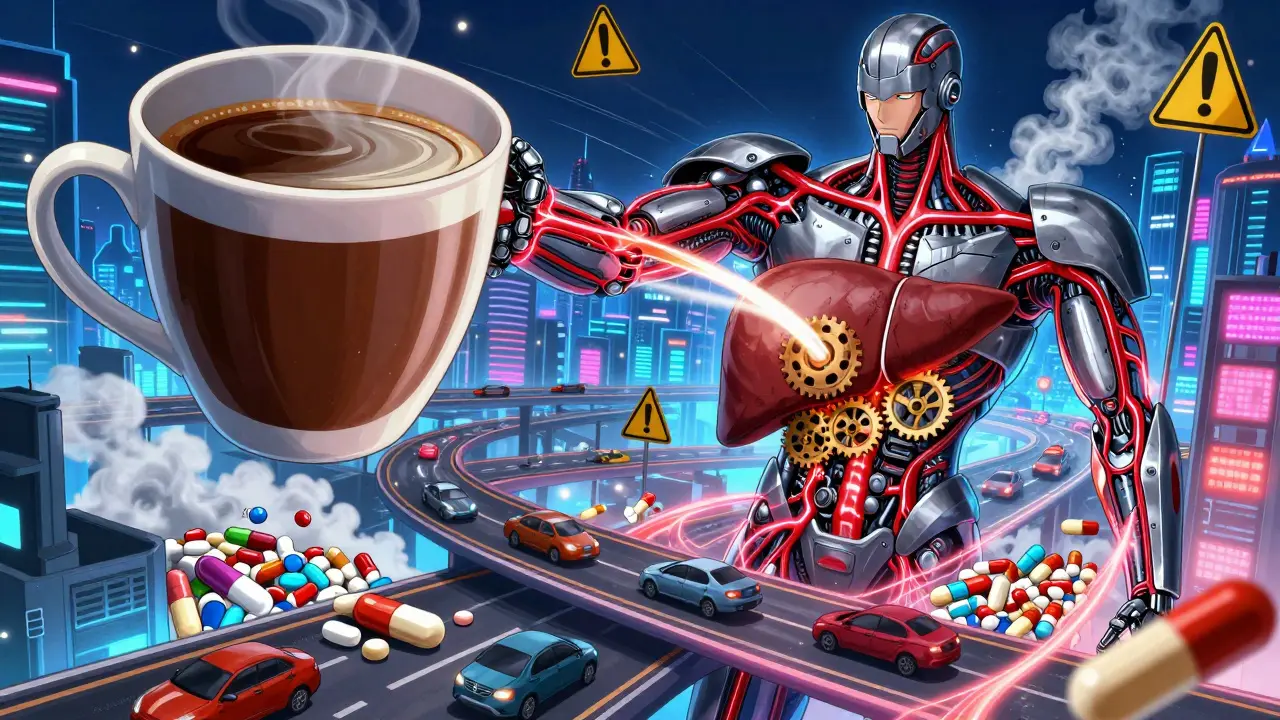
Caffeine doesn’t just wake you up-it changes how your liver processes drugs. It blocks an enzyme called CYP1A2, which breaks down about 10-15% of all prescription medications. When caffeine slows down this enzyme, drugs stick around longer in your body than they should. That means higher doses than intended, which can lead to serious side effects. On the flip side, caffeine can also stop some drugs from being absorbed properly, making them less effective.
Think of it like traffic on a highway. Normally, your body clears drugs at a steady pace. But caffeine jams the exit ramps. Some drugs pile up. Others never even get on the road.
Warfarin and Other Blood Thinners: A Dangerous Mix
If you’re on warfarin (Coumadin) or similar blood thinners, caffeine can raise your INR levels by 15-25% within just 24 hours. That means your blood takes longer to clot, increasing your risk of internal bleeding. A single cup of coffee won’t cause this-but daily coffee, especially if you suddenly drink more than usual, can trigger dangerous spikes.
The American Heart Association recommends limiting caffeine to 200 mg per day (about two cups of coffee) if you’re on warfarin. Even more important: keep your intake consistent. Going from one cup a day to four, or switching from coffee to energy drinks, can throw your INR out of range. That’s why many patients end up in the ER-not because they took too much medication, but because their coffee habit changed.
Heart Medications: Caffeine Can Block Their Effect
Two heart drugs-adenosine and dipyridamole-are used during stress tests to check for blocked arteries. But caffeine blocks the exact receptors these drugs need to work. If you drink coffee before your test, even one cup, the results can be inconclusive. You’ll have to reschedule, waste time, and pay for another test.
The American College of Cardiology’s 2023 guidelines say you must avoid caffeine for 24 hours before a cardiac stress test. That includes tea, soda, chocolate, and energy drinks. Even decaf coffee has 2-15 mg of caffeine-enough to interfere.
Other heart medications like verapamil can also be affected. Studies show caffeine raises diastolic blood pressure by 8-12 mmHg for a few hours after consumption. For someone already struggling with hypertension, that’s enough to undo weeks of careful management.
Thyroid Medication: Coffee Stops Absorption
Levothyroxine (Synthroid, Levoxyl) is one of the most commonly prescribed drugs in the U.S. But if you take it with coffee, your body absorbs 25-57% less of it. That’s not a small drop-it’s enough to push your TSH levels from normal to abnormal.
A 2017 study with 98 patients showed that those who drank coffee within an hour of taking their thyroid pill had significantly higher TSH levels. One Reddit user shared: “My TSH jumped from 1.8 to 4.5 after years of stability. I didn’t realize coffee was the problem until I waited 60 minutes after my pill. My levels went back down.”
The Endocrine Society’s official recommendation? Wait at least 30-60 minutes after taking your thyroid medication before drinking coffee. And don’t rely on decaf. Even low caffeine levels can interfere.
Psychiatric Drugs: Anxiety, Depression, and the Coffee Trap
Caffeine and antidepressants don’t mix well. For people taking SSRIs like fluvoxamine (Luvox) or escitalopram (Lexapro), coffee can reduce absorption by up to 33%. That means the drug isn’t working as well-and your depression or anxiety might get worse.
With tricyclic antidepressants like amitriptyline or imipramine, caffeine does the opposite: it slows down metabolism, causing drug levels to rise by 20-40%. That can lead to dizziness, dry mouth, heart palpitations, or even dangerous heart rhythms.
Patients on ADHD meds like Adderall report feeling “extremely jittery” or unable to sleep for 12+ hours after combining it with coffee. That’s because both are stimulants. Together, they overcharge your nervous system.
Dr. Robert H. Shmerling of Harvard Health puts it plainly: “Drinking coffee-especially in large amounts-can affect how your body processes these medications.”
Seizure Medications: Caffeine Can Trigger Seizures
If you have epilepsy and take carbamazepine, phenytoin, valproate, or other anti-seizure drugs, caffeine can reduce their effectiveness. A 2019 study in Epilepsy & Behavior found that patients who consumed caffeine regularly had 18-35% more seizures than those who avoided it.
Caffeine lowers the seizure threshold-the point at which your brain starts firing uncontrollably. For someone already on the edge, that’s enough to trigger a seizure. Doctors often advise patients to cut caffeine entirely, especially if their seizures are poorly controlled.
Diabetes and Cold Medicines: A Hidden Risk
Many cold and flu meds contain pseudoephedrine, a decongestant that raises blood pressure and heart rate. When you combine it with caffeine, the effect multiplies. University Hospitals’ 2025 review found diabetic patients who took pseudoephedrine with caffeine saw blood sugar spike by 15-25 mg/dL and body temperature rise by 0.5-1.0°C.
That’s dangerous for diabetics. High blood sugar means more stress on the heart and kidneys. And elevated body temperature can mask signs of infection or make you feel worse than you are.
Doctors now recommend avoiding caffeine for 4-6 hours after taking any cold medicine with pseudoephedrine. That includes Sudafed, Claritin-D, and many store-brand equivalents.
What About Aspirin and Caffeine?
Some pain relievers combine aspirin with caffeine-like Excedrin. In the U.S., the Mayo Clinic says this combo is safe. But European studies suggest high doses of caffeine with aspirin may increase stomach bleeding risk. If you’re prone to ulcers or take blood thinners, it’s better to avoid these combo pills altogether.
How to Stay Safe: Practical Tips
- Wait 30-60 minutes after taking thyroid meds before drinking coffee.
- Avoid caffeine for 24 hours before a cardiac stress test.
- Limit coffee to 2 cups a day if you’re on warfarin, and keep your intake consistent.
- Don’t mix caffeine with stimulant medications like Adderall, Ritalin, or pseudoephedrine.
- Check labels on cold meds, energy drinks, and supplements-they often hide caffeine.
- Decaf isn’t safe for everyone. Even 2-15 mg of caffeine can interfere with sensitive drugs.
- Ask your pharmacist if your meds interact with caffeine. Most pharmacies now flag these risks in their systems.
What to Watch For: Signs of a Dangerous Interaction
Stop caffeine and call your doctor immediately if you experience:
- Heart rate over 120 beats per minute
- Systolic blood pressure above 180 mmHg
- Difficulty breathing
- Vision changes or confusion
- Twitching, rigid muscles, or tremors
- Worsening depression or suicidal thoughts
- Seizures or loss of consciousness
These aren’t normal side effects. They’re red flags that caffeine and your medication are clashing in your body.
The Bigger Picture
Over 150 million Americans take both caffeine and prescription drugs. That’s more than half the adult population. And according to the American Pharmacists Association, these interactions cause 2.8% of all adverse drug events in adults over 50-and up to 4.2% in those over 65.
Health systems are catching on. 92% of major hospitals now have electronic alerts in their systems that warn doctors and pharmacists about caffeine interactions. The FDA added 15 new caffeine warnings to drug labels in 2024 alone.
This isn’t just about coffee. It’s about safety. A simple habit change-waiting an hour after your pill before your cup-can prevent hospital visits, adjust your treatment, and even save your life.
Can decaf coffee affect my medications?
Yes. Decaf coffee still contains 2-15 mg of caffeine per cup. For medications like levothyroxine, warfarin, or certain psychiatric drugs, even this small amount can interfere with absorption or metabolism. If you’re highly sensitive, switch to caffeine-free herbal teas or water instead.
How long should I wait after taking medication before drinking coffee?
It depends on the drug. For thyroid meds like Synthroid, wait 30-60 minutes. For blood thinners like warfarin, consistency matters more than timing-stick to the same amount daily. For cardiac stress tests, avoid caffeine for 24 hours. For stimulants like Adderall or pseudoephedrine, wait 4-6 hours. When in doubt, ask your pharmacist.
Does tea have the same effect as coffee?
Black tea has about half the caffeine of coffee, but green tea and energy teas still contain enough to interfere with medications. Herbal teas like chamomile or peppermint are usually safe, but check labels-some contain hidden caffeine or stimulant herbs like guarana.
I’ve been drinking coffee with my meds for years. Should I stop?
Not necessarily-but you should check. If your medication levels are stable and you’re not experiencing side effects, you may be fine. But if your doctor recently changed your dose, your symptoms worsened, or your lab results changed, caffeine could be the culprit. Try cutting it out for two weeks and see if things improve.
Are there any medications that are safe with caffeine?
Many common drugs like statins, most antibiotics, and insulin aren’t significantly affected by caffeine. But just because a drug isn’t listed doesn’t mean it’s safe. Always check with your pharmacist or doctor before assuming. New interactions are still being discovered.
Understanding caffeine’s role in your medication routine isn’t about fear-it’s about control. You don’t have to give up coffee. You just need to know when and how to drink it safely. A few simple adjustments can make all the difference between feeling well and ending up in the hospital.




Michael Dillon
December 24, 2025 AT 19:40Look I get it coffee is a drug but so is water and we don’t panic about hydration interfering with blood pressure meds. This whole article reads like a fearmongering pamphlet from a pharmacy that’s trying to sell you herbal tea.
Gary Hartung
December 26, 2025 AT 16:47It is, indeed, a profound and alarming revelation - that a simple, centuries-old, culturally embedded ritual - the consumption of caffeinated aqueous extract from roasted coffee beans - may, in certain pharmacological contexts, exert a modulatory influence on hepatic cytochrome P450 enzyme activity. The implications are not trivial. They are, frankly, existential.
Jason Jasper
December 27, 2025 AT 04:10I take levothyroxine and have switched to drinking coffee 90 minutes after my pill. No issues. No drama. Just consistency. I don’t need a 2000-word article to tell me that timing matters. I just do it.
Linda B.
December 27, 2025 AT 22:03They don’t want you to know the real reason caffeine is flagged - it’s because the FDA and pharmaceutical companies make more money when you need higher doses. They profit off your confusion. Decaf is a trap. Even herbal tea has trace glyphosate. You think you’re safe? You’re not.
Mussin Machhour
December 29, 2025 AT 13:23Just wait an hour after your pill and you’re golden. No need to overcomplicate it. Coffee’s not the enemy - ignorance is. Keep it simple. Stay healthy. You got this.
Christopher King
December 30, 2025 AT 20:50Think about it - caffeine is the original nootropic. The ancient monks drank it to stay awake during prayer. Now we’re told it’s a villain because it messes with synthetic molecules made in labs. Who really controls your body - your biology or the patent office?
Bailey Adkison
January 1, 2026 AT 10:02It’s not that coffee interferes with medications. It’s that people don’t read the damn inserts. The FDA requires warnings. Pharmacists are trained to explain them. If you don’t ask - you’re not being responsible. Stop blaming the coffee. Take ownership.
Oluwatosin Ayodele
January 2, 2026 AT 09:41In Nigeria we don’t have this problem because most people drink tea not coffee and even then we wait until after breakfast. Your Western obsession with morning caffeine is the real issue. You need to reset your rhythm not your medication.
Lindsay Hensel
January 2, 2026 AT 23:58Thank you for this. I had no idea my morning espresso was sabotaging my antidepressant. I’ve switched to water until noon. My anxiety has already lessened. This is life-changing information.
Carlos Narvaez
January 4, 2026 AT 03:55Decaf is a scam. You’re still getting caffeine. Just less. And more chemicals. Stick to herbal. Or better yet - don’t drink anything for an hour after your pill. Simple.
Harbans Singh
January 5, 2026 AT 03:01I take metformin and statins - no issues with coffee. But I also take my thyroid med at night now. I learned this from my cousin in India who switched to nighttime levothyroxine after his TSH spiked. Sometimes the fix isn’t quitting coffee - it’s changing the timing.
Justin James
January 6, 2026 AT 20:51Did you know that in 1998 the CIA ran a secret program called Project Caffeine to test how stimulants affected patient compliance with psychiatric meds? They found that caffeine made patients more likely to miss doses because they felt too jittery. That’s why they started adding caffeine warnings - not because it’s dangerous - because it’s a control mechanism. The same people who gave you Adderall also told you coffee was fine. They’re lying. They always lie.
Zabihullah Saleh
January 7, 2026 AT 16:38It’s funny how we treat caffeine like a villain but we don’t blink at sugar or alcohol. We’ve normalized the chaos. Maybe the problem isn’t coffee - it’s that we’ve outsourced our body’s rhythm to pills and stimulants and expect everything to just work. Maybe we need less chemistry and more stillness.
Winni Victor
January 8, 2026 AT 01:27I’ve been taking Adderall with espresso since college. I’m fine. My heart is a racecar. My brain is a turbocharged quantum processor. If your body can’t handle two stimulants? Maybe you’re not built for modern life. Stop whining and upgrade your hardware.