
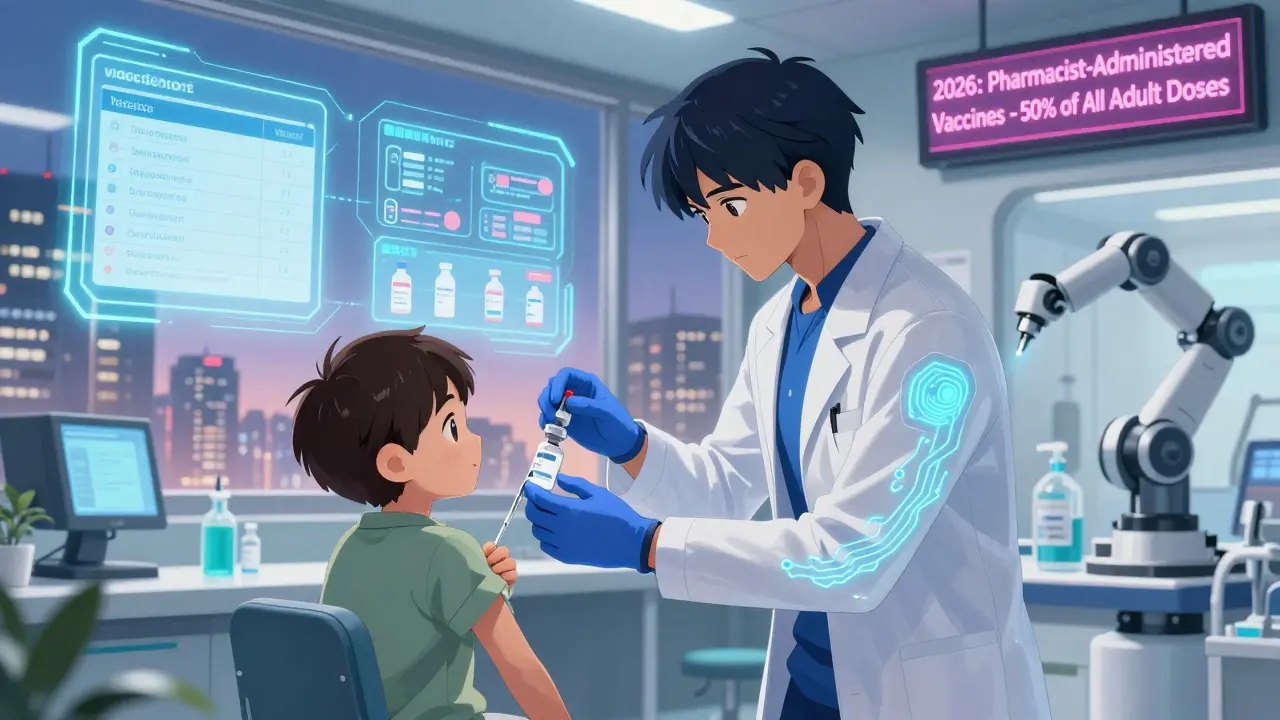
When you walk into a pharmacy, you might think you’re there just to pick up your prescription. But in 2026, pharmacists are doing so much more. They’re giving flu shots, explaining why vaccines are safe, helping you save money on generic drugs, and even catching missed immunizations before you leave the store. This isn’t just convenience-it’s a quiet revolution in how healthcare reaches people where they already are.
Pharmacists Are Now Vaccine Administrators
Back in 1995, only nine U.S. states let pharmacists give vaccines. Today, every state, plus D.C. and Puerto Rico, allows it. That’s not a small change-it’s a complete shift in who delivers preventive care. Community pharmacies are open longer than clinics, don’t require appointments, and are within five miles of 93% of Americans. That means if you’re busy, live far from a doctor, or just don’t feel like waiting weeks for a shot, your local pharmacist is often the easiest place to get protected.
During the COVID-19 pandemic, pharmacists gave over 200 million doses. That’s not just a number-it’s millions of people who got vaccinated because their pharmacy was open on a Saturday, or because the pharmacist took the time to answer their questions. In California, pharmacists can now give any FDA-approved vaccine to anyone three years and older. In other states, age limits still exist, especially for kids under 12, but the trend is clear: pharmacists are being trusted with more responsibility.
Why Generic Prescriptions Matter
Generic drugs are just as safe and effective as brand-name ones. The FDA requires them to have the same active ingredients, strength, and dosage. But they cost 80-85% less. That’s huge for people on fixed incomes, for families juggling bills, or for anyone who’s ever skipped a dose because the price was too high.
Pharmacists don’t just hand out generics-they explain why they’re a smart choice. A 2023 survey found that 78% of independent pharmacists routinely suggest lower-cost alternatives to patients. One pharmacist in Aberdeen told me about a woman who was taking a $400-a-month brand-name blood pressure pill. Her pharmacist switched her to a generic that worked just as well-and cost $12. The woman cried. Not because she was upset, but because she could finally afford to take her medicine every day.
But here’s the catch: Pharmacy Benefit Managers (PBMs) often squeeze independent pharmacies on reimbursement. They control which drugs are covered, how much pharmacies get paid, and sometimes even force patients to use mail-order services. That’s why 78% of independent pharmacists say PBM practices hurt their ability to care for patients. It’s not about profit-it’s about access.
Advocacy Isn’t Optional-It’s Part of the Job
Pharmacists aren’t just dispensing pills anymore. They’re advocating. That means pushing for better laws, fairer pay, and clearer rules. The American Pharmacists Association has spent years lobbying to remove age restrictions on vaccines, improve reimbursement rates, and get pharmacists included in electronic health records.
They’re also fighting for payment fairness. Right now, Medicare pays only 87% of what it actually costs to give a vaccine in a pharmacy. That’s a loss. And when pharmacies lose money on vaccines, they can’t afford to keep offering them. Independent pharmacies, which serve rural and low-income areas, are hit hardest. That’s why the National Community Pharmacists Association has collected over 23,000 letters from pharmacists asking Congress to fix PBM rules.
And it’s working. Between 2020 and 2023, 27 states passed laws expanding pharmacists’ scope of practice. Fourteen of them removed age limits for vaccines. More are coming in 2026.

How Pharmacists Build Trust
People trust their pharmacists. More than doctors, more than nurses, more than online ads. Why? Because they see them every month. They know their names. They’ve asked them about side effects, drug interactions, and whether that new pill is worth the cost.
On Reddit, users share stories of pharmacists talking them out of vaccine fears. One thread showed a pharmacist spending 15 minutes explaining mRNA technology to a teenager who thought it would “alter DNA.” The pharmacist used a simple analogy: “It’s like a recipe card. It tells your cells how to make a protein that trains your immune system. Then it’s gone.” The teen got the shot.
Pharmacists spend 7 to 10 minutes per patient talking about vaccines-not just handing them a syringe. They ask about travel plans, chronic conditions, and past reactions. They check immunization records. They remind you when your next shot is due. That’s personalized care, delivered without a doctor’s appointment.
The Hidden Challenges
It’s not all smooth sailing. Vaccine storage is a big one. If a fridge breaks and the flu shots spoil, the pharmacy loses about $1,200 per incident. That’s money they can’t afford to lose. And reporting requirements? They vary wildly. Thirty-four states demand that pharmacists report every vaccine to state registries within 72 hours. Sixteen states give them more time. That inconsistency adds hours of paperwork to an already packed day.
Insurance billing is another headache. Forty-two percent of patients say they’ve been billed incorrectly for pharmacy vaccines-sometimes charged the full price, sometimes denied coverage altogether. Pharmacists end up spending time on the phone with insurers instead of with patients.
And while chain pharmacies give 68% of all pharmacy-administered vaccines, independent ones are catching up fast. In 2015, only 65% of independent pharmacies offered vaccines. Now, it’s 92%. They’re doing it despite the odds because they know their communities need them.
What’s Next?
By 2026, pharmacists are expected to give over half of all adult vaccines in the U.S. That’s not a guess-it’s a projection based on current growth. The CDC has set a goal to increase pharmacist-administered vaccines by 25% by 2025. The Inflation Reduction Act is slowly opening doors for better reimbursement. And pharmacists are demanding better integration with electronic health records so they can share vaccination data with doctors.
But the biggest shift? The public is starting to see pharmacists not as clerks, but as healthcare providers. When you get your flu shot at the pharmacy, you’re not just getting a vaccine-you’re accessing a full-service health advisor who knows your meds, your history, and your budget.
What You Can Do
If you need a vaccine, don’t wait for a doctor’s appointment. Walk into your pharmacy. Ask if they give flu, shingles, HPV, or Tdap shots. Ask if they can check your immunization record. Ask if there’s a cheaper generic version of your prescription.
If you’re frustrated with insurance bills or high drug prices, tell your pharmacist. They’re listening. And if your state still limits what pharmacists can do, contact your local representative. Pharmacists are ready to do more. All they need is the law to catch up.
Can pharmacists really give all types of vaccines?
In most states, pharmacists can give all FDA-approved vaccines, including flu, shingles, HPV, pneumonia, and COVID-19. Some states still restrict pediatric vaccines for children under 12, but 14 states have removed age limits entirely. Always check your state’s rules-pharmacists can tell you what’s allowed where you live.
Are generic drugs as good as brand-name ones?
Yes. The FDA requires generics to have the same active ingredient, strength, dosage form, and route of administration as the brand-name version. They’re tested for bioequivalence, meaning they work the same way in your body. The only differences are in inactive ingredients like color or filler, which don’t affect how the drug works.
Why do some pharmacies charge more for generics?
It’s usually not the pharmacy’s fault. Pharmacy Benefit Managers (PBMs) control pricing and reimbursement. Some PBMs set inflated prices for generics and then reimburse pharmacies below cost. Independent pharmacies often lose money on generics but still offer them because patients need them. Ask your pharmacist if they can help you find a lower-cost option through mail-order or discount programs.
How do I know if my insurance covers a vaccine at the pharmacy?
Call your insurance company or check your plan’s formulary online. Most plans cover CDC-recommended vaccines with no copay. But if you’re billed after getting a shot, ask the pharmacy to refile the claim. Many times, it’s a simple coding error. Pharmacists can help you navigate this-they do it every day.
Do pharmacists need special training to give vaccines?
Yes. All pharmacists who give vaccines must complete a certification program, usually the APhA Pharmacy-Based Immunization Delivery course. It takes 20-30 hours of training, including hands-on practice with injections. Most states also require continuing education every few years. This isn’t something they just learn on the job-it’s a formal, regulated skill.




Kelly Beck
January 6, 2026 AT 05:03I just got my shingles shot at CVS last week-and the pharmacist spent 20 minutes explaining how it works, checking my med list, and even printed out a calendar for my next booster. 🥹 I didn’t even know pharmacists did this kind of stuff anymore. We’ve turned them into healthcare heroes without even asking.
Wesley Pereira
January 6, 2026 AT 10:00pharmacists are now vaccine adminstrators?? wow. next they'll be doing MRIs and prescribing antibiotics like they're ordering coffee. the system is just handing out MD-level power to people who used to count pills. 🤡
Tom Swinton
January 8, 2026 AT 08:31My grandma’s pharmacist in Ohio switched her from a $380 brand-name heart med to a generic that costs $14-and then called her every month to check if she was taking it. That’s not a job. That’s family. And now PBMs are squeezing these people out because they’re too good at their jobs. It’s insane.
Joann Absi
January 10, 2026 AT 06:49AMERICA IS BECOMING A PHARMACY NATION. WE TRUST PHARMACISTS MORE THAN DOCTORS NOW?? WHAT HAPPENED TO THE MEDICAL ESTABLISHMENT?? THIS IS SOCIALISM IN A WHITE COAT. 🇺🇸💊
Venkataramanan Viswanathan
January 12, 2026 AT 01:50In India, pharmacists are still mostly order-takers. But I’ve seen a few private clinics where trained pharmacists counsel patients on drug interactions-especially with Ayurvedic supplements. It’s rare, but it’s happening. We need to formalize this. No one should die because they mixed turmeric with blood thinners and no one asked.
Pavan Vora
January 12, 2026 AT 19:58Wait-so pharmacists are now giving vaccines, checking immunization records, advising on generics, fighting PBMs, managing cold storage, filing insurance claims, and still getting paid less than minimum wage for the labor? And you’re surprised independent pharmacies are closing? I’m not shocked-I’m just disappointed we didn’t fix this 10 years ago.
Susan Arlene
January 14, 2026 AT 06:58my pharmacist knows my dog’s name and remembers when i had that bad reaction to penicillin in 2018. she didn’t need my chart to know. that’s trust. not data. not algorithms. just human memory. we lost that everywhere else.
Leonard Shit
January 15, 2026 AT 18:14the fact that we need to have a national conversation about whether a pharmacist can give a flu shot says more about our broken healthcare system than it does about pharmacists. they’re filling the gaps because everyone else quit. again.
Isaac Jules
January 16, 2026 AT 01:27pharmacists are now ‘healthcare providers’? sure. next they’ll be doing surgeries. this is the dumbest creep of scope i’ve ever seen. you took a 2-year degree and now you think you’re a doctor? get real. we’re turning healthcare into a Walmart aisle.
Ashley S
January 16, 2026 AT 07:19so now we’re just giving out vaccines like candy? what’s next? pharmacists doing mental health screenings? giving out antidepressants? where does it end? someone needs to draw the line.
Rachel Wermager
January 17, 2026 AT 17:46the FDA’s bioequivalence thresholds for generics are 80-125% AUC and Cmax. that’s a 45% variance window. it’s technically compliant, but clinically? for narrow-therapeutic-index drugs like warfarin or levothyroxine? it’s a gamble. pharmacists should disclose this. they don’t.
Indra Triawan
January 18, 2026 AT 06:04do you ever wonder… if we outsource care to pharmacies… are we outsourcing empathy? are we becoming a society that treats healing like a transaction? i feel… hollow. like we’ve lost something sacred.
Mukesh Pareek
January 18, 2026 AT 10:47Let me clarify: The 80-85% cost reduction for generics is misleading. The active ingredient is identical, yes-but excipients vary. In elderly patients with polypharmacy, these variations can alter absorption kinetics. Pharmacists rarely disclose this. They push generics for reimbursement, not patient safety. This is not healthcare. It’s cost arbitrage.