
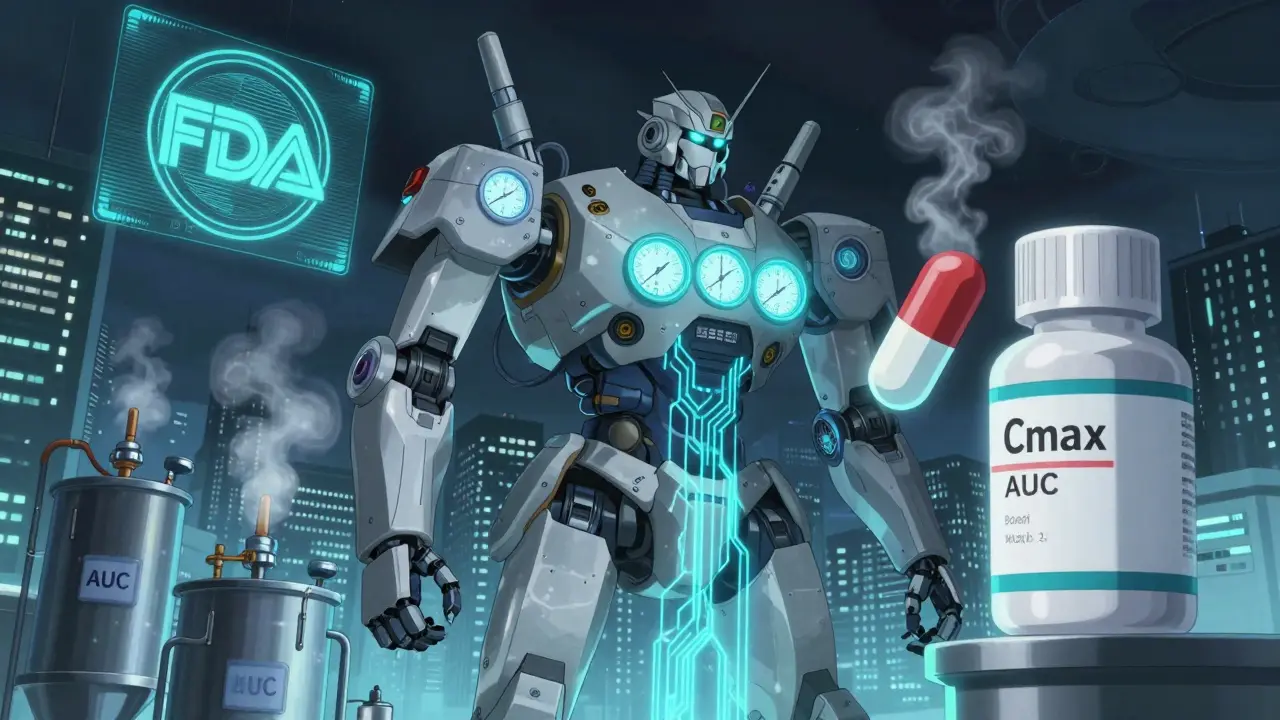
When you pick up a generic pill at the pharmacy, you expect it to work just like the brand-name version. That’s not luck-it’s the result of one of the most tightly regulated processes in medicine. The FDA doesn’t just approve generic drugs because they look the same or cost less. They require proof-hard data-that every generic drug meets the same exact standards for safety, quality, and strength as the original. This isn’t a suggestion. It’s the law.
What Makes a Generic Drug Legally Identical?
A generic drug isn’t a copy. It’s a legally recognized equivalent. To get FDA approval, it must have the same active ingredient, strength, dosage form, and route of administration as the brand-name drug it’s copying. That means if you’re taking 10 mg of lisinopril once daily in tablet form, the generic version must deliver exactly that-no more, no less.
The FDA calls the original drug the Reference Listed Drug (RLD). Every generic applicant must prove their product performs the same way as that RLD. That’s where bioequivalence comes in.
Bioequivalence: The Core of Generic Approval
Bioequivalence isn’t about how the pill looks or tastes. It’s about how your body absorbs and uses the drug. The FDA requires that the generic drug’s absorption rate falls within 80% to 125% of the brand-name drug’s rate. This range is measured through blood tests in healthy volunteers, tracking key metrics like Cmax (peak concentration) and AUC (total exposure over time).
For most standard pills-like antibiotics or blood pressure meds-this is tested in 24 to 36 people. They take the brand drug one day, the generic another, and their blood is drawn over 24 to 72 hours. If the numbers match within that 80%-125% window, the drug is approved.
But not all drugs are that simple. For extended-release pills, inhalers, or topical creams, the rules get stricter. Take Ritalin LA, an extended-release methylphenidate. The FDA doesn’t just look at total absorption. It breaks down the release pattern into time segments: 0-3 hours, 3-7 hours, and 7-12 hours. The generic must match each segment exactly. Otherwise, it won’t work the same way throughout the day.
Quality Isn’t Optional-It’s Built In
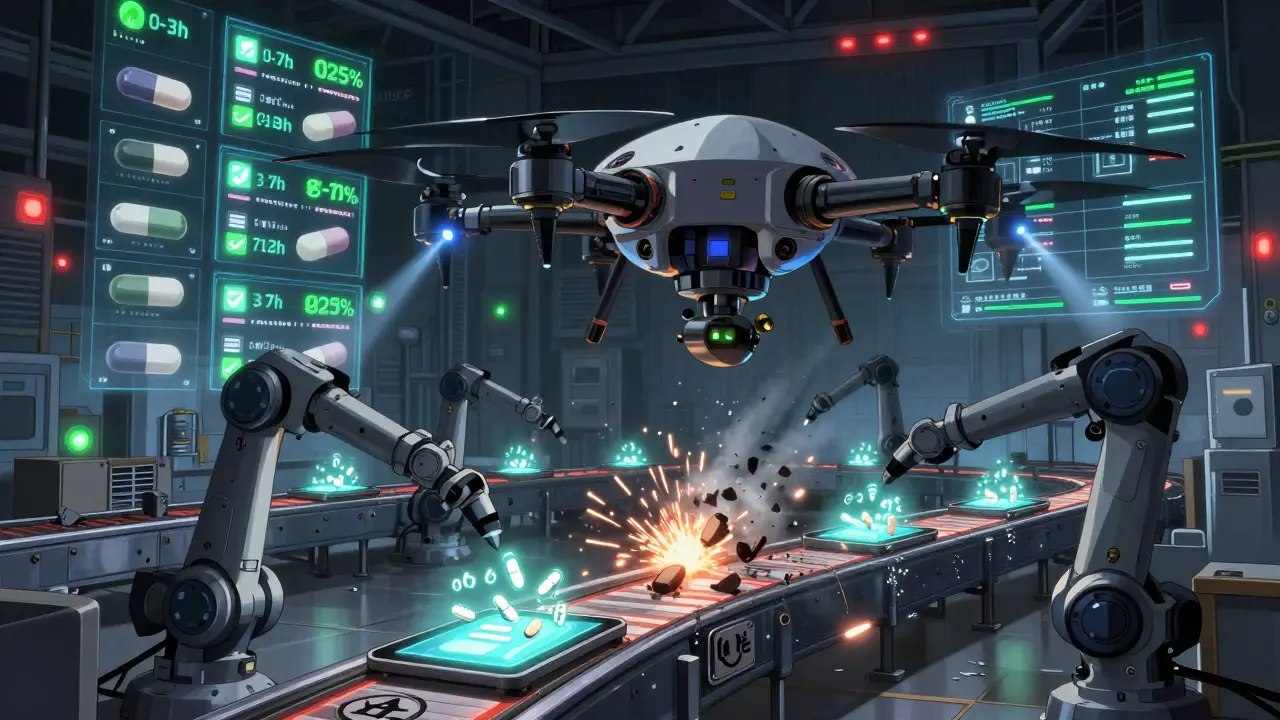
Strength and absorption mean nothing if the pill falls apart in the bottle or contains impurities. That’s why every generic manufacturer must follow Current Good Manufacturing Practices (cGMP), enforced under 21 CFR Parts 210 and 211.
The FDA inspects every manufacturing facility before approving a generic drug. In 2022, they conducted about 1,200 pre-approval inspections. If they find even one major flaw-like inconsistent tablet hardness, unclean equipment, or poor record-keeping-the application gets rejected. In 2021, Hetero Labs’ generic version of Jardiance was denied because tablet hardness varied too much between batches. That’s not a minor issue. It affects how the drug dissolves in your body.
Manufacturers must also prove stability. They test samples over time under different temperatures and humidity levels to ensure the drug doesn’t degrade before the expiration date. A generic that works perfectly on day one but loses potency in six months isn’t approved.
Special Rules for High-Risk Drugs
Some drugs have a narrow therapeutic index-meaning the difference between a safe dose and a dangerous one is tiny. Warfarin, levothyroxine, and lithium fall into this category. For these, the FDA tightens the bioequivalence range.
For levothyroxine, the standard 80%-125% range was replaced with 95%-105% in 2020. That’s because even a 10% variation in thyroid hormone levels can cause heart palpitations, weight changes, or mood swings. The FDA doesn’t just rely on blood tests for these drugs. They also require clinical outcome studies in patients with hypothyroidism to confirm the generic doesn’t cause instability.
Other high-risk products-like epinephrine auto-injectors (EpiPen)-face even bigger hurdles. The problem isn’t just the drug. It’s the device. Between 2015 and 2020, only 3 out of 27 generic EpiPen applications were approved because the needle depth, injection force, and activation mechanism had to match the original exactly. A slight difference could mean a failed emergency dose.
Why Do So Many Generics Get Rejected?
You might think the abbreviated approval process (ANDA) is easy. It’s not. Less than 10% of generic applications get approved on the first try. That’s because the FDA expects perfection in documentation, testing, and manufacturing.
Common reasons for rejection:
- Incomplete or flawed bioequivalence studies
- Manufacturing inconsistencies across batches
- Failure to meet cGMP standards
- Missing or incorrect labeling
- Patent or exclusivity issues
Complex generics-like inhalers, injectables, or topical gels-have even lower approval rates. A 2021 analysis found only 58% of complex generic applications were approved within three review cycles, compared to 76% for simple pills. The reason? These products involve intricate chemistry, delivery systems, and device integration that are hard to replicate.

How Long Does It Take? How Much Does It Cost?
Bringing a brand-name drug to market costs about $2.6 billion. A generic? Around $1.3 million. That’s why generics make up 90% of prescriptions in the U.S. but only 23% of drug spending.
But time isn’t cheap. The average approval timeline is 32.7 months. For simple pills, it’s about 28.5 months. For complex products, it’s nearly 47 months. Why so long? Because the FDA requires extensive testing, multiple inspection rounds, and detailed documentation. A typical ANDA submission runs 5,000 to 10,000 pages-covering chemistry, manufacturing, bioequivalence data, and proposed labeling.
Companies that succeed early often use the FDA’s Pre-ANDA program. In 2022, 78% of successful applicants met with FDA staff before submitting. These meetings help avoid costly mistakes and cut months off the timeline.
Are Generics Really Safe?
Yes. Over 15 years of post-market data show that generics perform the same as brand-name drugs in 98.7% of therapeutic categories. The American Medical Association confirmed this in a 2021 report. Millions of patients use generics daily without issue.
Some critics argue the 80%-125% bioequivalence range is too wide. But the FDA has already tightened it for high-risk drugs. And for most medications, even a 20% variation in absorption doesn’t change clinical outcomes. Studies show no difference in hospitalizations, side effects, or treatment failure between generics and brands.
The real issue isn’t safety-it’s access. Even after approval, patent lawsuits can delay a generic’s market entry by years. The FTC found an average delay of 2.4 years between FDA approval and when the generic actually hits shelves.
What’s Changing in 2026?
The FDA is pushing to speed up approval of complex generics. Their 2023 GDUFA III plan aims to approve 50% of these products within two review cycles by 2027-up from just 28% today. New guidance is being drafted for biosimilars, topical creams, and injectables to reduce ambiguity.
Recent approvals show progress. The first generic of Humira (adalimumab) was approved in December 2023 after years of development. The first generic of Vivitrol (naltrexone extended-release injection) came out in August 2023, giving patients with opioid addiction a more affordable option.
There are still 127 complex brand-name drugs with no generic alternatives, representing $52 billion in annual sales. That’s where the next wave of innovation is headed.
For now, if your doctor prescribes a generic, you can trust it. The FDA doesn’t cut corners. Every pill you take has passed through one of the most demanding approval systems in the world.
Are generic drugs as effective as brand-name drugs?
Yes. The FDA requires generic drugs to prove they are bioequivalent to the brand-name version, meaning they deliver the same amount of active ingredient into your bloodstream at the same rate. Over 15 years of real-world data show no meaningful difference in effectiveness or safety between generics and brand-name drugs for 98.7% of medications.
Why do some generic drugs look different from the brand name?
By law, generics can’t look identical to brand-name drugs due to trademark rules. That means color, shape, or flavor may differ, but the active ingredient, strength, and dosage form must be the same. These cosmetic differences have no impact on how the drug works in your body.
Can generic drugs have different side effects?
The active ingredient is identical, so the same side effects are expected. However, inactive ingredients (like fillers or dyes) can vary. In rare cases, someone might have an allergy or sensitivity to one of these, causing a reaction not seen with the brand. If you notice a new side effect after switching to a generic, talk to your doctor-but it’s not because the drug is less effective.
How does the FDA ensure consistent quality across batches?
Manufacturers must validate their production process using at least three consecutive commercial-scale batches. The FDA inspects facilities before approval and conducts random inspections afterward. Any batch that fails to meet specifications-like tablet hardness, dissolution rate, or purity-is rejected. Companies that repeatedly fail inspections risk losing their approval.
Why are some generic drugs harder to get than others?
Complex drugs-like inhalers, injectables, or extended-release formulations-are harder to replicate because they involve precise delivery systems, not just chemistry. Patent protections and legal delays also block entry. For example, the EpiPen took five years and 27 attempts before a generic was approved. Simpler pills like metformin have dozens of generics available because they’re easier to copy.
Do generics take longer to work than brand-name drugs?
No. For immediate-release drugs, absorption time is identical. For extended-release versions, the release pattern must match the brand exactly. If a generic is designed to release over 12 hours, it must do so at the same rate. The FDA tests this using segmented pharmacokinetic analysis to ensure timing is preserved.


Glenda Marínez Granados
January 20, 2026 AT 07:21So let me get this straight - we’re paying $2.6B to invent a pill, then $1.3M to copy it… and the FDA makes sure the copy doesn’t kill us? 🤦♀️ I’d call that capitalism with a backbone. Or maybe just… sanity?
Yuri Hyuga
January 21, 2026 AT 07:45This is one of those rare stories where the system actually works. 🌟 The FDA doesn’t just rubber-stamp - they demand proof, inspect factories, and refuse to cut corners. Generics aren’t cheap because they’re lazy - they’re cheap because the system is brilliant. We should celebrate this, not doubt it.
MARILYN ONEILL
January 21, 2026 AT 18:40I saw a generic pill once that was purple. Purple. Like, what is this, a gummy bear? I’m not taking that. My body knows the real thing when it sees it. Brand names have class. Generics look like they were made in a garage.
Coral Bosley
January 22, 2026 AT 16:24I switched to a generic for my thyroid med and felt like my soul was being slowly drained by a fax machine. I went back to the brand. It’s not just chemistry - it’s energy. And the generic had none.
Steve Hesketh
January 22, 2026 AT 22:50Let me tell you something - this is hope in pill form. 🌍 In Nigeria, people wait months for medicine. But here? A person can get life-saving treatment for a fraction of the cost because someone cared enough to build the rules right. This isn’t just science - it’s justice.
shubham rathee
January 24, 2026 AT 06:32they say the 80-125 range is fine but what if your body is on the edge of that range and the generic pushes you over? who tests that? no one. they just say its fine and move on. i think theyre hiding something. maybe the big pharma lobby is pulling strings. i know it
Kevin Narvaes
January 25, 2026 AT 09:59so like… if a generic is approved… does that mean the brand name is basically a scam? like… why did we pay all that money for the original if the copy is just as good? i feel manipulated
Alex Carletti Gouvea
January 27, 2026 AT 03:04America makes the best drugs in the world. Why are we letting foreign factories make our generics? They don’t even speak English. How do we know they’re not putting chalk in the pills? This isn’t freedom - it’s surrender.
Ben McKibbin
January 28, 2026 AT 14:24The real hero here isn’t the drug - it’s the regulatory rigor. This isn’t just about pills. It’s about trust. The FDA didn’t just check a box - they built a system where a single tablet, made in India or Ohio, can be trusted just as much as the one made in New Jersey. That’s not bureaucracy. That’s integrity.
Rod Wheatley
January 28, 2026 AT 22:25Let me break this down for you - because this is IMPORTANT: Every single generic pill you take? It’s been tested in real people. It’s been inspected by real FDA agents. It’s been held to the same standard as the brand. And if it fails? It gets thrown out. No exceptions. No shortcuts. This is the gold standard of medicine - and it’s working. You’re safe. You’re protected. And you’re saving money. Win. Win. Win.
Malvina Tomja
January 29, 2026 AT 07:25I read this entire thing. And I still think it’s a lie. I’ve seen people have seizures after switching generics. The FDA doesn’t care. They’re just happy to save a buck. You think they’re protecting you? They’re protecting Big Pharma’s bottom line. Wake up.
Samuel Mendoza
January 29, 2026 AT 19:28The 80-125% range is a joke. Anyone who says it’s safe hasn’t read the studies.
MAHENDRA MEGHWAL
January 29, 2026 AT 20:51The meticulousness of the FDA's regulatory framework for generic pharmaceuticals is commendable. The adherence to cGMP standards, coupled with segmented pharmacokinetic analysis for extended-release formulations, demonstrates an unwavering commitment to public health. This level of scientific rigor is a global benchmark.
Dee Monroe
January 31, 2026 AT 12:56You know what’s beautiful about this? It’s not just about pills. It’s about dignity. Imagine being someone who needs insulin every day but can’t afford the brand. Now imagine getting the same life-saving dose for $20 instead of $300. That’s not just science - that’s love in action. The FDA doesn’t just approve drugs - they give people back their lives. And honestly? That’s the most powerful thing I’ve read all year.
Jerry Rodrigues
February 2, 2026 AT 04:52Makes sense. I trust the system.